
Welcome to Kyoto, Japan: Temples, Temple, Tempo

A photo I took in Kyoto, Japan. It is remarkably beautiful here.
You will be glad to know that it is only about 25 hours door to door from Philadelphia to Kyoto. That’s 3 movies and 2 naps on a 14-hour overseas flight, with a taxi, train, short flight, bus, and final taxi to your apartment building, the Leo Palace.
I arrived on Tuesday 20 May. Wednesday 21 May featured a lot of sleeping. On Thursday and Friday I visited the Kyoto campus and met new colleagues there.
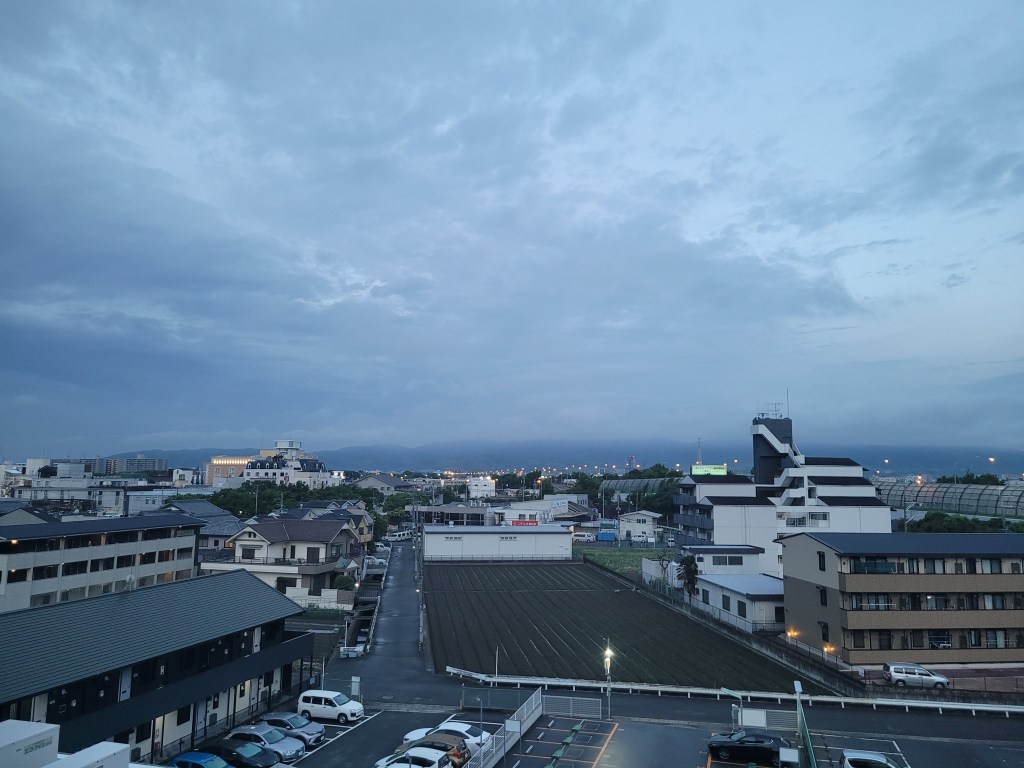
On Saturday I was awake at 5 a.m., which meant the jetlag was finally subsiding. I had breakfast on my balcony watching the sunrise over the city.
This is the view from my 5th-floor balcony.
Breakfast was a banana, a cup of instant coffee with soymilk, and a triangle of rice filled with bonito fish flakes and wrapped in crispy seaweed. If like me you are interested in acquiring Japanese vocabulary, okaka is a word for bonito flakes.
There once was a man from Osaka                                                                             Whose breakfast was always okaka
He

I will not be able to complete my limerick until I learn some more Japanese words.
My agenda for Saturday was to clear up the piles of stuff I had dumped on the floor of my apartment in lieu of actually unpacking, and to visit the renowned 1300-year old Fushimi Inari-taisha Shinto shrine which has 10,000 dramatic vermillion arches lining a path up a mountain. Because I was still a bit delicate from the jetlag, I told myself I could achieve my day’s agenda in any order I wished. So I kicked a few piles of stuff towards the closet and set out for the historic shrine.
A few other people had the same idea.

You know, it is somewhat interesting when your find yourself smack in the middle of that gap between internet-depicted reality and the other kind of reality. Reality reality.
Here is how the Fushimi Inari-taisha Shinto shrine is inevitably depicted on internet travel sites for Japan:
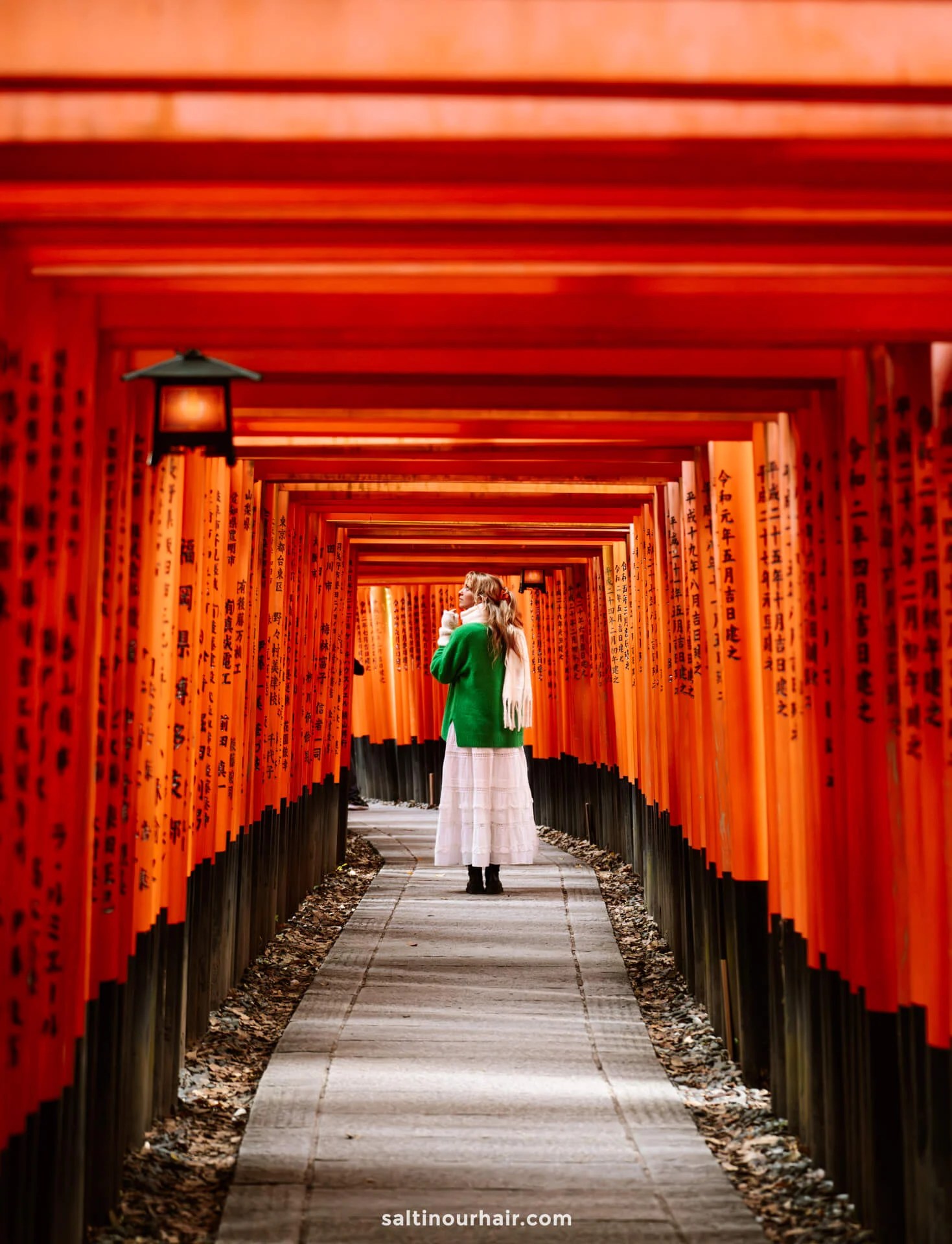
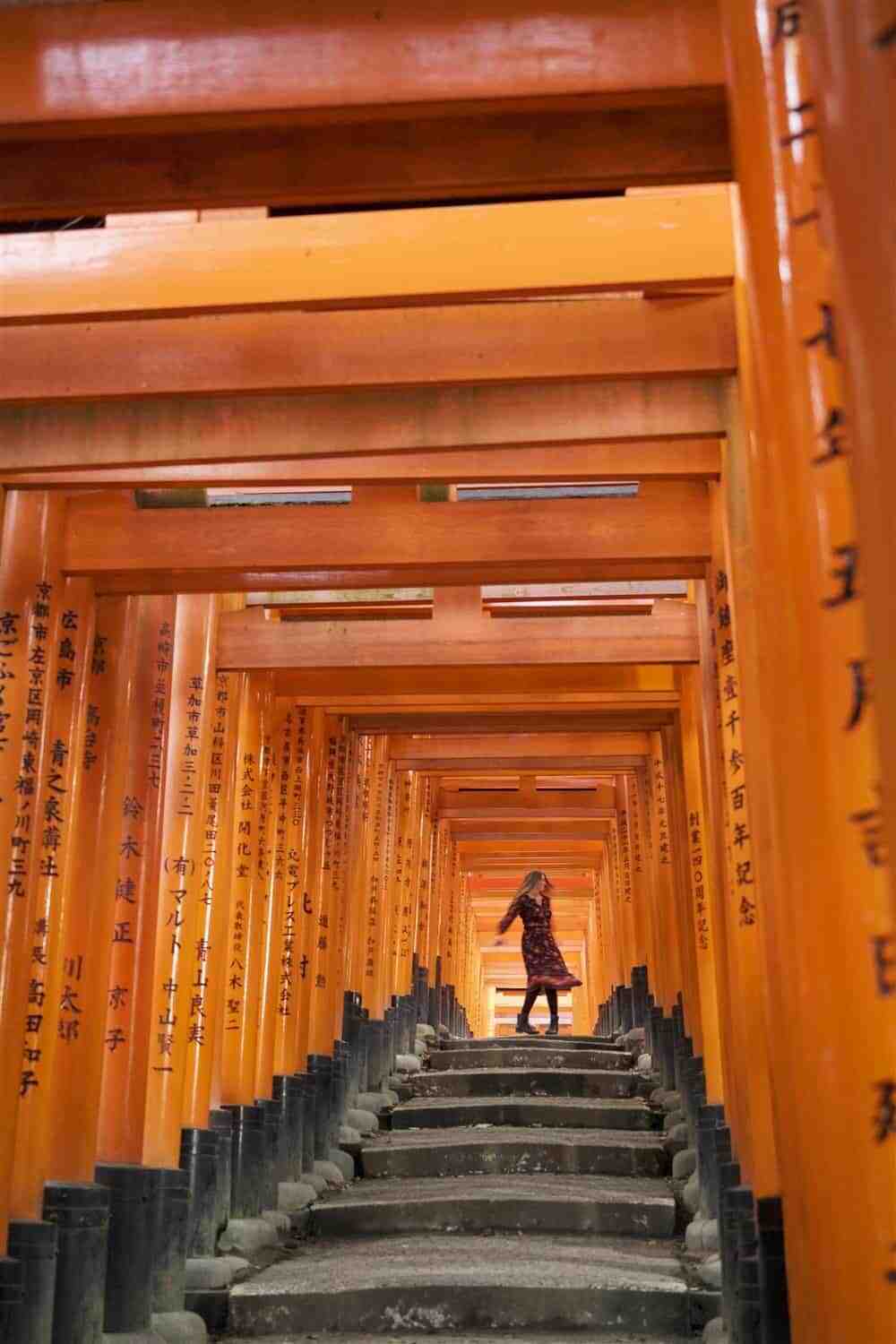
And now I give you Saturday, 24 May 2025:
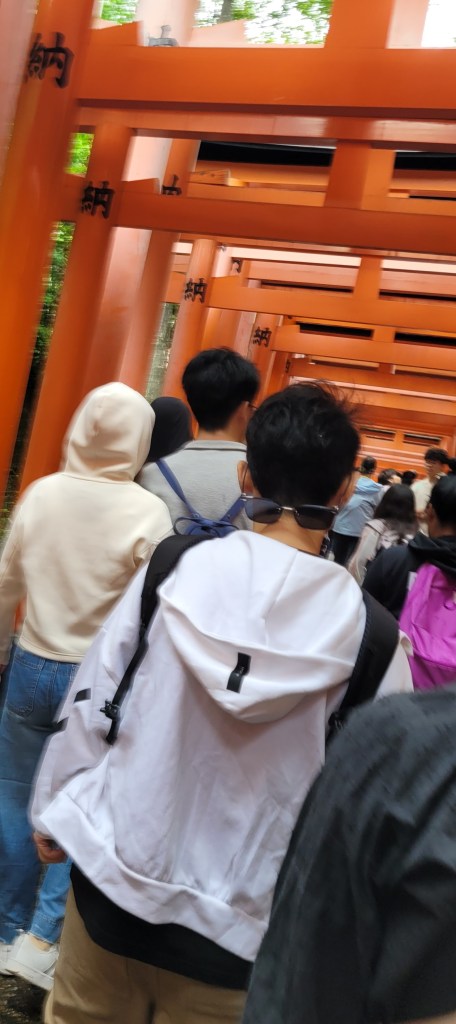

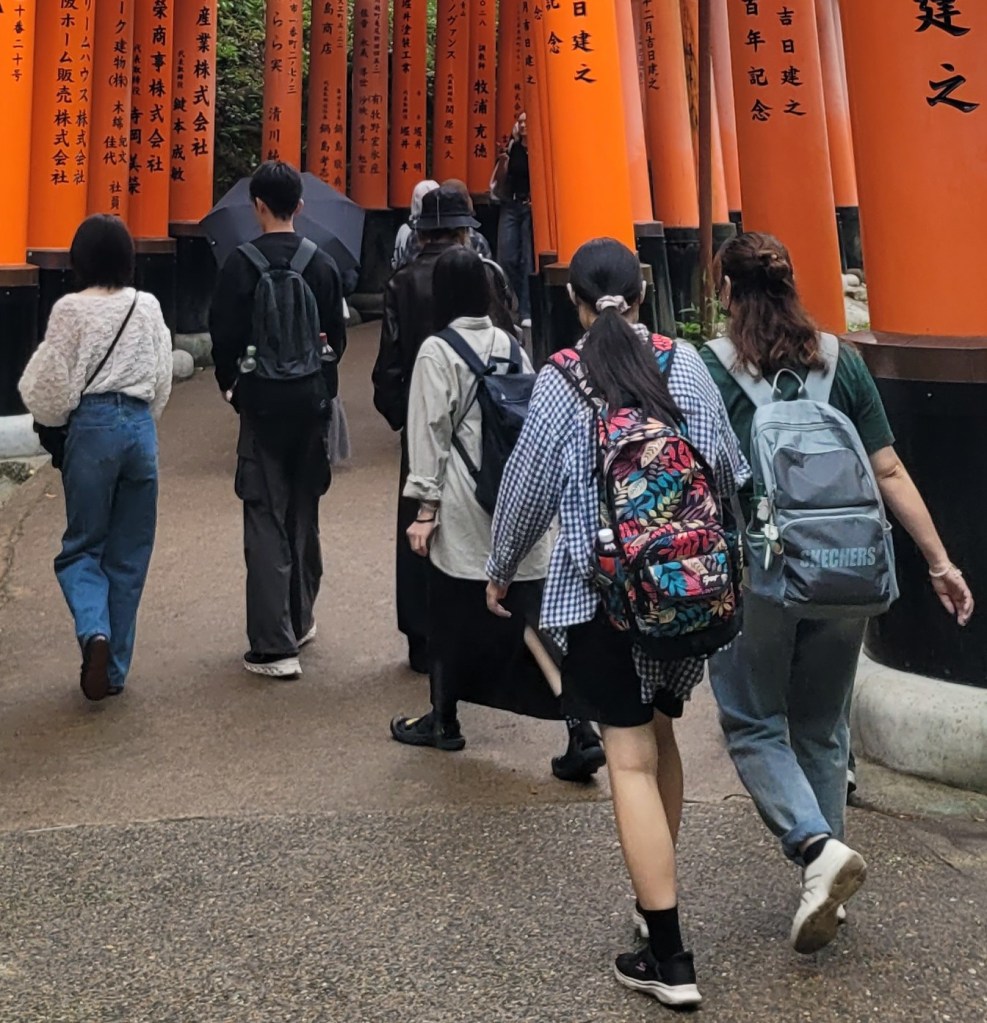
The drizzle and breeze deterred no one. So we all marched up the mountain through the tunnels of vermillion gates, each arch donated by someone inspired through the centuries by this venerable network of temples and shrines dedicated to Rice.


Eventually the crowd thinned out — many people were stopping along the way to take photos of each other posed against the brilliant orange pillars, which required them to wait for crowds to pass. I very happily kept stomping along, up and up.
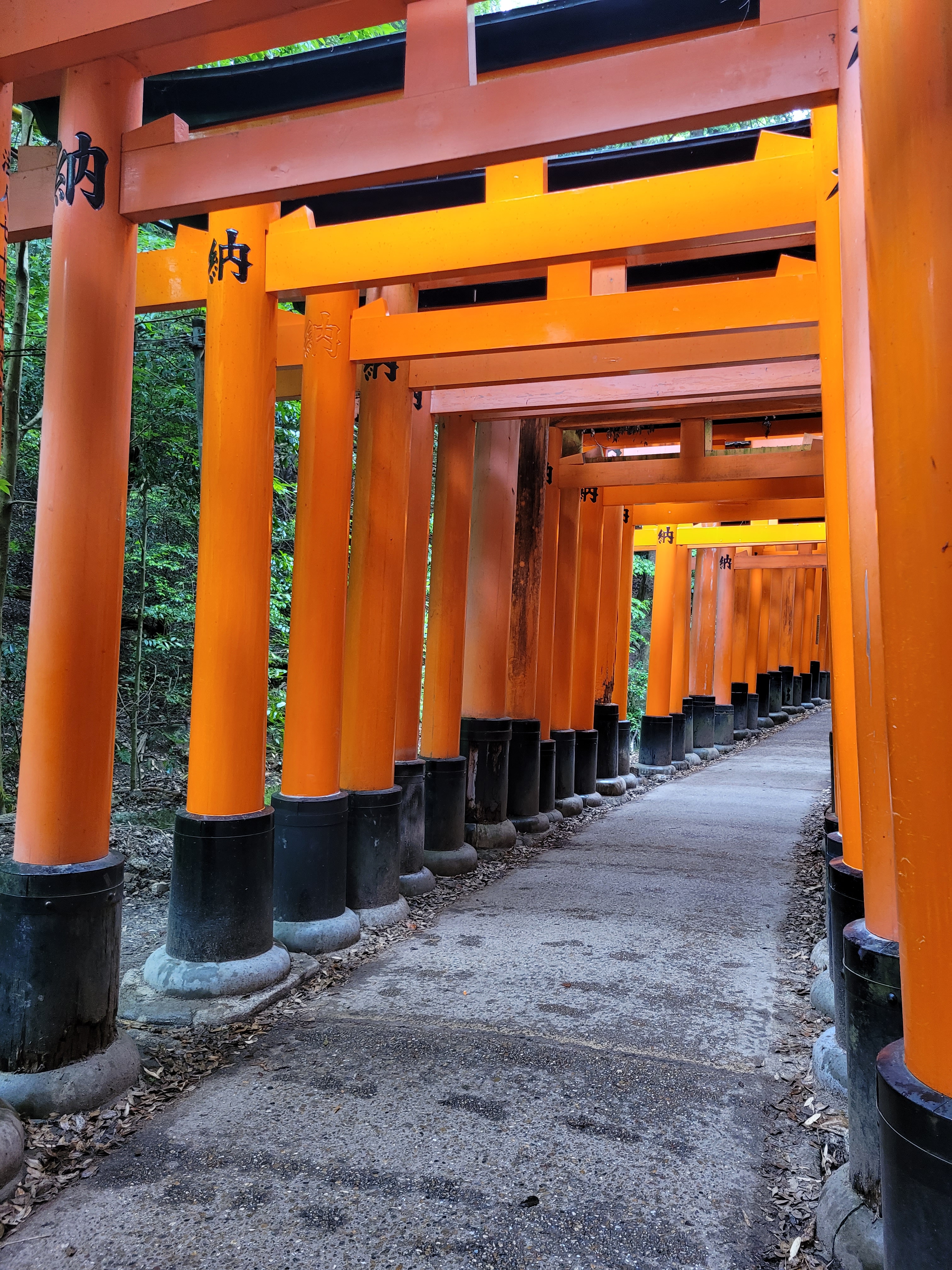
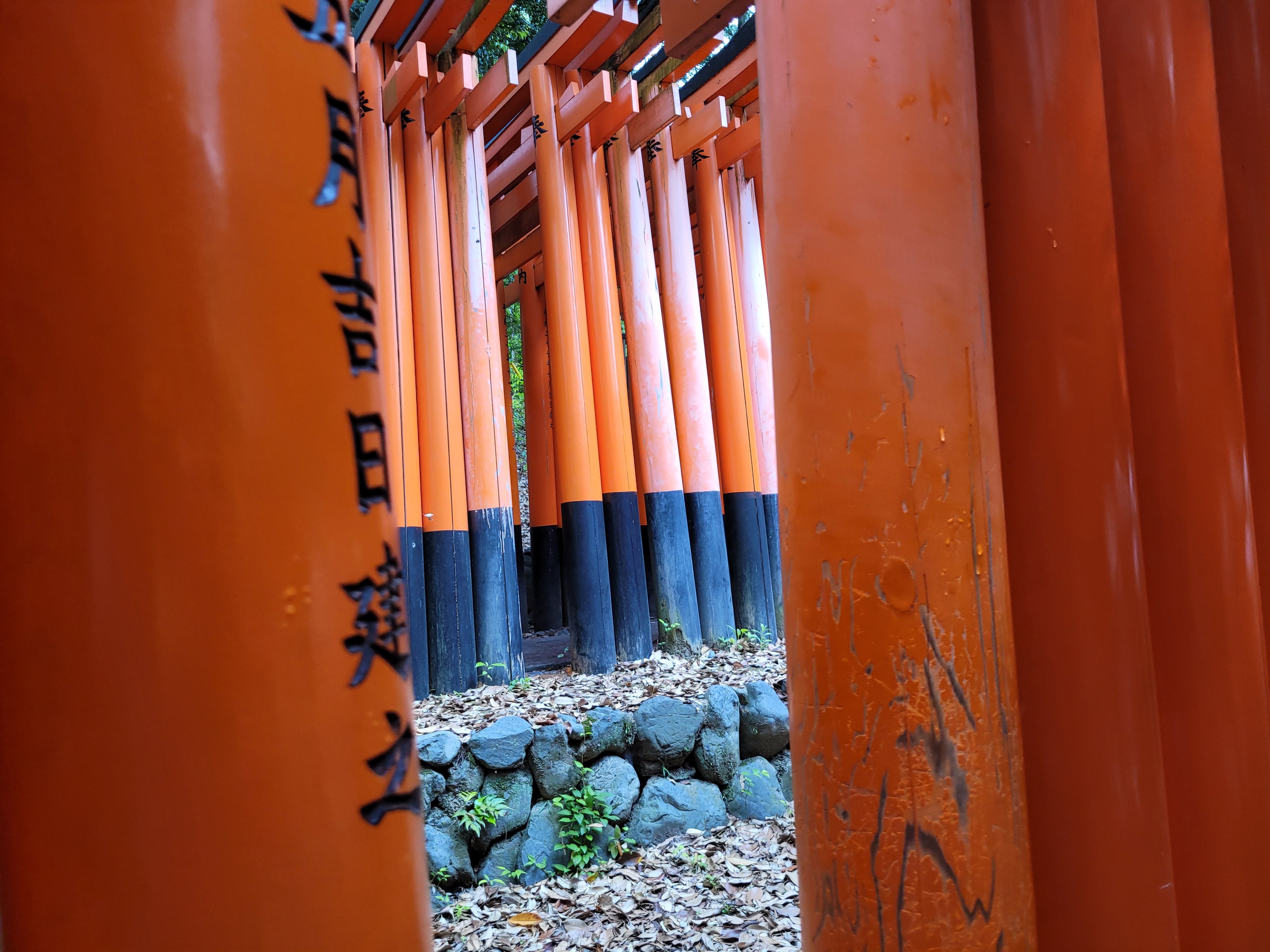
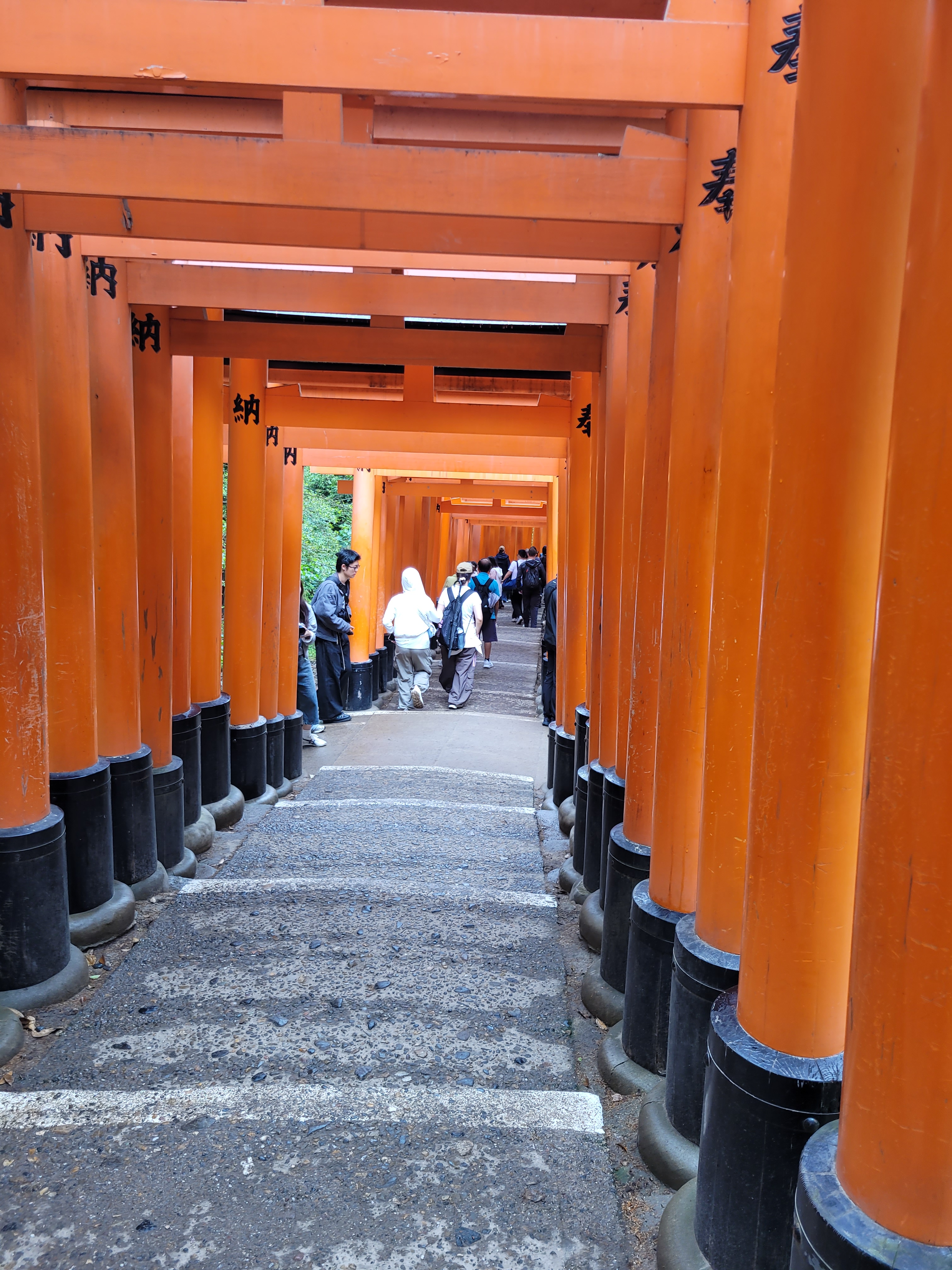
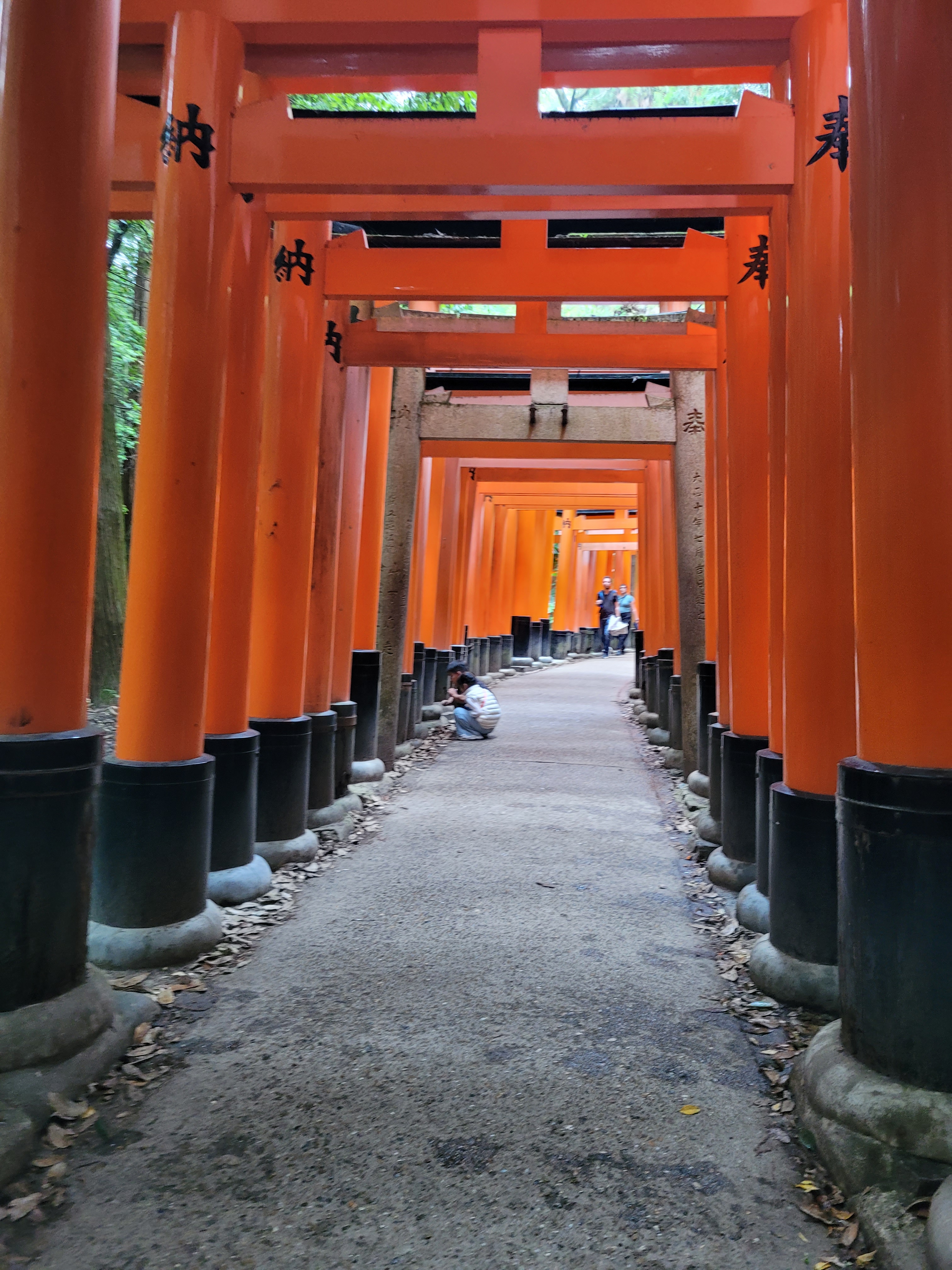
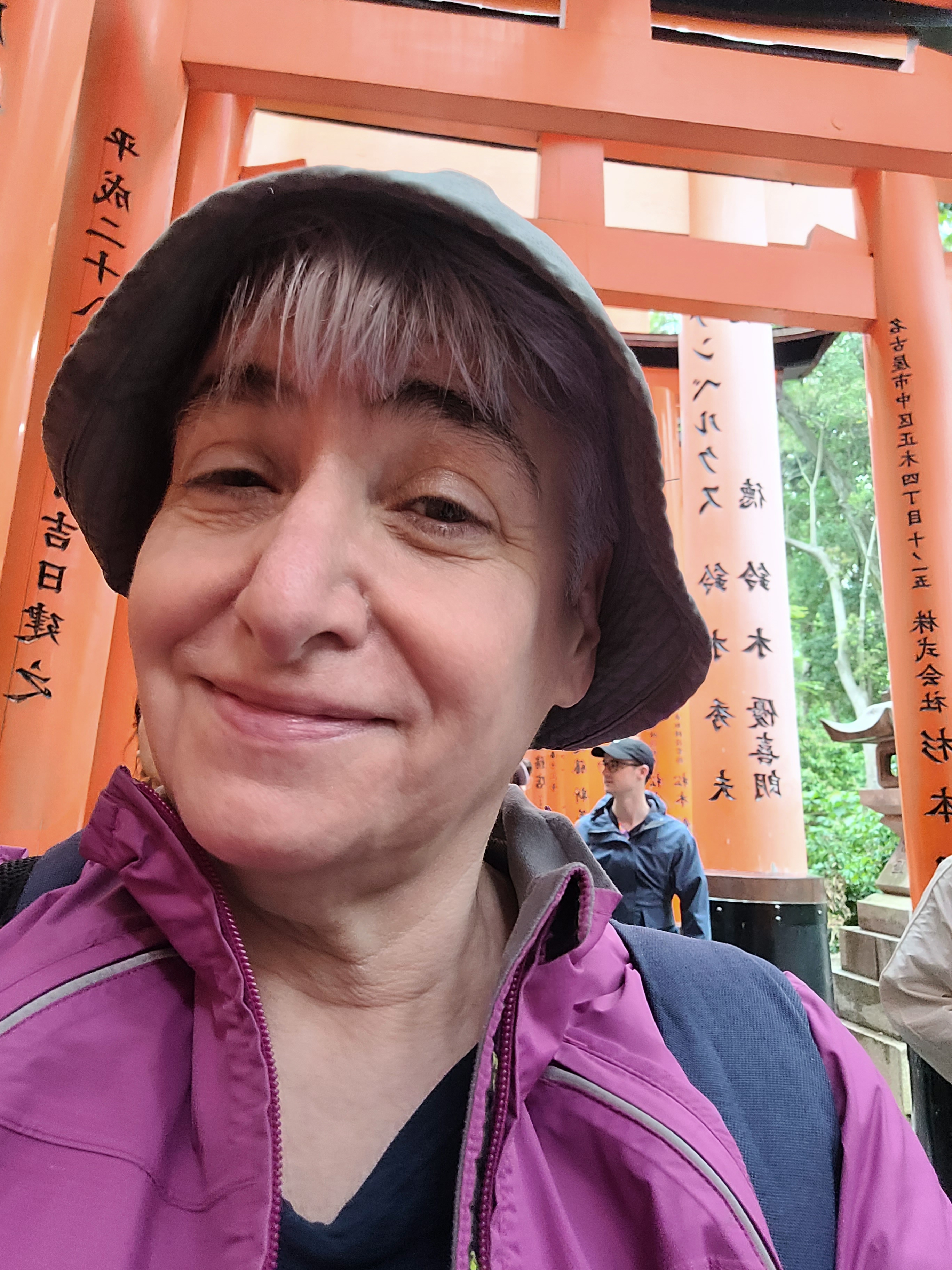
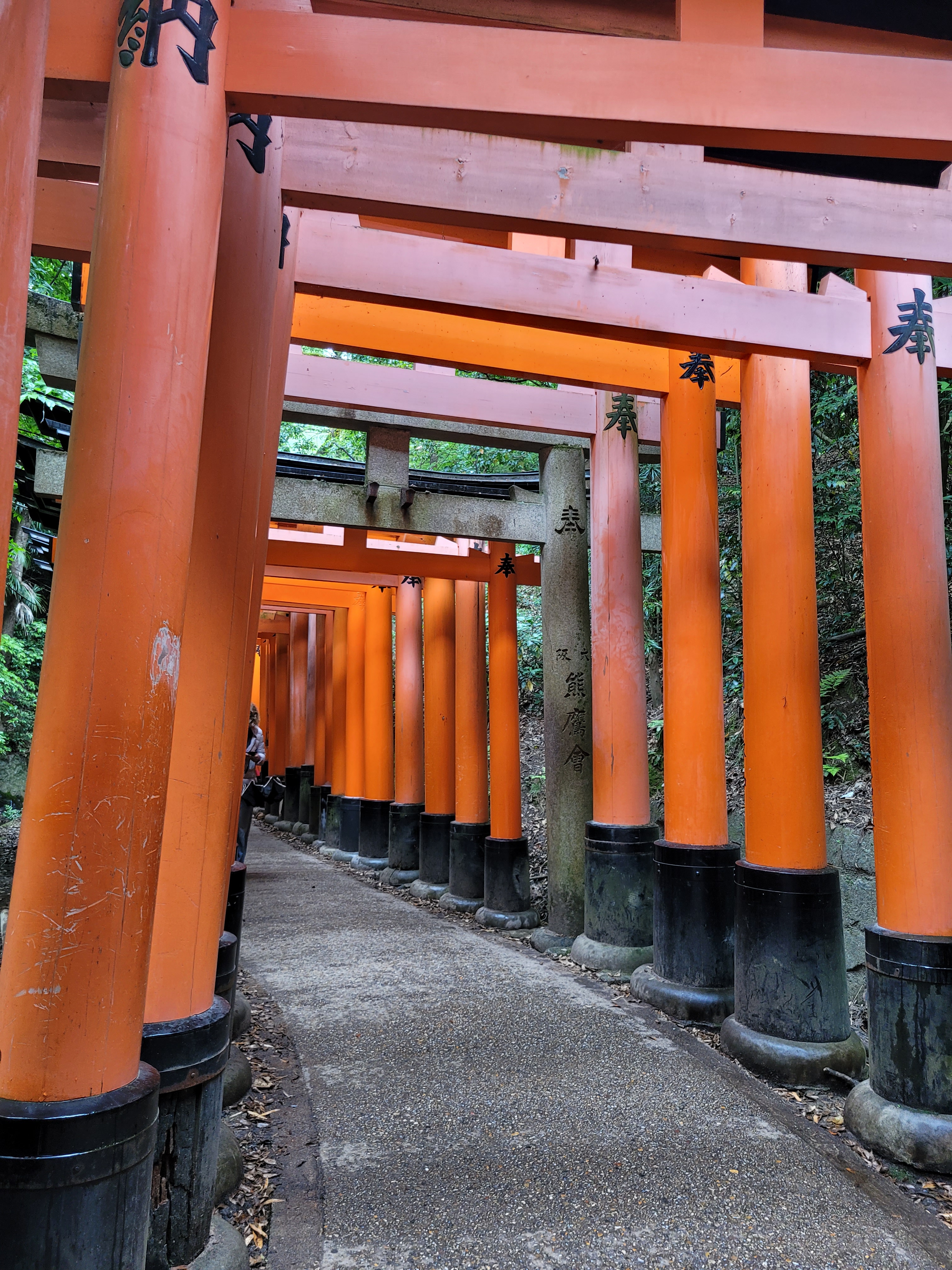
I am always pretty happy to be stomping up a mountain. Especially this one.
The very top of the Inari mountain is a 2-hour hike, which I will save for another day. I ascended as far as a most beautiful lake, which was surrounded by dozens of small shrines, and then a forest of bamboo.
And now we move to the educational part of the blog post. You did know this was coming.
The arches or gates are called torii, specifically Senbon torii (千本鳥居), or “thousand torii.” There are thousands of orange gates lining the looping path up to the various temples, and then back down the mountain.
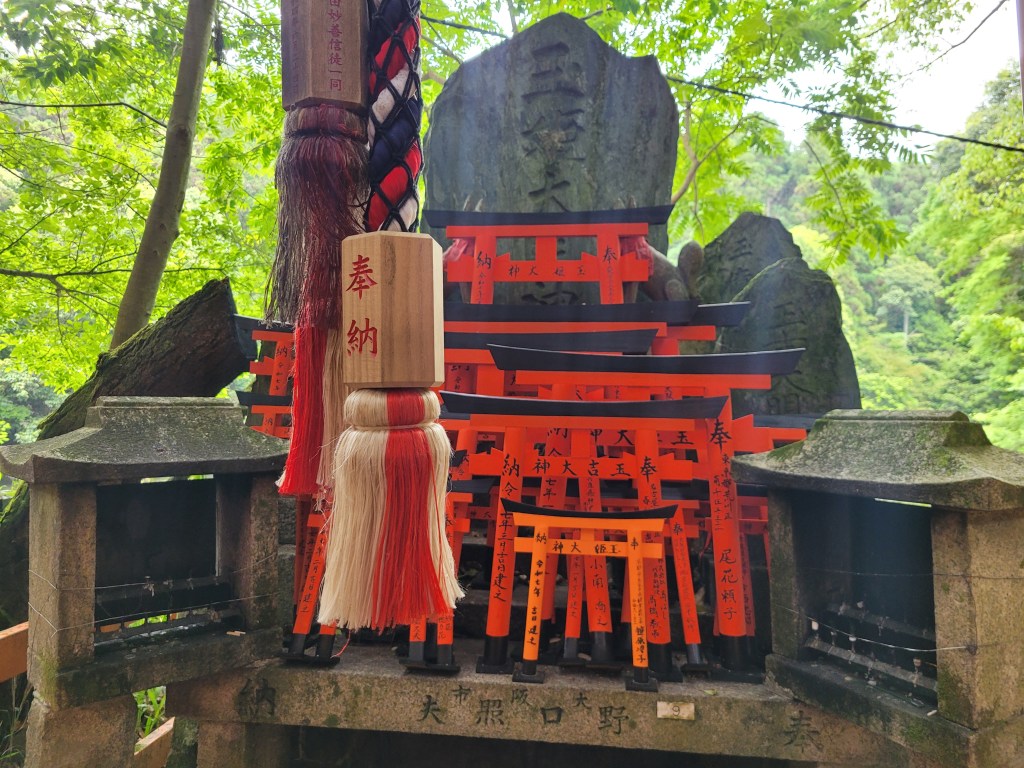
There are also hundreds of small altars along the way, made by local people over the years. Some have miniature torii, bells, and statues.
Foxes are associated with the Fushimi Inari shrine, and there are fox statues everywhere, in all sizes. The foxes often have something in their mouth related to rice: a key to storage, a sheaf of rice. Or this thing that looks like a dog biscuit.

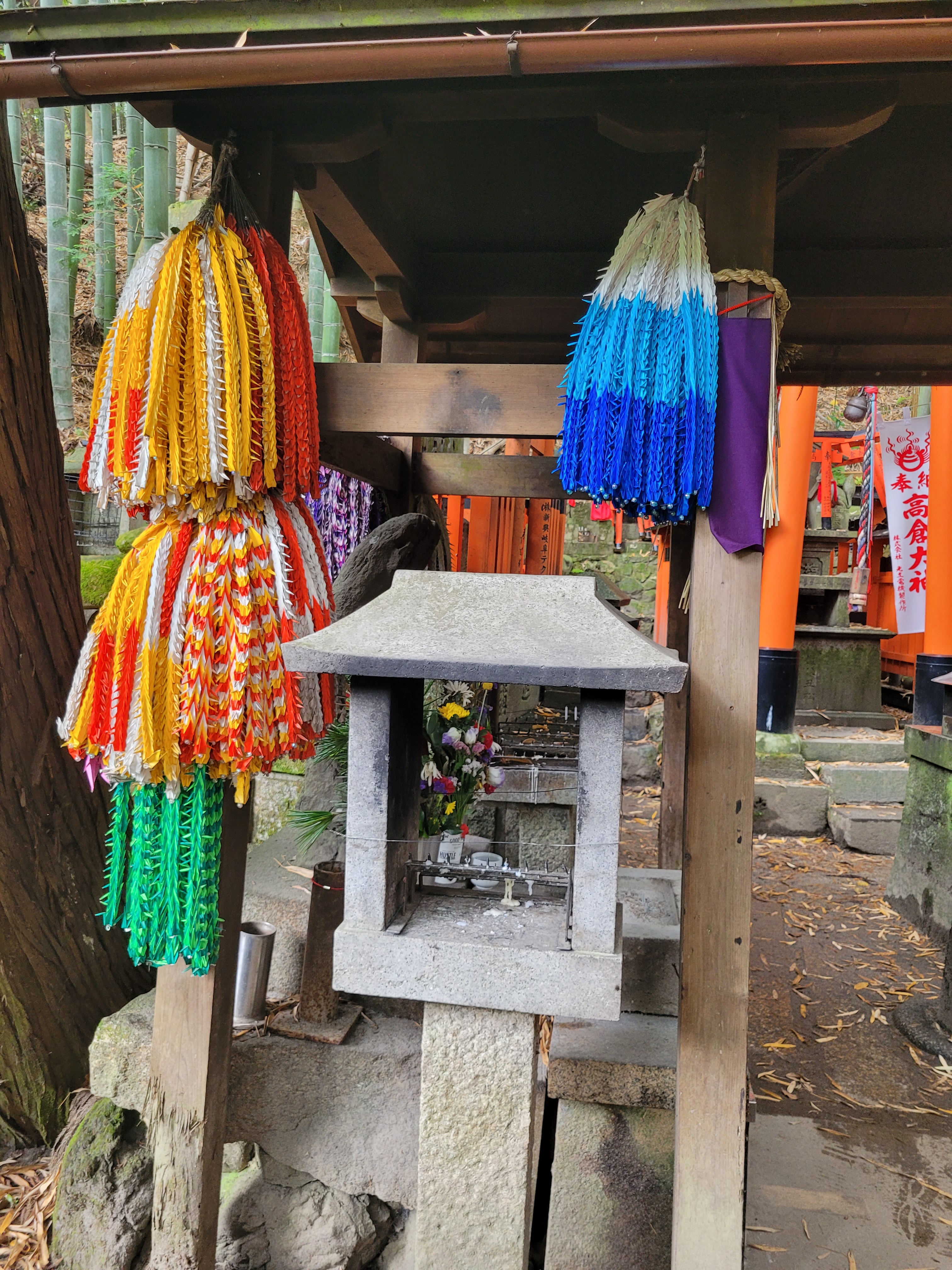


The altars are elegant, decorated mini-shrines. This one has long chains of zillions of folded paper cranes.
Large-billed crows are a regular, noisy component of life in Kyoto. I stepped very close to an altar to see this particularly bold and screetchy one:

I was only part of the way up the mountain, but was now away from the crowds, and it was so peaceful there. Visitors wandered quietly through the altars, or stood gazing at the calm lake. It had stopped raining completely and above us tall bamboo swayed and reached heavenward.

I am in a land of temples, teaching at Temple University, and adjusting to the much more peaceful tempo of Japanese life.


 Where No Mangoes
Leave a comment