
Been up Roseberry Topping yet?

This is the story of a walk that did not go exactly as planned.
The picturesque village of Great Ayton sits at the edge of the North Yorkshire Moors National Park, edging that skyline with moors.
This picture shows some lovely local fields criss-crossed by hedges and stone walls, with the rolling moors rising in the background.
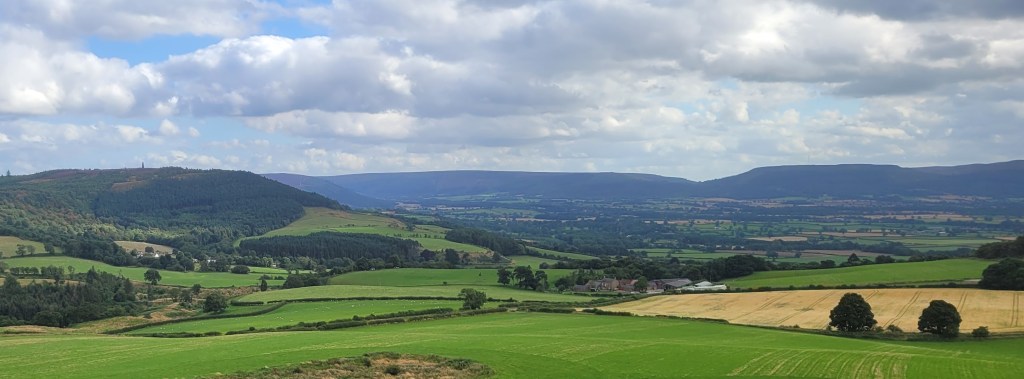
And here are more moors:


A moor is a large bump on the surface of the earth. Anywhere else this would be called a hill. But not here in Britain. “I know! There’s that word left over from 10th-century Old English, a language which nobody speaks any longer. Let’s use that!”
Moors, like hives, tend to erupt in bunches, so you end up with multiple moors, which then comprise an entire landscape of moors, a moorland. Moors comprise ancient, wind-sheared land, and they are punctuated by slopes, valleys, streams, and peaty bogs. And that is more than enough Geology for one day.

Heather is currently in full purple bloom on the moors in North Yorkshire Moors National Park, where I took this picture.
Moorland is not farmed, and thus it is the perfect place to dump a bunch of sheep. The practice here is to spray paint colored stripes on the sheep so you can tell which belong to whom, and then just leave all the sheep there forever to eat the scrub, bracken, and heather flourishing everywhere on a moor. I suppose at some point someone shows up to count them, and shear their woolly coats to make some nice warm cardigans, which, and I am not kidding, you might need to wear around here in August.
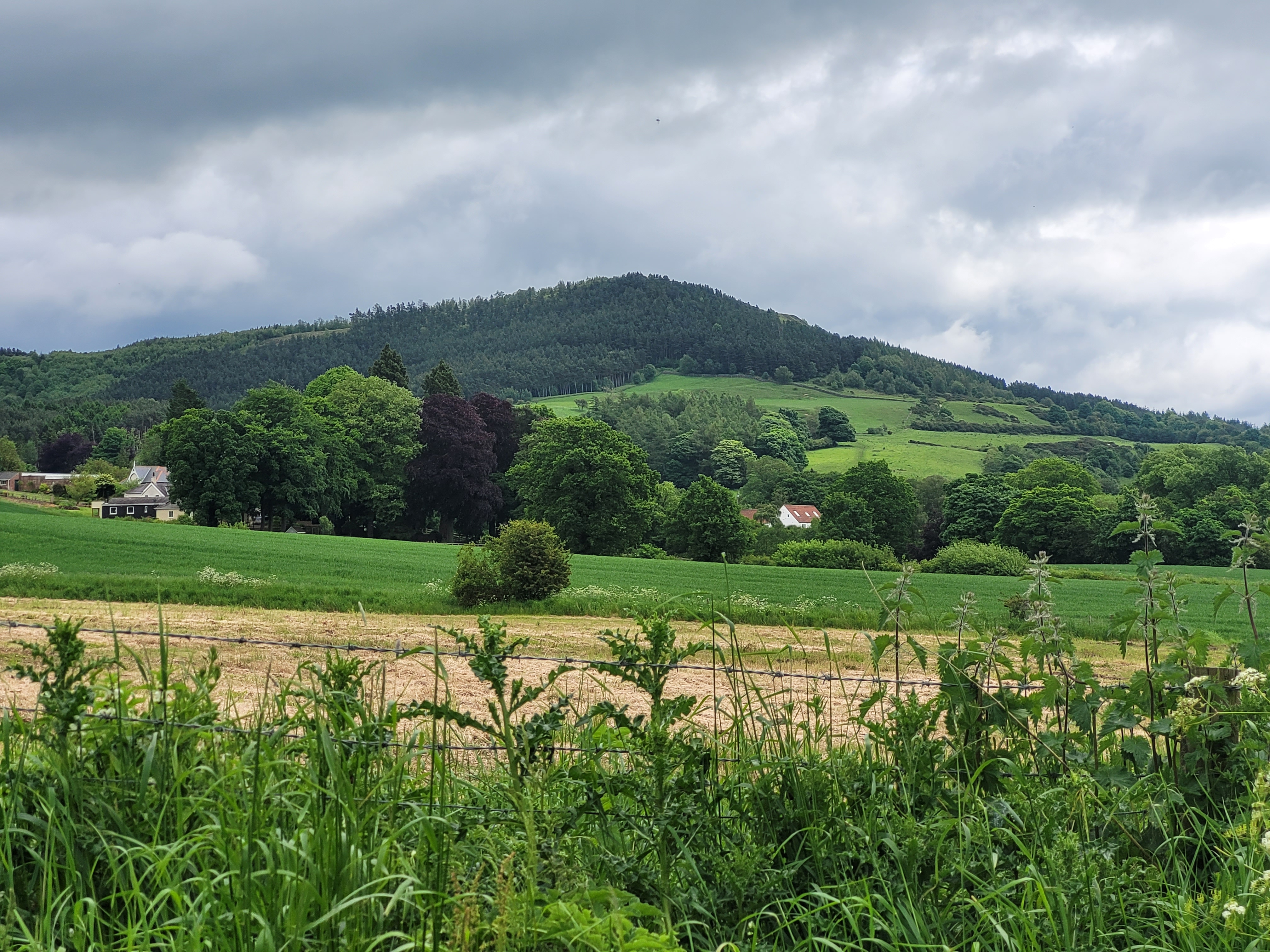
Roseberry Topping is the closest moor to Great Ayton, and it provides a truly striking backdrop for this little village.
Here is Roseberry Topping in a picture I took across some fields.

Here are views of Roseberry Topping I took approaching Great Ayton:
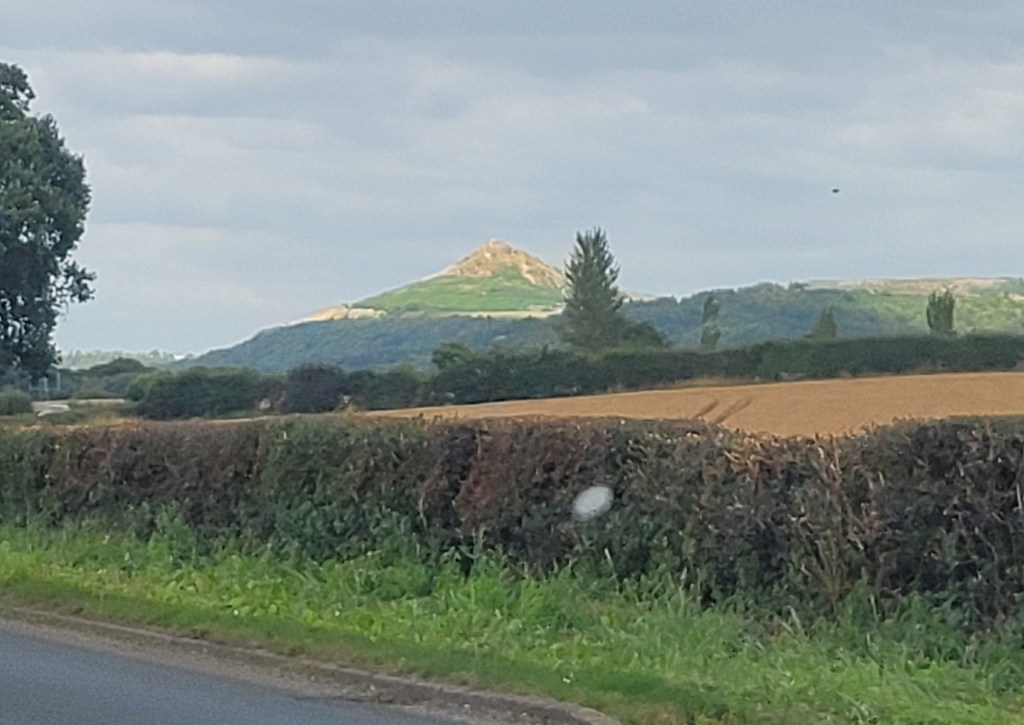

It took me a really long time to stop calling it Raspberry Topping. That just made more sense to me. And what is a “Roseberry” anyway? After a lot of asking around here I finally found something out: the name is somehow a variation of The Hill of Odin’s Hill, or Odin’s Hill Hill, from Norse Viking language. Frankly I prefer thinking that it derives from Raspberry! Like: gigantic Viking-era Raspberries! It is probably a good thing that no one has ever asked me to teach historical linguistics.
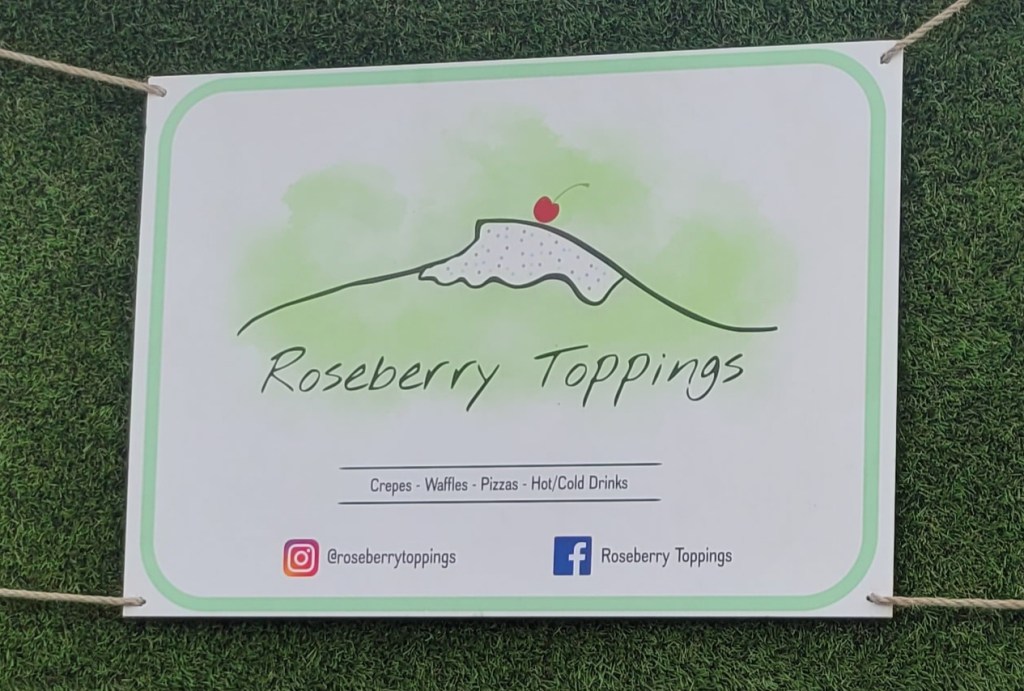
But I was delighted to discover that someone had seen the potential in the name, and cashed in! This was a very popular food truck at the Great Ayton Village Fete in June: crepes and waffles served with Roseberry Toppings. Including Raspberry.
So, anyway, Roseberry Topping is a moor. A moor with, you might have noticed from the pictures, the top blown off.
I could explain here that it is a moor which was mined a long time ago for something iron mineral-y, and the moor top crumbled due to the destabilization from the mining, but as previously announced, we have already finished with Geology for the day.
It was inevitable that I would hike up it, because that is what one does around here. In Great Ayton, “Have you been up Roseberry Topping yet?” comes after “Hello!” in 8 out of 10 conversations as soon as they hear my foreign accent.
So of course I packed some lunch, a bottle of water, sunblock, and off I went to climb Roseberry Topping.
The nearest route starts at a footpath just down my road, and that takes you into some woods.

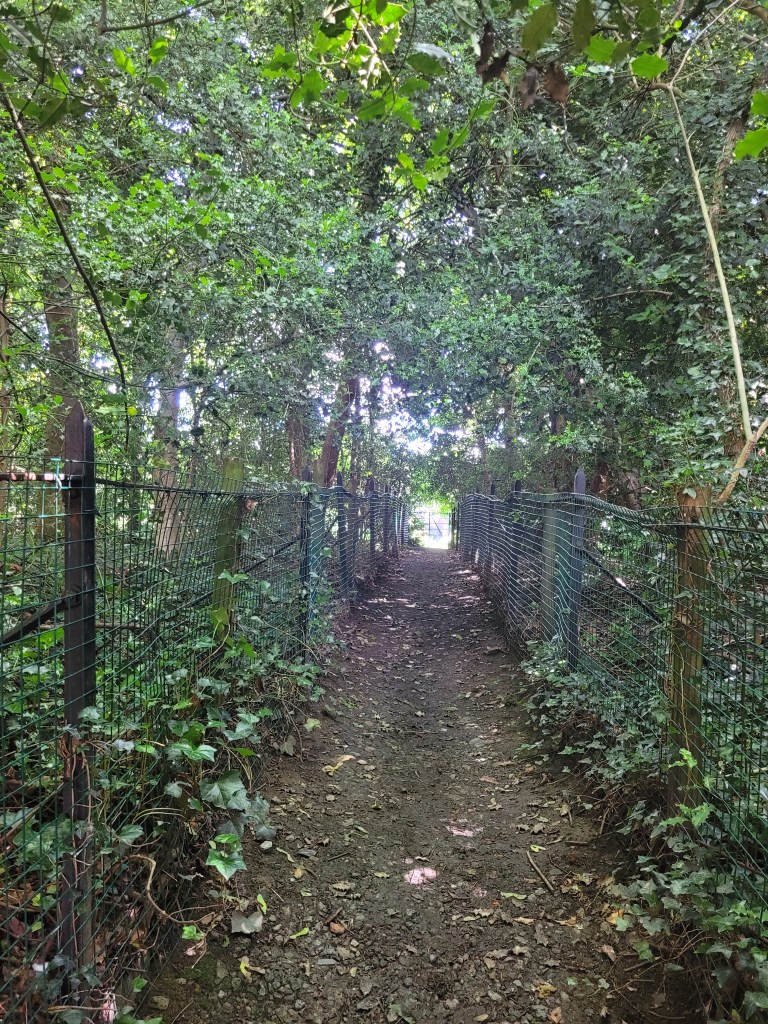

I am showing you the exact route. You walk through woods and fields, and then more woods and fields. Along the way, you go through various gates.


Field, woods, woods.
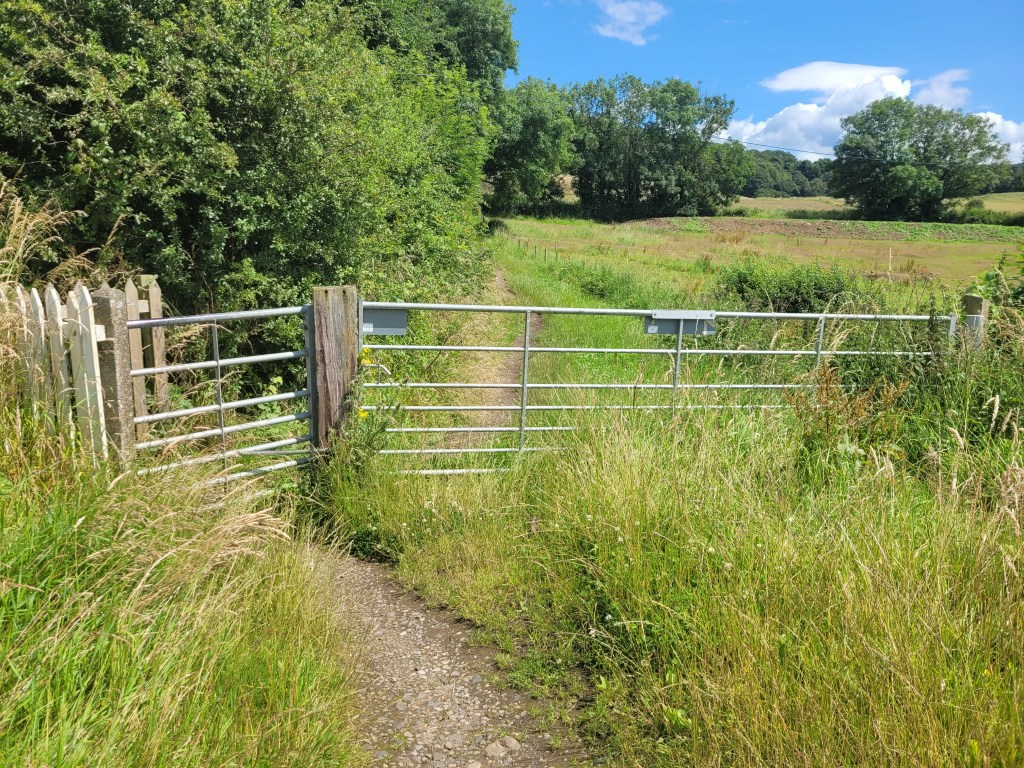
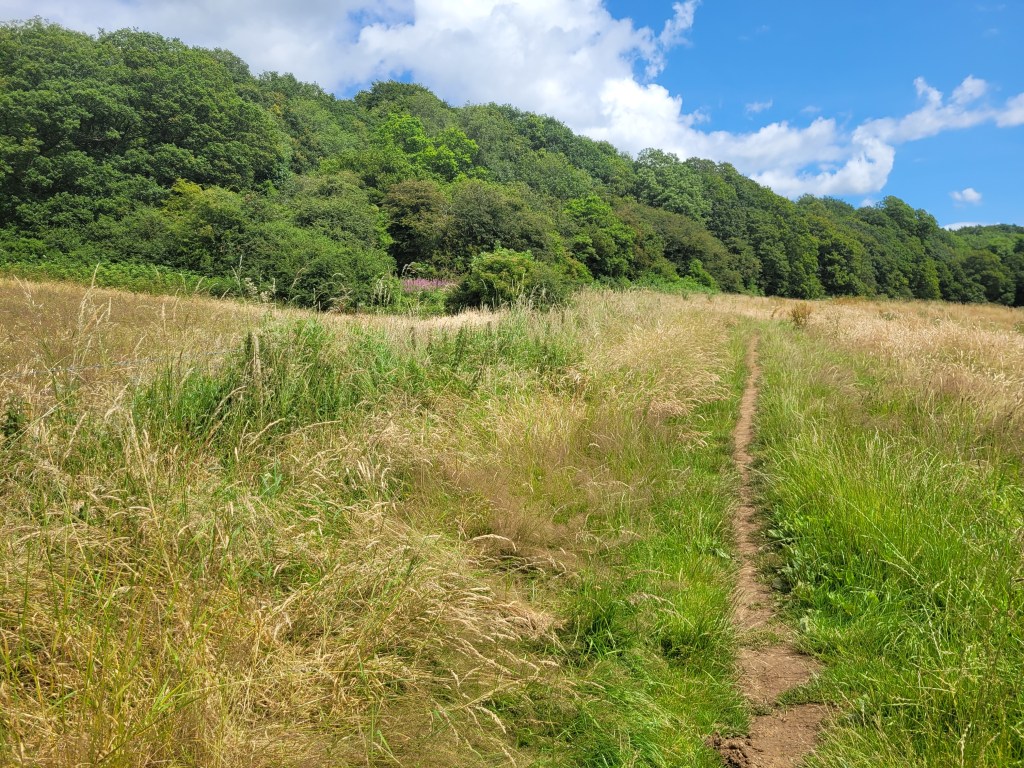
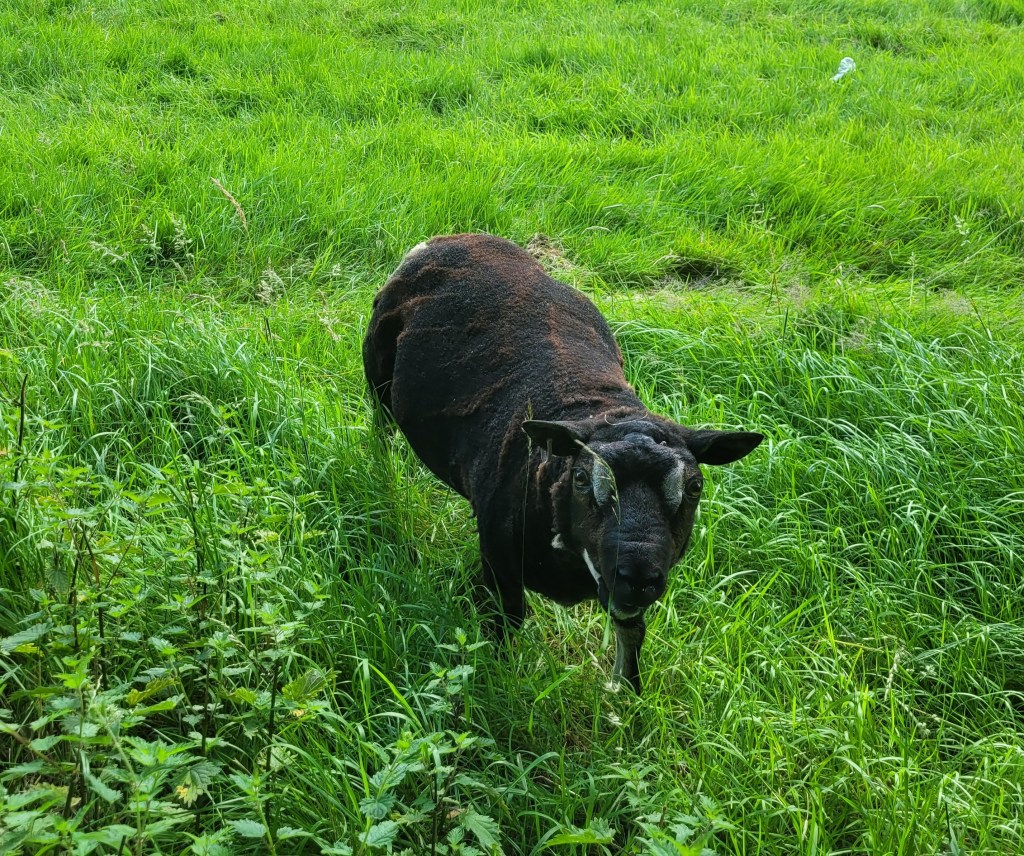
Gate, field, sheep. You can stop and say “Hello!” to the sheep. Followed by “Been up Roseberry Topping yet?”
Cross the railway tracks.
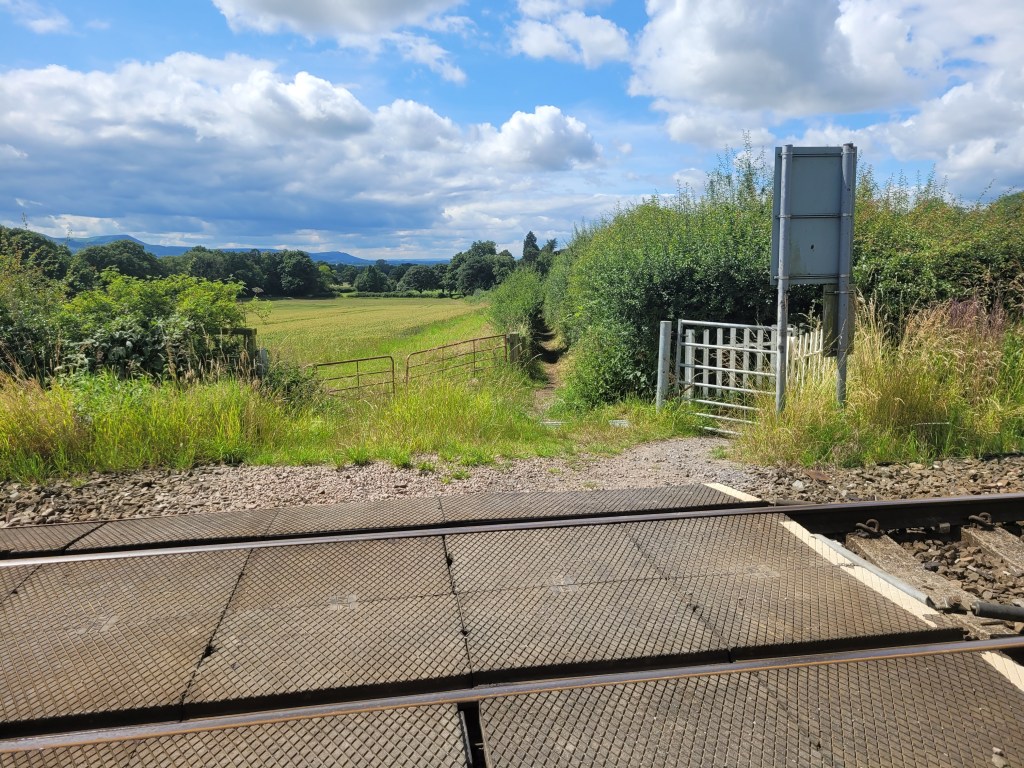
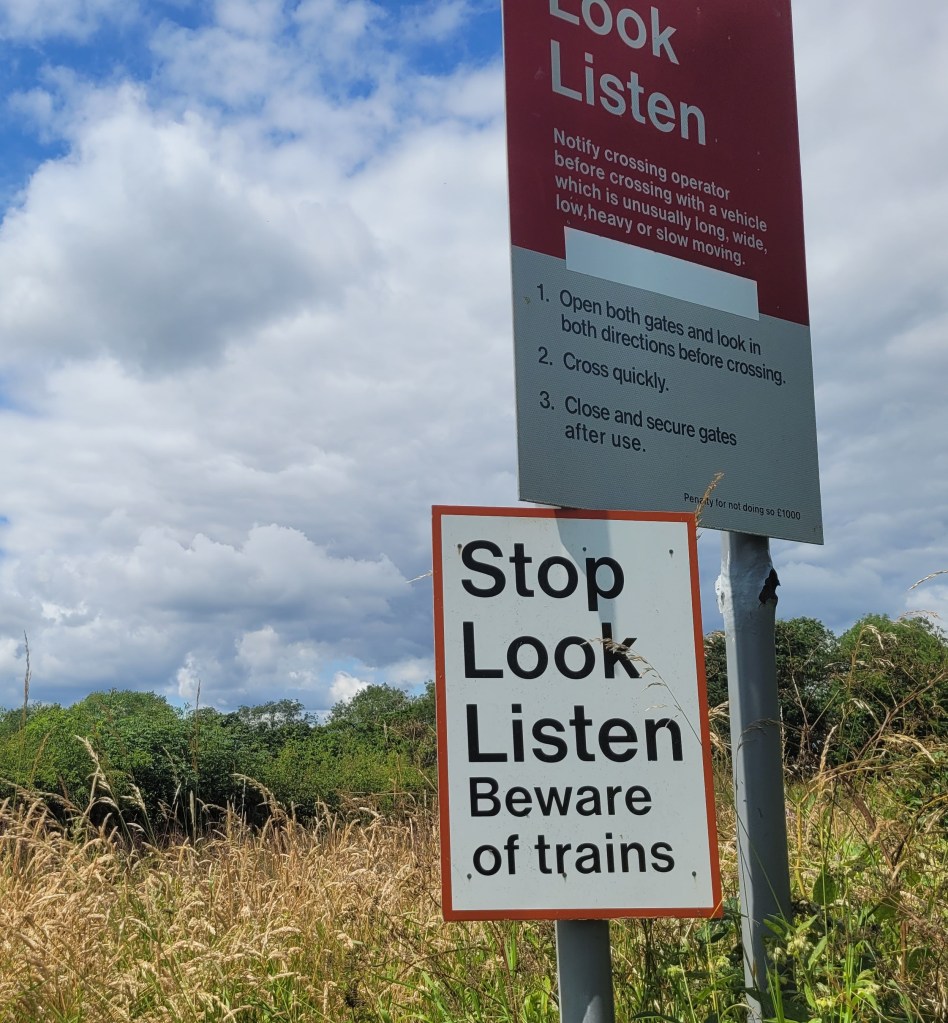
Always beware of trains.
More fields.
~~~~~~~~~~~~~~~~~~~~~~~~~~~~~~~~~~~~~~~~
So, I have been thinking all summer about how village life seems to work. There is a sort of critical mass factor to villages. The size needs to work, so the village has enough stuff going on, but is not so large that it is always full of strangers.
Some villages are made up of a “Welcome To _____” sign and a “Thanks For Visiting _____” sign, with four houses in-between. That’s a very tiny village. Skutterskelfe is that sort of tiny village — a wee village with a gigantic name. I biked there one day just to see what it looked like.

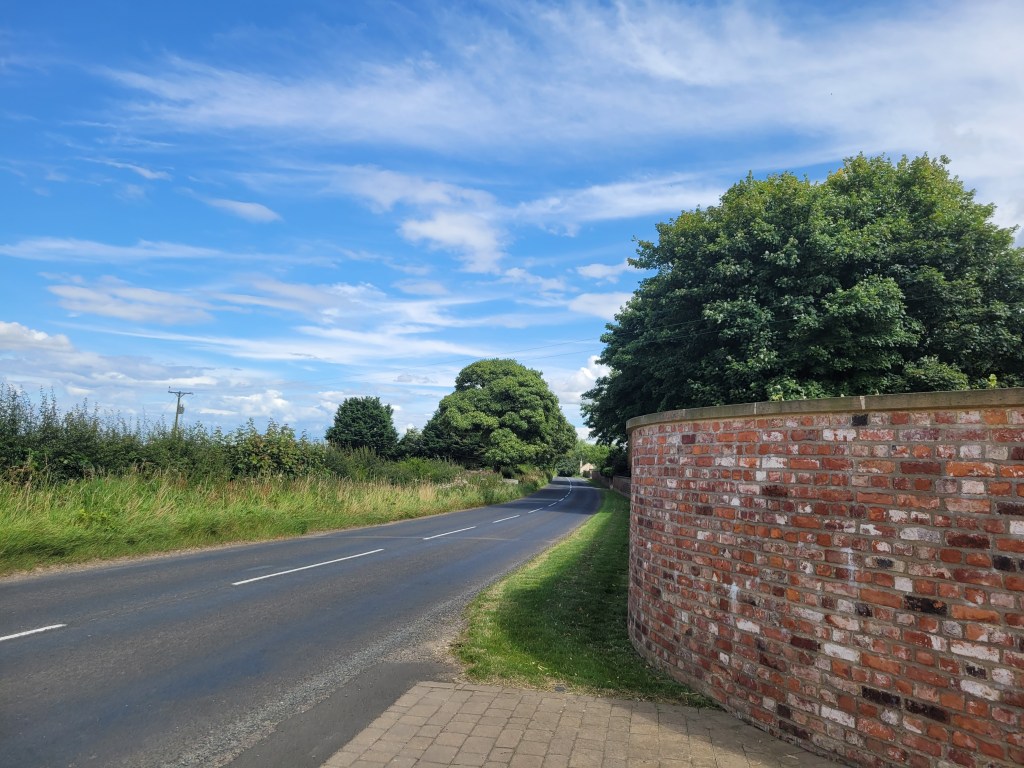
This is downtown Skutterskelfe.
Other villages might have a pub and a few shops. Swainby is that sort of village. Swainby has a pub, a village store for groceries, a gift shop, and a cafe. No one will ever starve in Swainby, but they might run out of underwear. But Swainby is still quite small. The Swainby nightlife, I hear, underwhelms.
Stokesley and Guisborough (pronounced Gizzbruh) are each nearby, and larger than Great Ayton. Each has an actual commercial district, with a decent choice of places to eat and shop. But being larger, a local Great Aytonian explained to me, means that these are places “where you’d always be seeing people you don’t recognize.”
The thing about the size of Great Ayton is that apparently if one stays here a while, you’ve seen practically everyone. Then when you walk onto the Village Green for the annual Village Fete, or into any of the four pubs, it’s all familiar faces. It’s a community.
~~~~~~~~~~~~~~~~~~~~~~~~~~~~~~~~~~~~~~~~
Back on my hike, the footpath started to go up an incline.
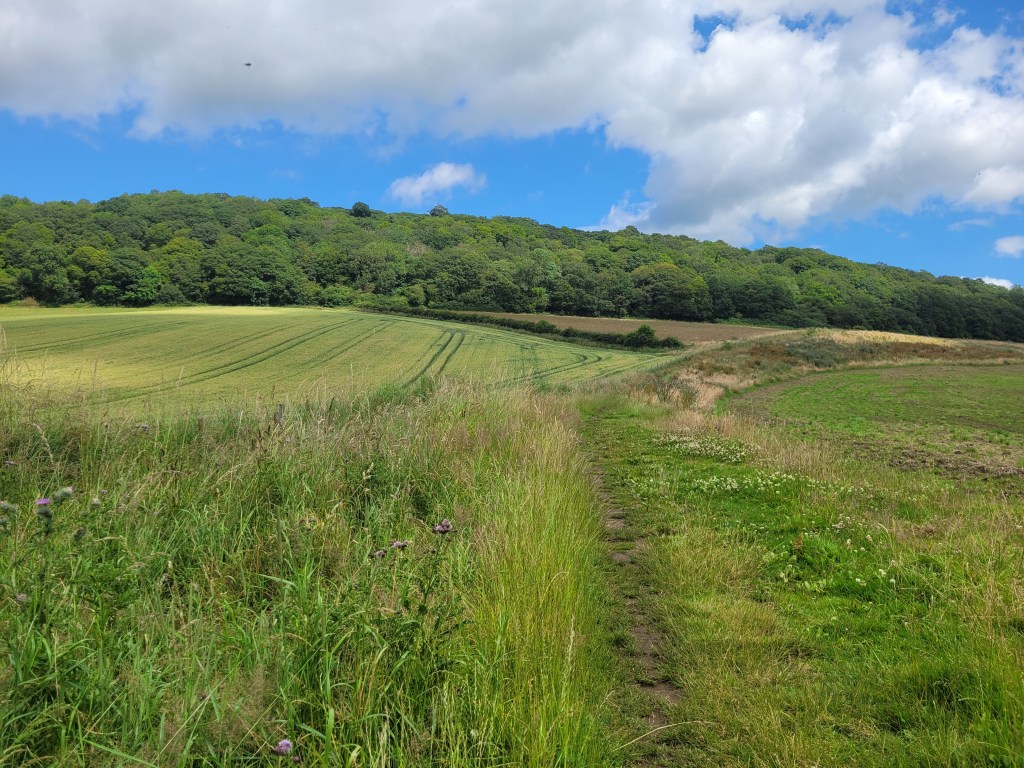
I’d walked exactly this far once with my old buddy Jarvis, to the bottom of this picture. That is where we sat down for a rest before turning back.
Jarvis is not one for climbing up hills these days, but he is still reliably entertaining company.

One can honestly say that Jarvis is always outstanding in any field.
Jarvis had pointed from our rest spot that day, saying, “Aye, you just walk up this path, and over that way.” He waved vaguely to the left, and continued: “The path takes you t’Roseberry Topping.”
Jarvis knows all of this terrain from his youth, having grown up in the area, when he rambled and roamed with his mates and pals, and had all kinds of hijinks and adventures throughout the moors. Now, decades later, his memories are clear and his stories full of surprising details, and there may still be police warrants out for him.
My plan on this solo hike was to follow Jarvis’s instructions exactly: continue up the path, go left, keep following the footpath, and there would be Roseberry Topping. Onward I walked.

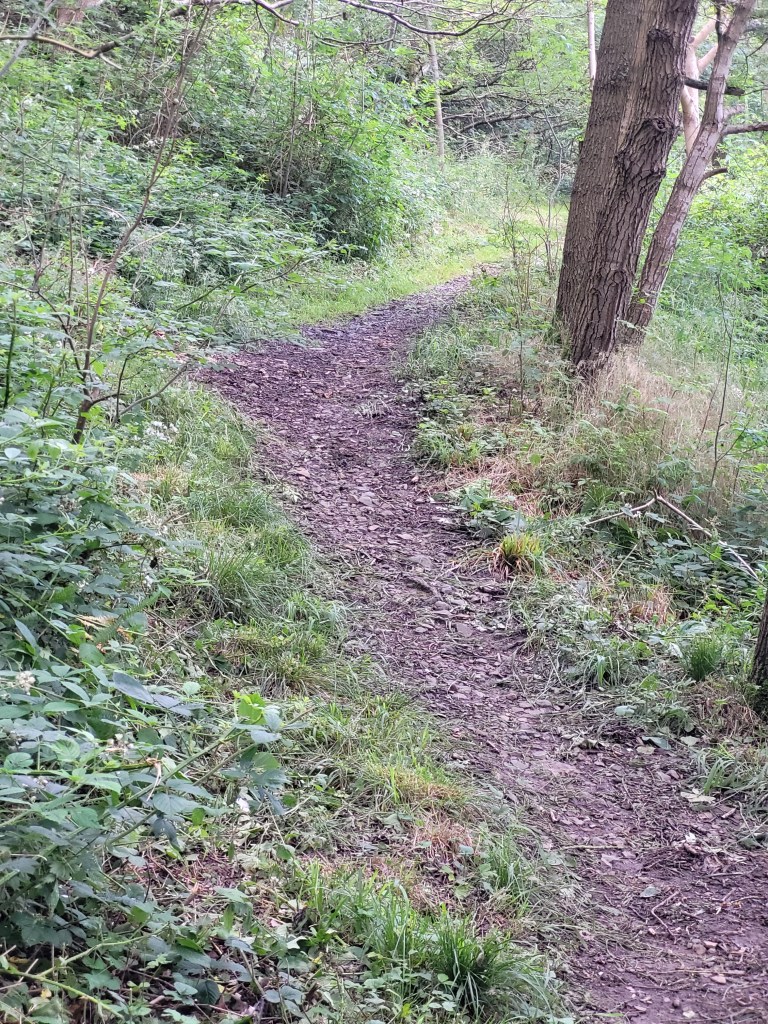

Now I was somewhere in the woods, and you can’t see any moors from inside the woods. So you can’t navigate by seeing your destination. You have to just keep walking. I kept walking.
You might be able to navigate from helpful signs provided by the National Trust, Great Britain’s honored national organization which oversees preserved heritage sites and lands, and promotes responsible tourism.
Except there weren’t any signs except this one. Which was empty in the middle. It’s basically a National Trust frame. Omitting the crucial information: Where the heck am I?

Because at this point in my walk, I was starting to realize that I had no idea where the heck I was.
There was one other sign I encountered:

Oh, that’s a good sign! I am being sarcastic. That sign is garbage. That sign tells you that each direction of the path you are on is a Bridleway. A Bridleway means you are allowed to ride your horse there. But it does not tell you where you are.
And anyone can tell which path is used as a Bridleway on account of it’s the one with the horse poop.
The National Trust will shortly be receiving a rather sharply worded letter from me about their acute under-utilization of signage on these footpaths. I shall even make some very useful suggestions about sign content. I will suggest: “The Right Way to Roseberry Topping.” And: “The Wrong Way To Roseberry Topping.” That would do nicely.
I had been walking for a while now. I was starting to wonder if someone had moved Roseberry Topping.
~~~~~~~~~~~~~~~~~~~~~~~~~~~~~~~~~~~
Being a big-city dweller for most of my life, my normal state is that urbanist hypervigilance where you are always alert to imminent danger. Because cities are full of danger! A solo walk in a wooded urban area would be a fearful undertaking for many. You’d have to watch over your shoulders, and listen for twigs crackling underfoot nearby.
One of the nicest things about embedding for an entire summer in a picturesque North Yorkshire village has been the complete lack of crime in daily life.
Now if you are a regular watcher of American Public Television, which many of my readers are, that last sentence makes absolutely no sense. Because there are dozens of tv mystery shows set in rural British villages where someone gets murdered weekly! For many of us, that is our total knowledge of UK village life: absolutely full of quirky people, clever detectives, and piles of corpses.
Midsomer Murders, Grantchester, Broadchurch, Unforgotten, Father Brown, Sister Boniface, Vera, A Touch of Frost, Inspector Morse, Endeavour, Inspector Lewis… it’s a very long list.
The point is: small British villages are incredibly dangerous places to hang out in! It is a real wonder, with all the regular murders going on in small British villages, that anyone is left.
With the murder rates so high, it should be just the detectives left standing by now: Poirot, Brother Cadfael, Inspector Barnaby and his latest Detective Sergeant Ben Jones/Charlie Nelson/Jamie Winter, Father Brown and Mrs. McCarthy and Lady Felicia Montague and Sid Carter and Bunty Windermere…
Midsomer Murders has been running now for 27 years, with a total of 150 episodes. At an average of three murders each episode in Midsomer county, all around the picturesque but lethal villages of Midsomer Wellow and Badger’s Drift and Causton, that’s approximately 450 corpses in one series alone.
It is a true miracle that village life goes on at all.
Here in Great Ayton, the only “crimes” reported lately (with great umbrage expressed dramatically on social media) have been people occasionally not cleaning up after their dogs on the local sidewalks, and some very wonky parking outside the local Coop grocery store.
~~~~~~~~~~~~~~~~~~~~~~~~~~~~~~~~~~~
On I walked. The path went up and got much narrower. Occasionally I had to elbow my way through some obtuse ferns. I have never seen the point of ferns, actually. Green, frondy, but do they have a purpose?


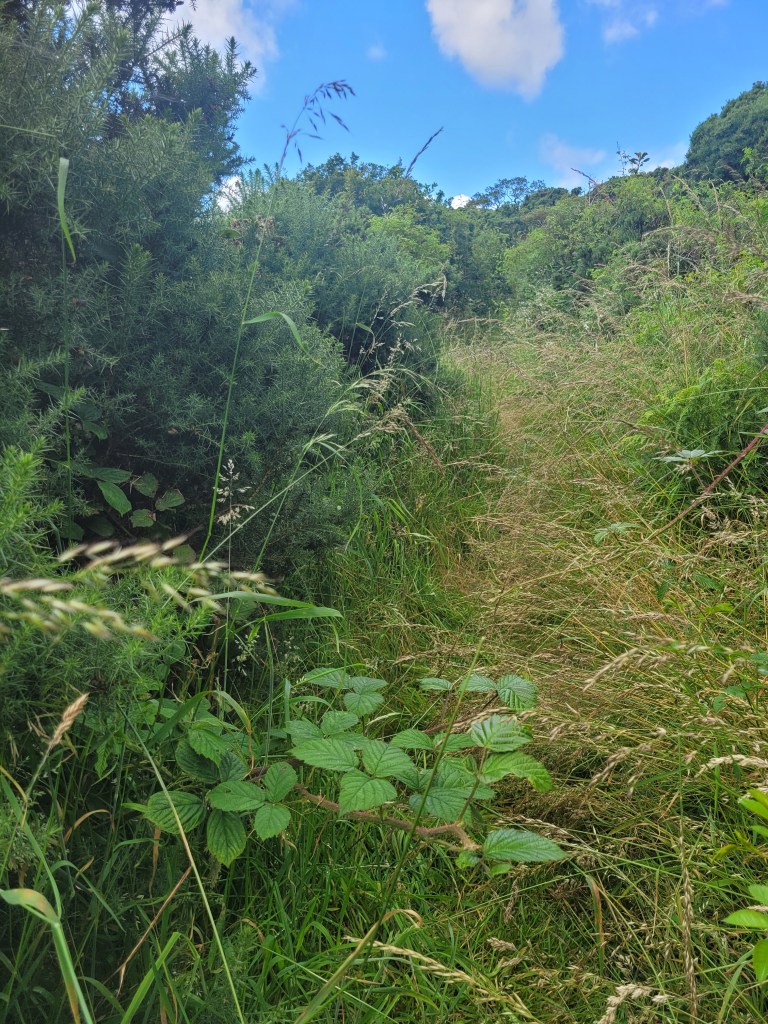
On the whole, the English landscape is full of lovely native plants, all in full bloom now that it is high summer.
~~~~~~~~~~~~~~~~~~~~~~~~~~~~~~~~~~~~~~
Quick Multiple-Choice Nature Quiz
What is the charming name of this charming pink native flower which grows abundantly in England?
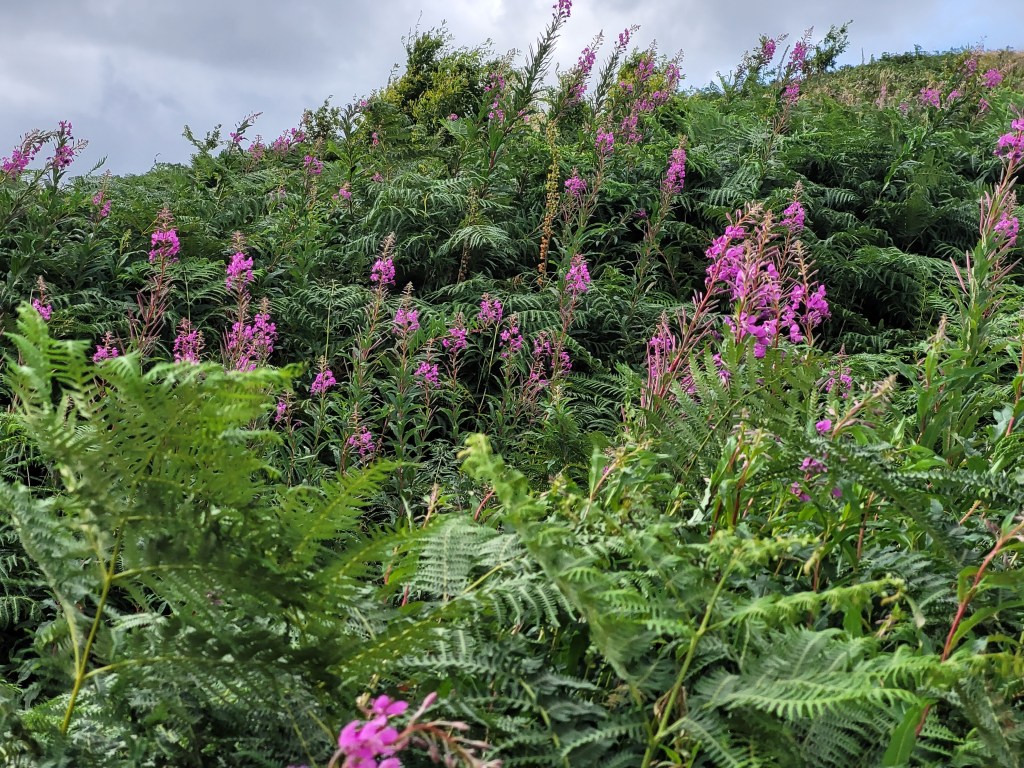
Is it called:
a) True Blush Corn Cockle ?
b) Pink Vale Lily Wort?
c) Rose Bay Willow Herb?
d) Plum Dip Honey Weed?
ANSWER: You will have to ask Jarvis, because I can never remember.
In summer the hedgerows and woods are packed full of glorious daisies, goldenrod, morning glories, wild roses, berries, and poppies.
But some native English plants bite. Walking through English native plants can actually be full of peril.
Allow me to introduce you to the main bearers of peril.
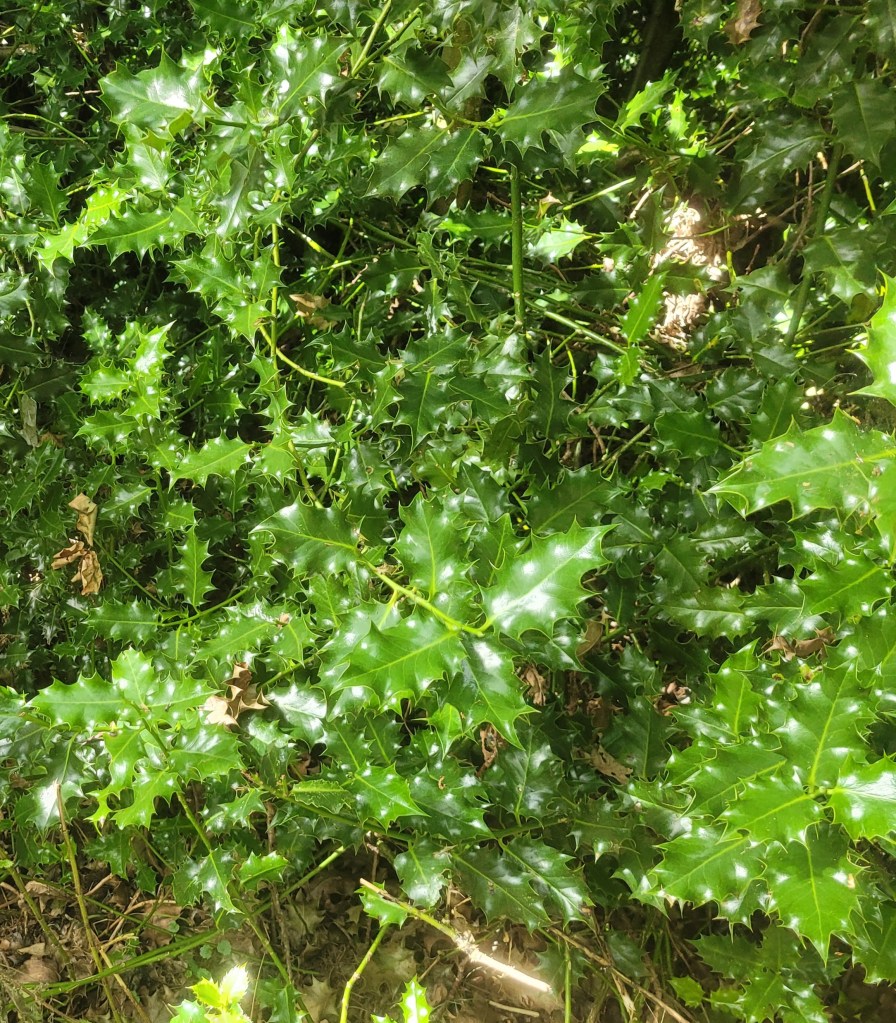
This is Holly, which grows like crazy here. It may be a favored item for Christmas home decor, but here it is a shiny green pin cushion waiting to attack.
These are Nettles. They don’t look like USA nettles, as they are less spiky, and thus less obviously nettley, which explains why I casually leaned into a bunch back in June to take a picture of a peacock. With one swipe these nettles will leave your skin sore for an entire day.

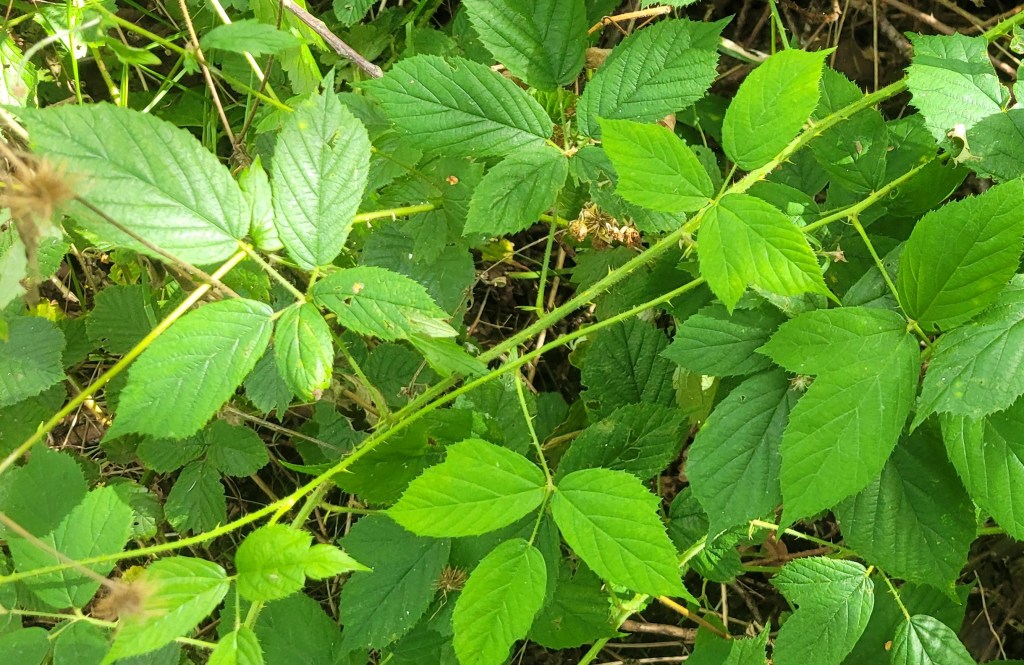
These are Brambles. At some point in the summer they produce really wonderful blackberries. But they are covered in thorns. Even the backs of the leaves have thorns. They are coming to get you.
This is a Thistle. Thistles are basically knives on a knife-covered stem.
On steroids.

(This is a nettle-sting remedy: Dock Leaves, next to my Doc Marten shoe. You rub the leaf juice directly on a nettle sting and the sting goes away — I learned this from Jarvis, who has deep nature knowledge. Dock leaves always grow near nettles, so they are easy to find when you need them. Score another win for Mother Nature!)

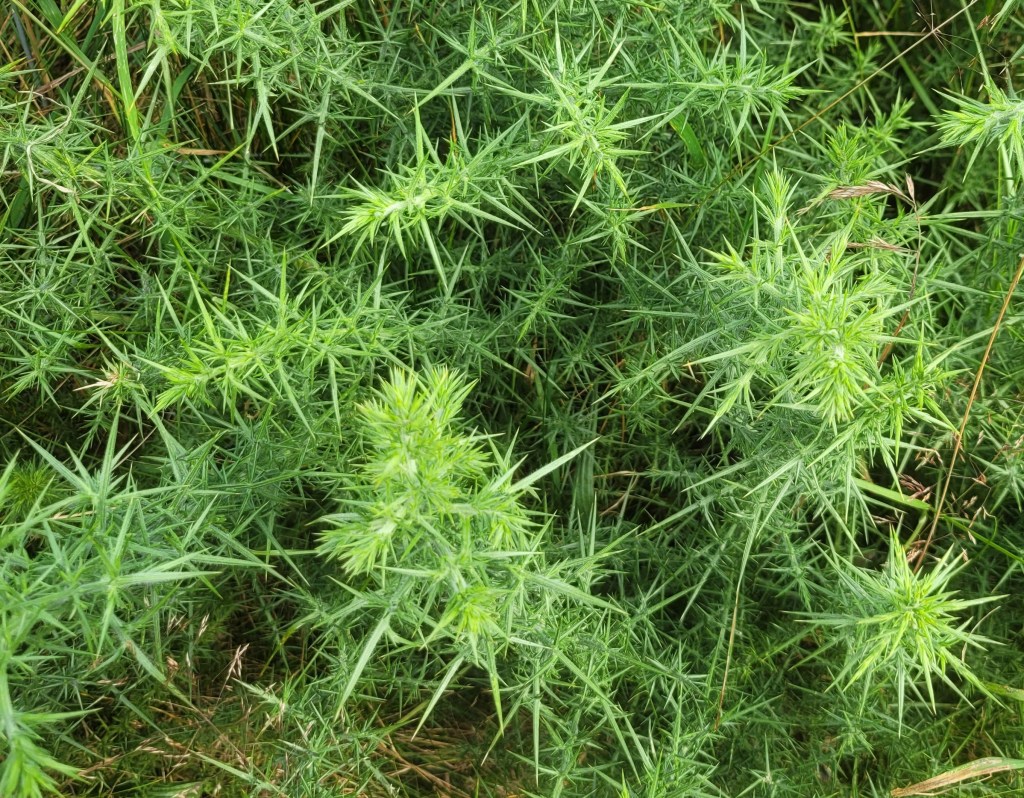
And Good God, I could not even begin to tell you what this one is. Other than green and covered in 2-inch skewers. And hungry.
My point here is that a walk in the park in the Yorkshire Moors is not always a walk in the park. There are sharp prickles and pokey spikes, so one must flippin’ beware of the plants.
~~~~~~~~~~~~~~~~~~~~~~~~~~~~~~~~~~~~~~~
Pause for a Quick Nature Quiz:
What is this a picture of?

a) A stunning natural vista featuring lush botanical elements in the foreground.
b) Your imminent demise by lethal flora.
ANSWER: All of the above. You were pretty much cooked as soon as you looked at it.
~~~~~~~~~~~~~~~~~~~~~~~~~~~~~~~~~~
Back on the hill, I had now wandered into a BMX/ mountain bike track which someone had installed at considerable altitude.
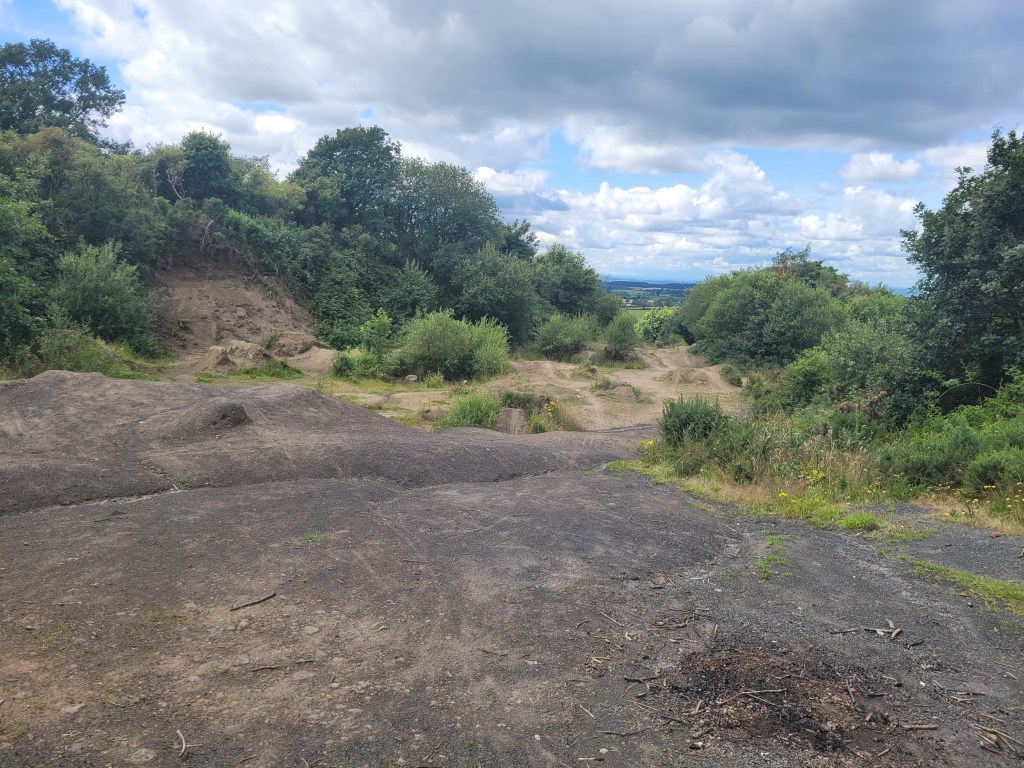
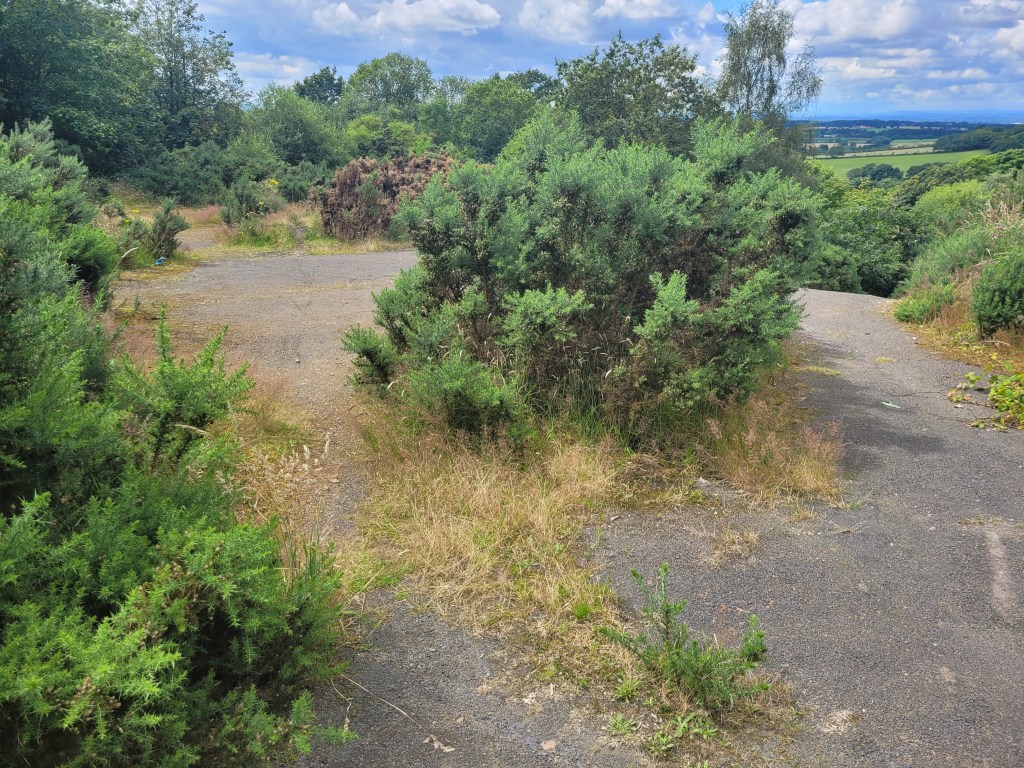
That’s all very nice, but I was not looking for a BMX/mountain bike track. Where on earth was Roseberry Topping? Although wherever the heck I was, the occasional views across the moors were pretty wonderful.
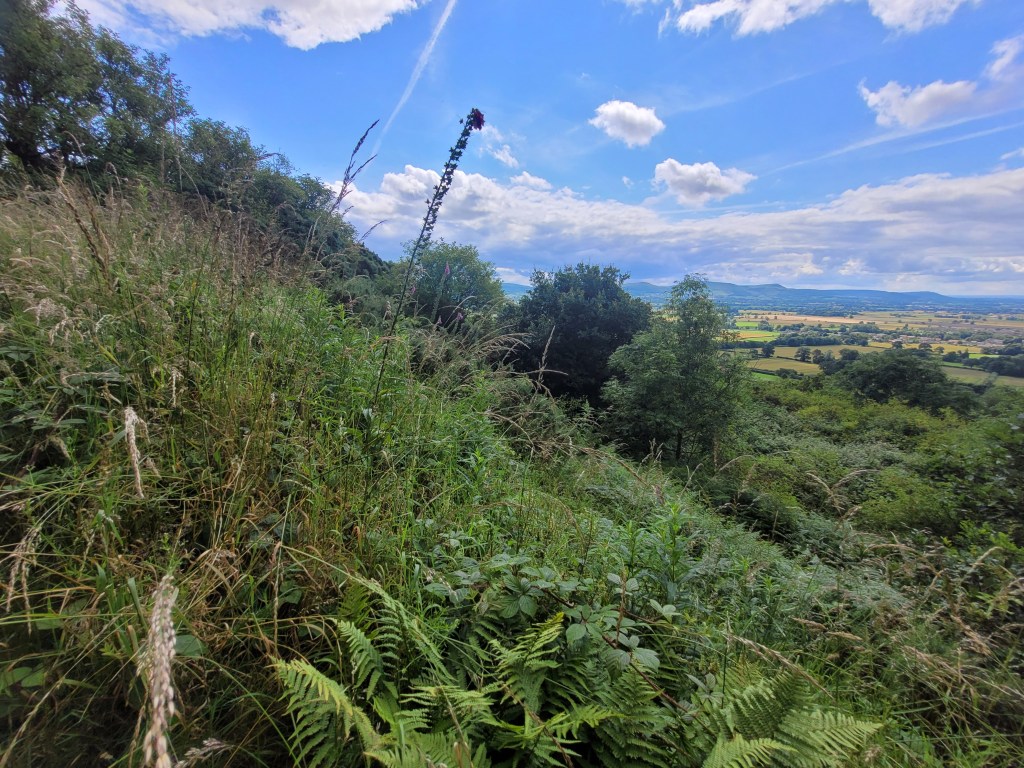
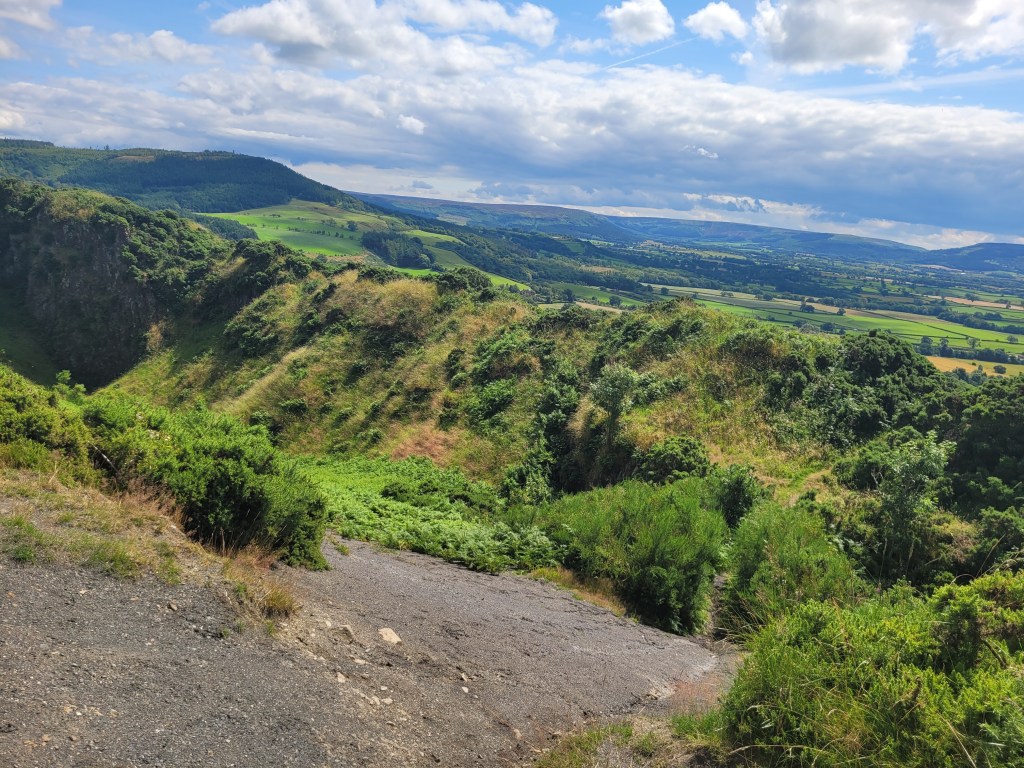
And there were ripe raspberries everywhere! I picked and ate mouthfuls, spitting out the seeds as I walked.
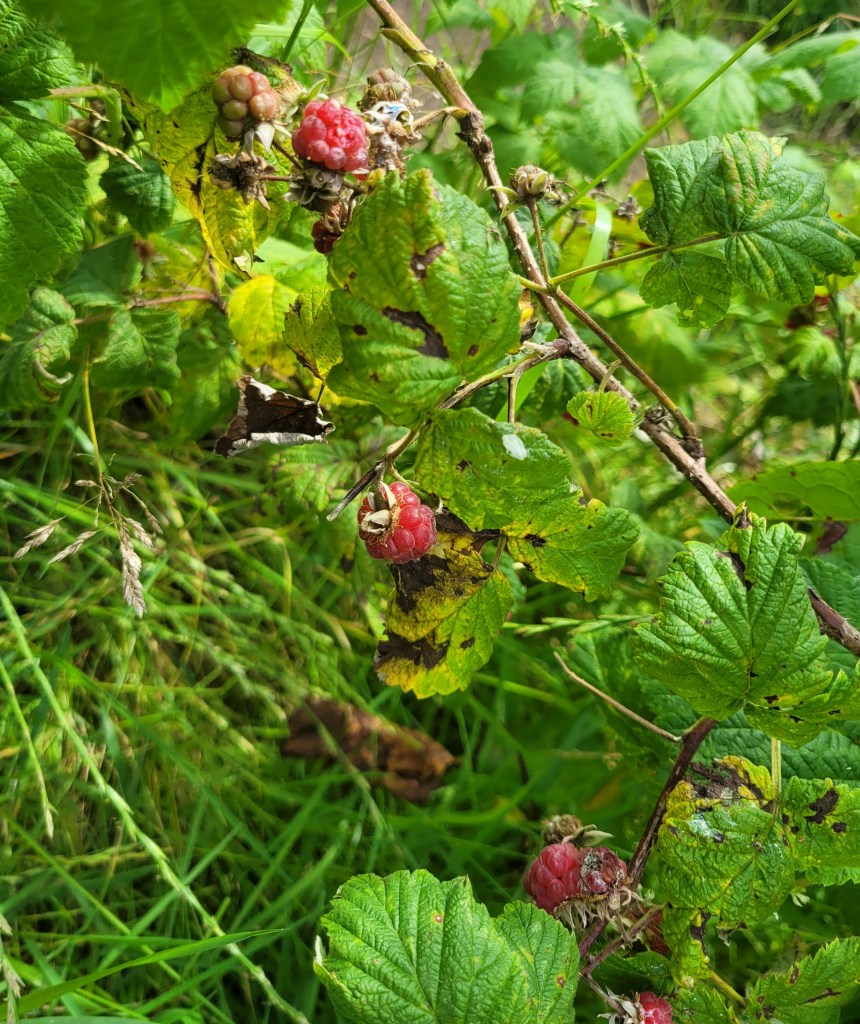
Turns out there are wild raspberries atop Roseberry Topping.
Now fueled by raspberries I continued on, eventually reaching a super steep summit, at the edge of an old quarry. I had been hiking for two hours! Roseberry Topping must be close!

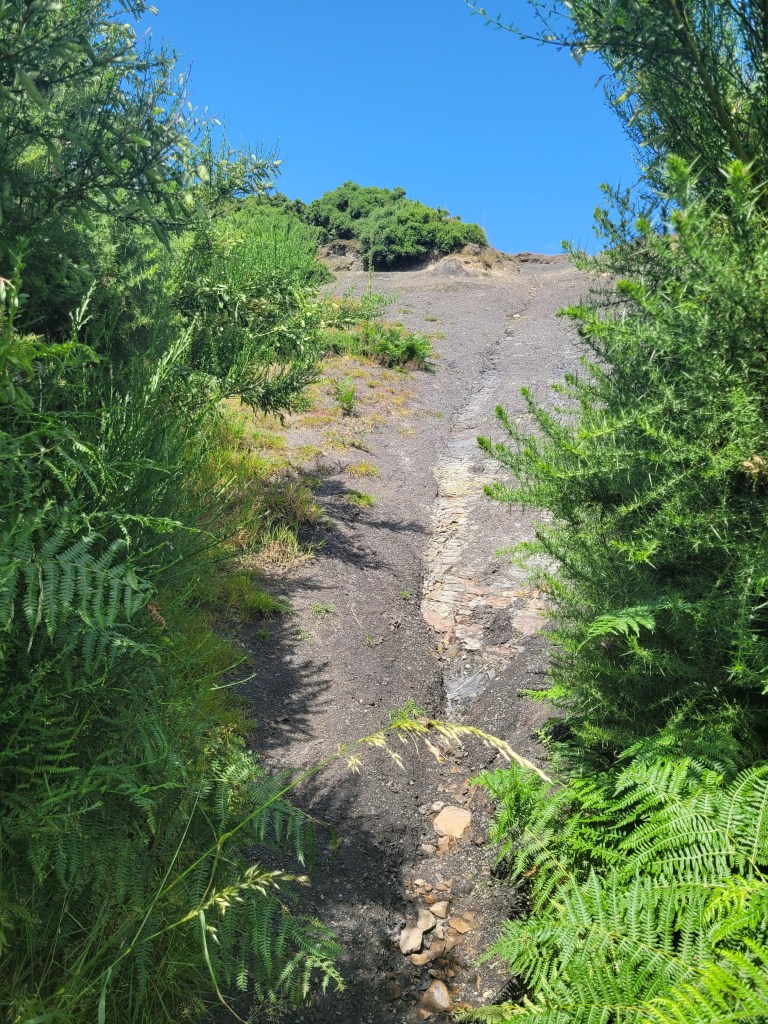
I scrambled to the top of the quarry, so I could finally see where I was!

Where I was, was still miles from Roseberry Topping.
There it sat in the distance, all the way over at the horizon. I was nowhere near my destination.
Clearly I had zigged when I should have zagged.
This walk was not turning out as planned as all. So I sat down under a tree, where I could still see Roseberry Topping, just an inch tall, waaaaaay off in the distance, and I ate my lunch.
~~~~~~~~~~~~~~~~~~~~~~~~~~~~~~~~~~~~~~~
The historical figure who has bookended this entire 8.5-month sabbatical voyage has been, oddly, Captain James Cook, the 18th-century nautical explorer.
There is a monument on the Big Island of Hawaii at the place Cook fell and died at the hands of furious native Hawaiians. The Big Island of Hawaii was my first stop, back in December. And Great Ayton, North Yorkshire, where I have spent this summer, turns out to be where James Cook got his start, born just up the road, and where he grew up and went to school.
For the longest time I had Captain Cook completely mixed up in my head with Captain Hook. You know, the evil pirate in Peter Pan? Every time I heard “Captain Cook” I immediately thought of the bad guy with the hook for a hand, chased by the ticking crocodile which had eaten a clock. Am I remembering that right? Lost Boys, Peter, Wendy, Tinkerbell, Never Grow Up.
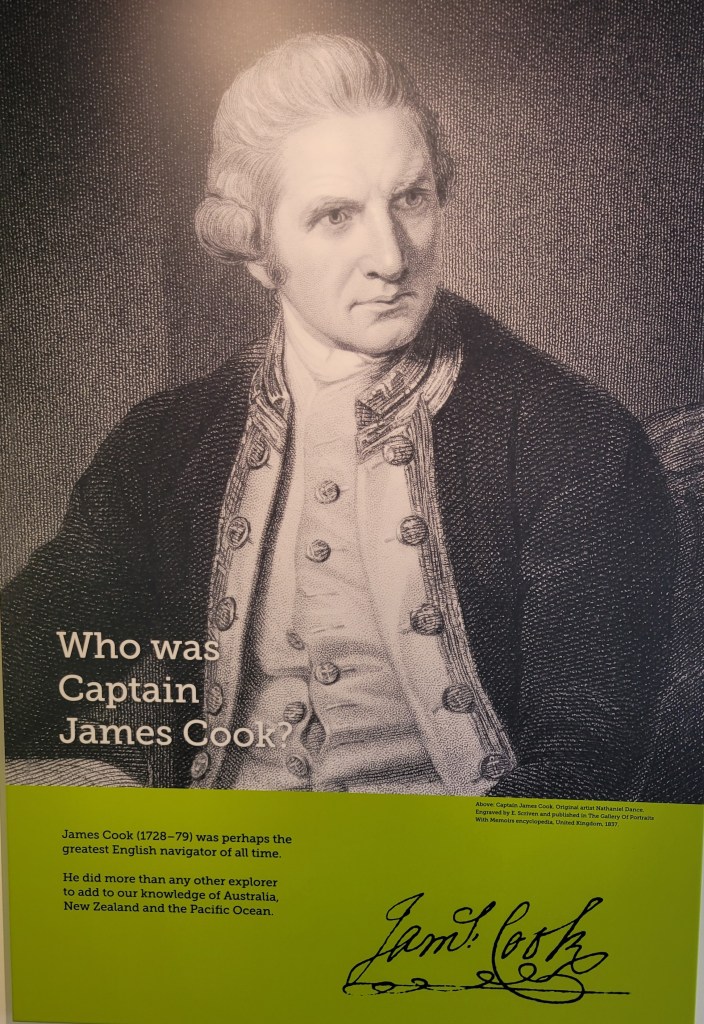
It took a while to detangle all that from the actual historic Captain, the one who’d explored and mapped the globe. Who’d had a notable career and a horrible end.
In Hawaii the Cook monument stands in a town called Captain Cook, which is right between Kealakekua and Honaunau-Napoopoo on the west side of the Big Island. It’s where Captain Cook died in 1779.

To reach the Captain Cook monument in Hawaii, you can do a long hike down the steep cliff or arrive by boat. I drove along the clifftop through the town of Captain Cook, but did not walk the trail to see the monument.
The death of Captain Cook came during his third voyage to map oceans and coasts of the globe. Cook’s celebrated voyages had already produced widely admired maps for navigation, and natural history accounts for science. But his pattern of rough treatment of the indigenous people he encountered erupted in deadly violence on this trip. Moored in this bay to repair a mast, Cook felt threatened and directed his men to attack the local king. Shots were fired, knives and hammers drawn, and Cook was dead at the hands of the Hawaiians at the end of the day.

Great Ayton is Captain James Cook’s boyhood home.
Young James Cook attended school here in Great Ayton from 1736 to 1740, in what is now the James Cook Schoolroom Museum
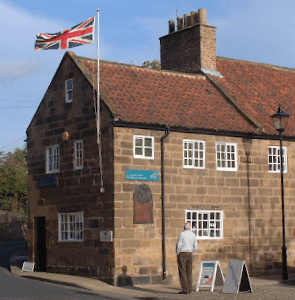
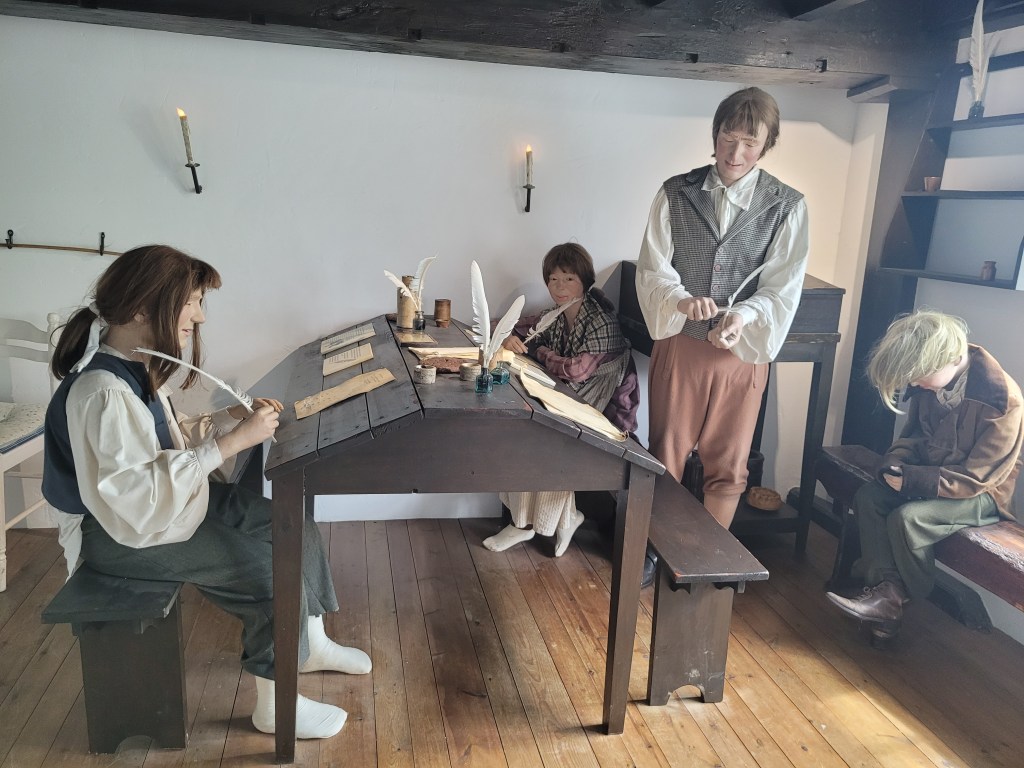
The museum has displays about Cook’s life and voyages. That is young Cook on the left, seen doing his maths in a model of the schoolroom.
There is a statue of young Cook at the edge of the Village Green, and several streets and buildings in Great Ayton bear his name. And Captain Cook has another monument, atop nearby Easby Moor, overlooking the village. You can hike up to see it. I hiked up several times.
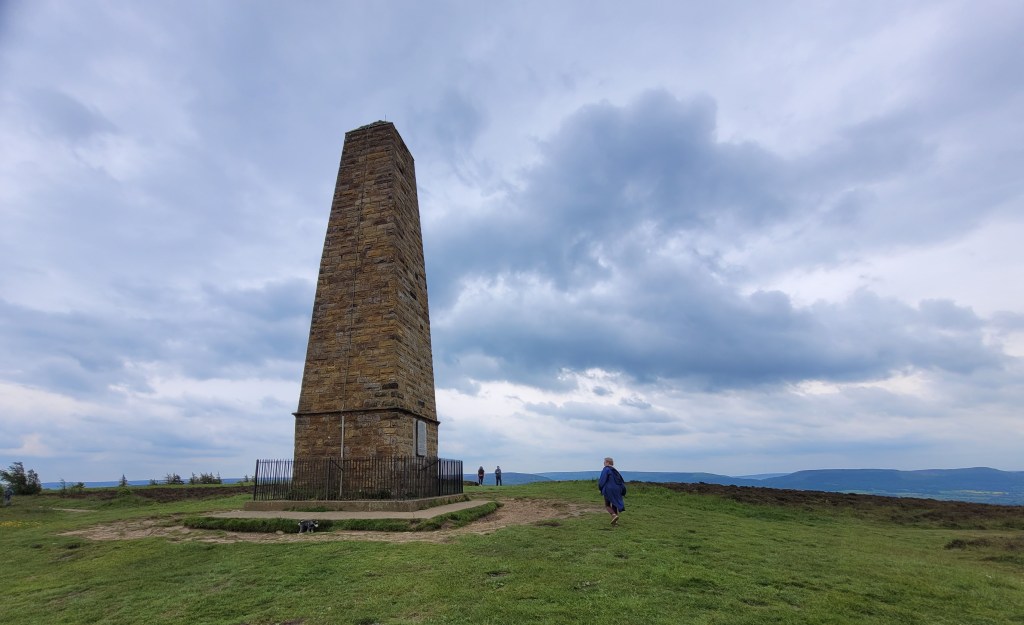
Cook’s Yorkshire monument overlooking Great Ayton and many moors.
So I started my sabbatical where Captain Cook ended, and ended where Captain Cook began. My entire sabbatical is bookended by this both revered and reviled fellow: adventuring, navigating, mapping, recording, exploring but still misguided and violent.
I really would have preferred an out-and-out hero. But we get what we get, with all the ambiguities that brings along.
~~~~~~~~~~~~~~~~~~~~~~~~~~~~~~~~~~~~
Chomping my sandwich in the shade, I had decided that this was as close as I was going to get to Roseberry Topping on this hike. It was early afternoon, and there were still miles to cover to get back to Bumble Cottage.
And when I eventually got down to the fairly busy road, I would be walking back to Great Ayton along a 1.5-mile stretch with no sidewalk.
Public transport? The bus schedule said that the next bus headed back to Great Ayton was at 10:30 a.m. the following morning. Rural bus services did not exactly thrive under 14 years of Tory government.
And now I was getting cranky.
No signs on the trail! Preposterous!
Not making it up to the top of the Topping! A dismal performance!
No buses till tomorrow! Ludicrous!
No sidewalks on the hike home to separate me from the cars or the perilous thorn-filled hedgerows! Unfair!
I was filling up with self-pity and vinegar.
I really felt like that day’s expedition had been a failure.
It took me the entire walk home to remember that it had still been a very nice outing actually. It was sunny and I had a picnic. And it’s okay when things don’t work out the way you planned! Next time, I would plan the hike better. And there was still a hot shower and a cold seltzer to look forward to.
I did eventually climb Roseberry Topping — on my third hike there. Before my second hike, I decided to carefully study a map (a map! such a brilliant invention!) and I worked out two different routes I could hike, there and back. My routes got me to another picnic, more berries, and eventually up the Topping.
~~~~~~~~~~~~~~~~~~~~~~~~~~~~~~~~~~~~~~~~~~~~~~~~~
My late mom always said, “Time is a gift.” To 15-year-old me, this made very little sense. Trendy, straight-leg, blue corduroy Levis — in the late 1970s, now that was a gift!
But I do now see her sense of things, and how right she was.
This entire sabbatical has been a gift of time: time to look around, meet people, have fascinating conversations, think, explore, and write. I am still a pretty mediocre ukulele player, to be honest, because I don’t practice enough. But I have really picked up the habit of constant writing, and that is a fine thing to be taking home with me. I am a lousy-ukulele-playing WRITER.
I soon return to Philadelphia, to a more ordinary routine and the classrooms of Temple University for autumn term. This sabbatical is winding down. But I have been able to cook up some interesting plans for the future.
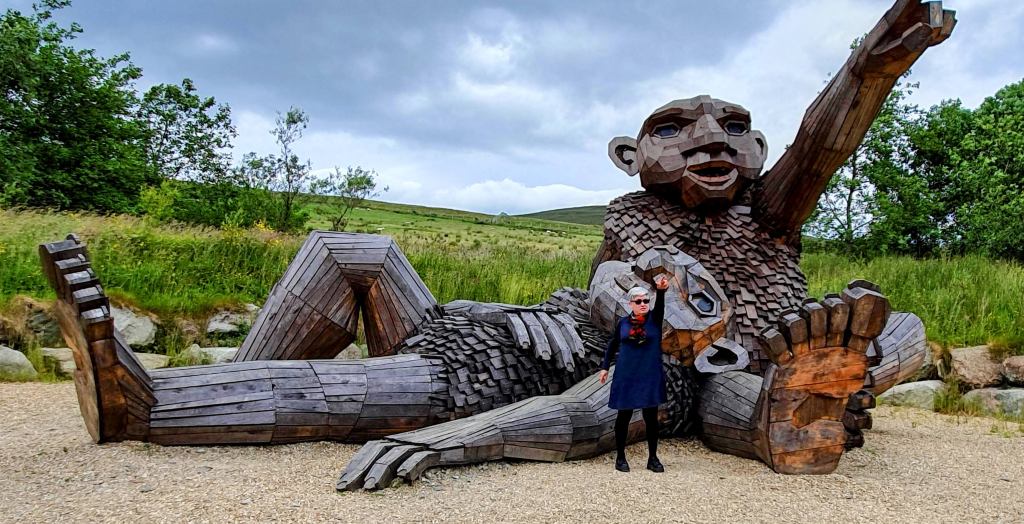
What a gift of time it has been!
And thank you, Dear Readers, for coming along with me Where No Mangoes.


Leave a Reply