
I’ve been to so many places!
I’ve been everywhere, man
‘Round Kyoto in Japan, man
I’ve breathed that mountain air, man
And avoided every bear, man
I move with savoir-faire, man
‘Cause I’ve been everywhere…
I’ve been to Shijo, Rakugo, Osaka World Expo
Lantern Shop, Cheese Shop, Nidec Tower and Gift Shop
Kabuki, Ninna-ji, Mt Hiei, Kyoto Symphony
Himeji, Nishiki, Enryaku-ji temple and monastery,
Nihon Buyo, Classic Noh, Kimono show, Tokyo,
Jimbocho, Uniqlo, Because when you Noh, you Noh!
I’ve been everywhere, man
‘Round Kyoto in Japan, man
I show off my silver hair, man
Paid train and subway fare, man
Never seen a bear, man
And I’ve been everywhere…
I’ve been to Takarazuka, Yamazaki, Amano Hashidate
Arashiyama, Aquarium-a, Yayoi Kusama, Fire Fest Kurama
Daihikaku Senko-ji, Toji, and Jidai Matsuri
Imperial Palace – grounds are free, Fushimi Inari, Kinkaku-ji
Silk Workshop (Shiruku), Walking all of Mt Joju
Sit Zazen, Shinkansen, Ginza, I’d do it all again!
~~~~~~~~~~~~~~~~~~~~~~~~~~~~~~~~~~~~~~~~~~~
I’ve been busy in Japan, with a calendar of activities and events, alongside teaching the students at TUJ-Kyoto, and always trying along the way to learn some Japanese.
The verses above go to the tune of “I’ve Been Everywhere,” a 1959 song by Australian singer Geoff Mack, later adapted by Johnny Cash for the back roads of America, and according to the internet adapted in over a hundred different versions.
Now that is not a list of everything I have done. That is a list of the things I have done that I could figure out how to rhyme.
And now for the details! What exactly have I been up to? Let me see if I happened to take any pictures because I’d love to share a few with you . . .
New apartment!
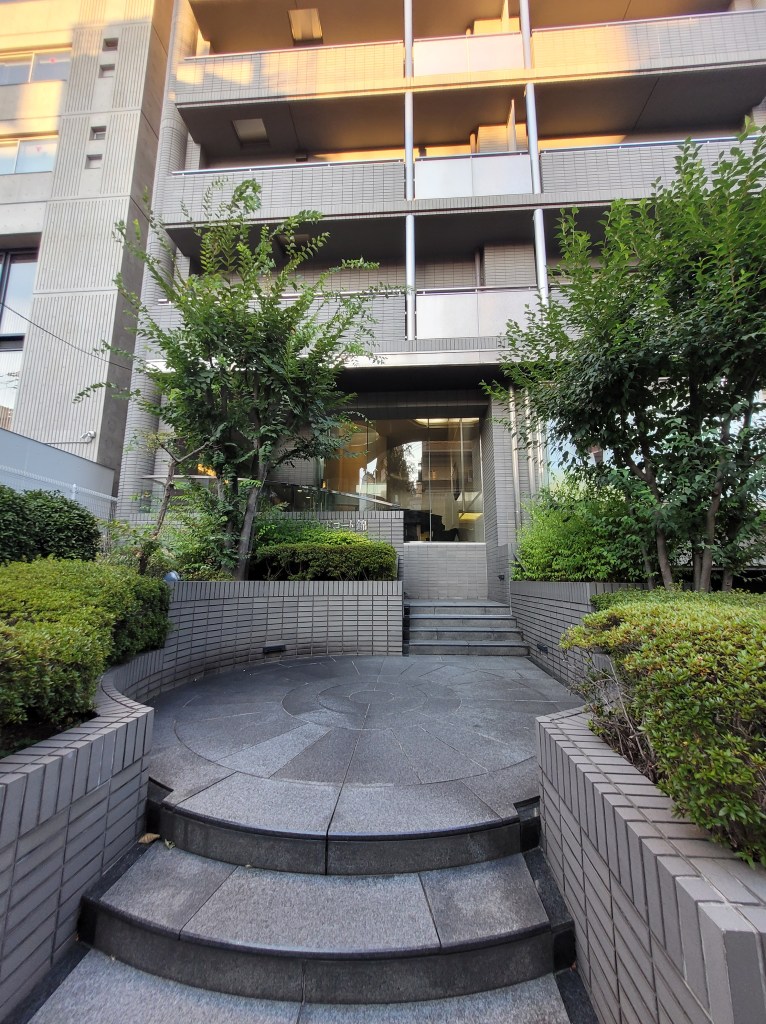


Back in August I moved to a much larger apartment in the Shijo neighborhood right in the center of Kyoto. There is enough room in the new place to host family and friends, which accounts for how I ended up with 16 work colleagues and their family members over in late November for what I called Pretend Thanksgiving, and also operating a bit of an hotel. But it has been such a gift to have people come to stay! And I know enough of Kyoto now to show people around a bit and ensure they don’t starve.
And now on to some of the places and events I have been to since moving to Shijo, sometimes solo and sometimes with work colleagues, Japanese friends, or my many visiting guests.

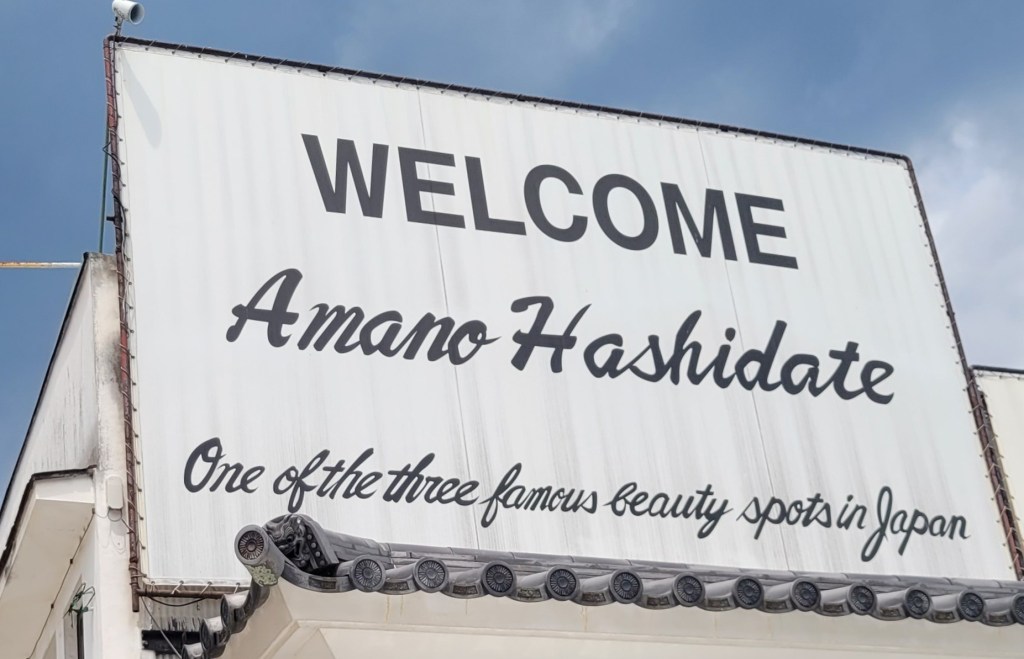
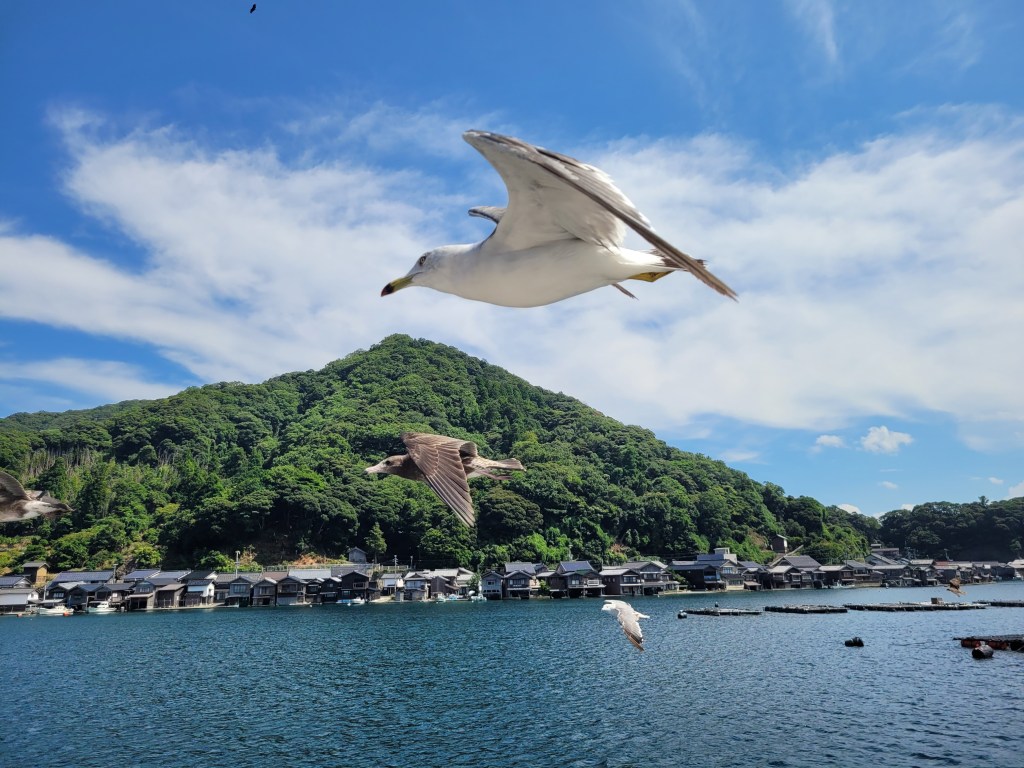
Well I don’t know about you, but I can not resist an invitation to go visit a famous beauty spot! So even though it was 103F in August, I hopped right on that bus to Amano Hashidate to see some beauty.
In fact I saw all of this beauty:


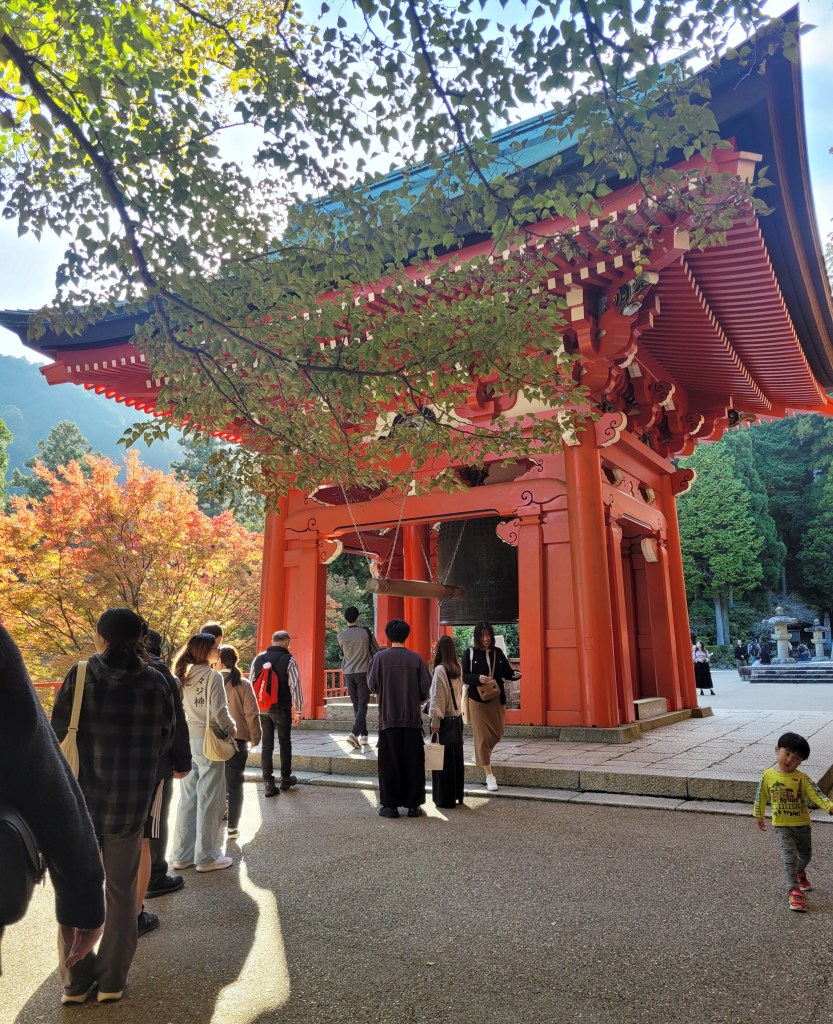
At the top of Mt. Hiei overlooking Kyoto sits a venerable temple compound called Enryaku-ji, with roots stretching back to the late 700s. Buddhist monks still live here, and pilgrims come to visit, pray, and ring the giant bell. You can ride a city bus all the way up the winding road to the temples, and after a hike through the woods, board Japan’s steepest cable car to ride back down.


My younger brother Dan came to visit and we got to see a lecture and performance about Noh theater, which is a very dramatic and formal Japanese art form.
And below is our picture taken with the featured actor! (I’m the one on the left.)


At the Kyoto Aquarium you can watch a dolphin show in Japanese, with genial hosts, and dolphins soaring through the air!
I liked pretty much everything at the Kyoto Aquarium except this: The Japanese Giant Salamander. That thing is the size of a flippin’ vacuum cleaner. I visited the Aquarium with assorted colleagues, and have taken the liberty of including in this photograph an actual mathematician colleague for scale.

I don’t like knowing that there is a creature the size of a vacuum cleaner hanging out anywhere. These things just lurk in rivers? There are nine rivers cutting through the city of Kyoto. And that is how many lurking Japanese Giant Salamanders?
But never mind massive amphibians which can grow up to 5 feet long. (For scale, I am 5 feet long.) They are just lizardy things. And who wants to think about large lizardy things which can open their wide mouth as wide as their entire body? Let’s go visit some nearly naked men and a whole lot of fire instead.
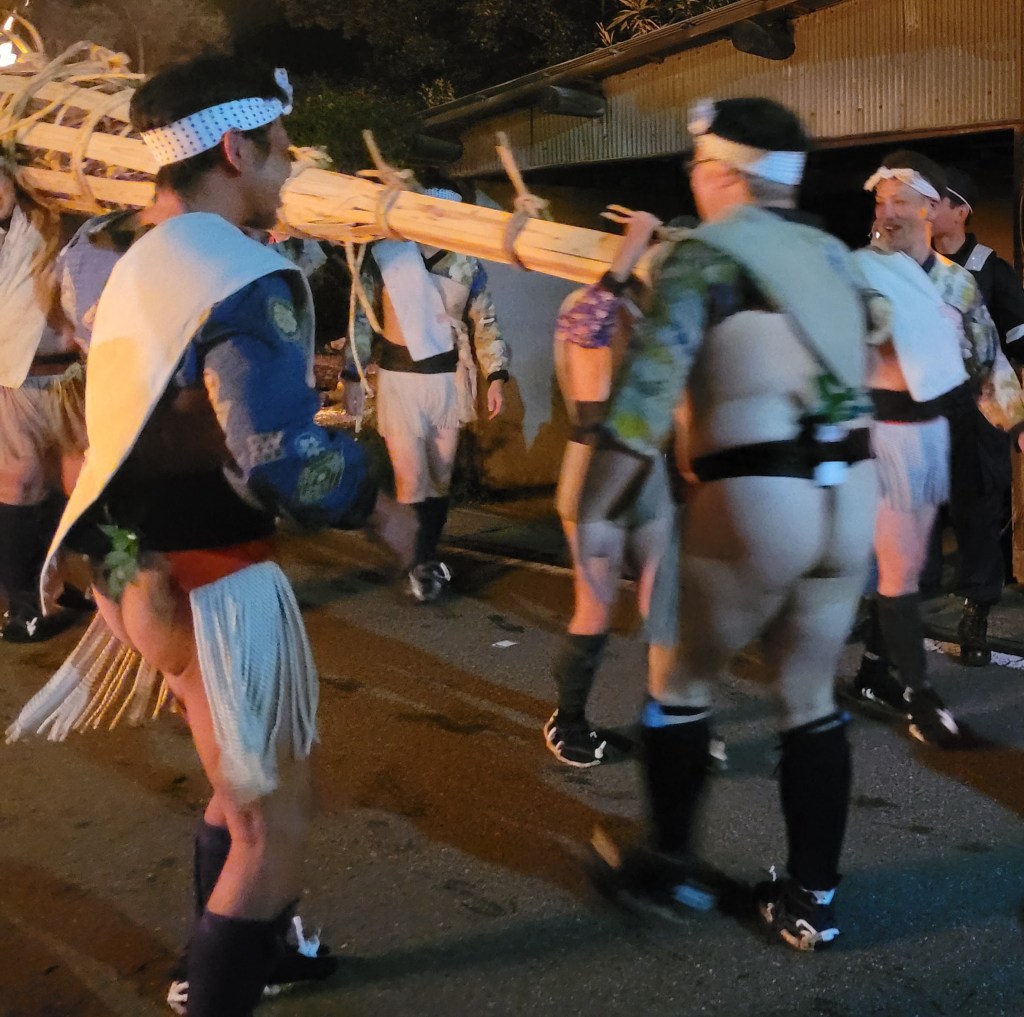
The annual Kurama Fire Festival features giant 12-foot lit torches carried through the tiny village of Kurama on a night in October to welcome a deity, ward off evil spirits, and preserve the safety and honor of the village. The torches are carried not entirely safely by chanting men in loin cloths.

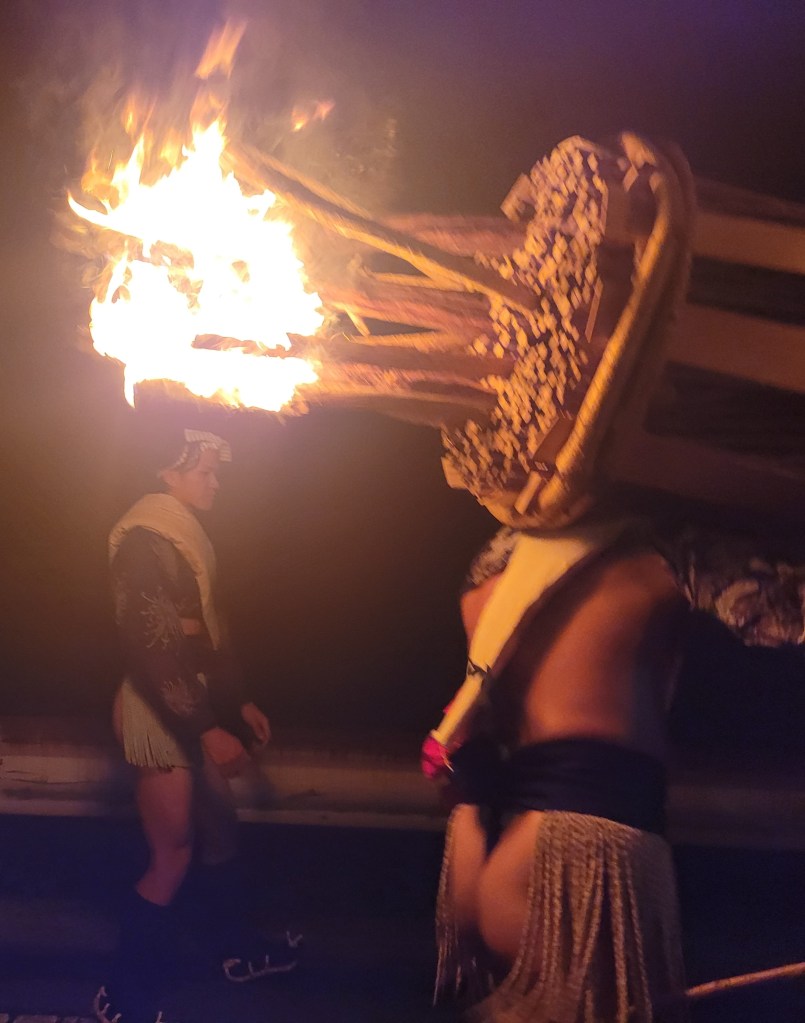

There is fire everywhere, on doorsteps, by the roadside, and everyone is yelling “SAIREYAA, SAIRYO!” which means either “Festival! Great Festival!” or “Festival! Let’s have a Festival, Yo!”
To be honest, it is rather a lot to take in.
At first I looked around at the men processing with blazing torches in both directions and thought, Surely those swingy string skirts worn at the front go all the way around . . . and no they don’t. Well, then I thought for a little while about how sumo wrestlers undertake their particular strenuous activities in attire known for acute brevity. So I supposed there’s perhaps an extensive Japanese tradition of underdressed men engaging in fierce physical displays. And if they wish to hoist a massive pine-and-vine flaming inferno whilst wearing little more than a few twists of fabric . . . And then I had to duck quite suddenly because a scorching torch was passing about 3 feet away. . . .

It took a bit of planning, but I managed to set up my two-day Official State Visit to the Temple University-Tokyo campus this semester. I have been teaching at the Kyoto campus, which is 280 miles southwest of Tokyo, and was looking forward to seeing the Tokyo operation and meeting many of the new colleagues I’d only seen on Zoom.

Temple University has been in Tokyo for over 40 years! The current campus is this swinging building packed with students, classes, offices, activities, a cafeteria, arts, sports, and a library. There are a few other buildings scattered in the neighborhood — I visited them all on a special guided tour, and got to tour the library, too.
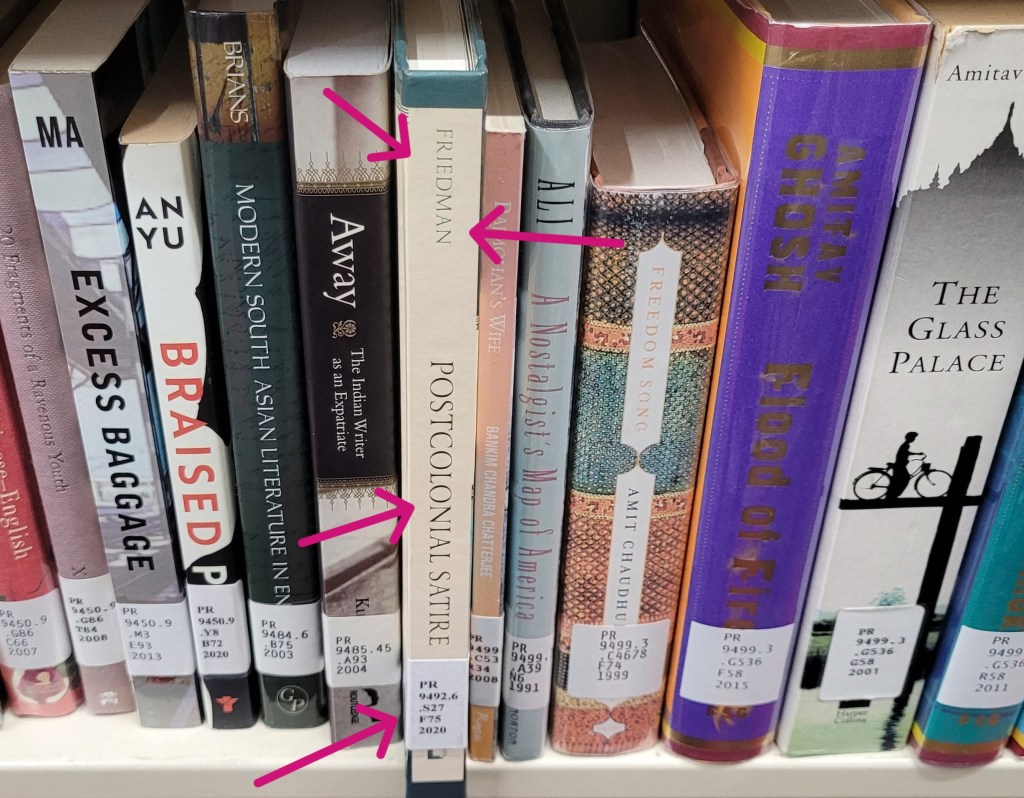
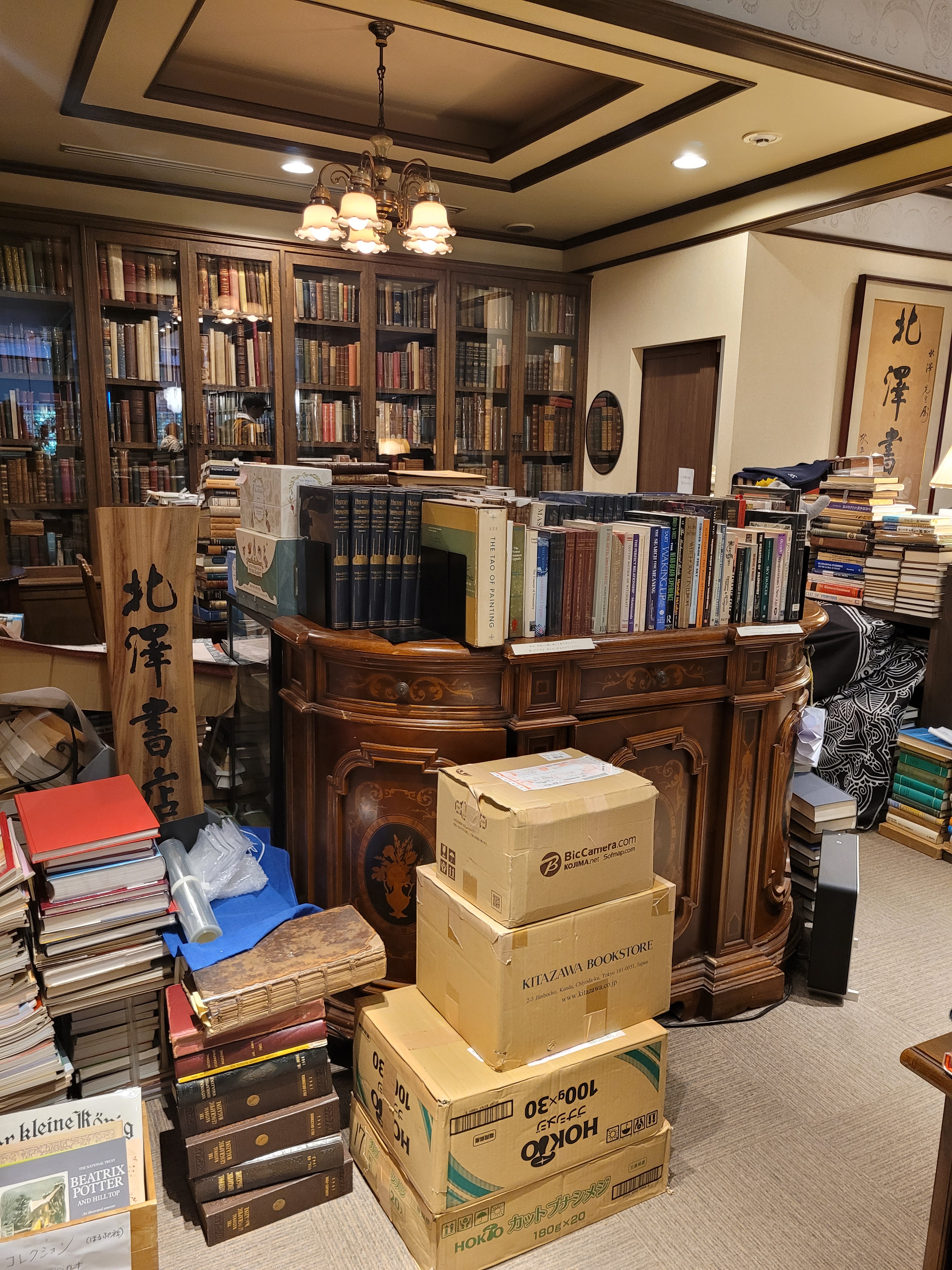
During my Official Library Tour I got to visit my book on its shelf in the Temple University-Tokyo library. I discovered my book has some very fine neighbors there: it is right near Amitav Ghosh!
I love the novels of Amitav Ghosh. You should definitely read the colorful and exciting Ibis trilogy he wrote, Sea of Poppies, River of Smoke, and Flood of Fire, if you haven’t already. I once spent three months reading those three substantial novels and also lots of historical material on how oceans are governed, all to present a 15-minute paper on migrants in boats to eight people during a literature conference in Baltimore. (Academia really gives new meaning to the phrase “zero-sum game” sometimes.)
My Official State Visit was a smashing success, though! There were tours, coffee, lunches, a class observation, meetings, dinner, and more coffee. Afterwards I had the weekend to mooch around in Tokyo, so I did that strictly by-the-book English-professor style. I headed to the bookshop neighborhood.

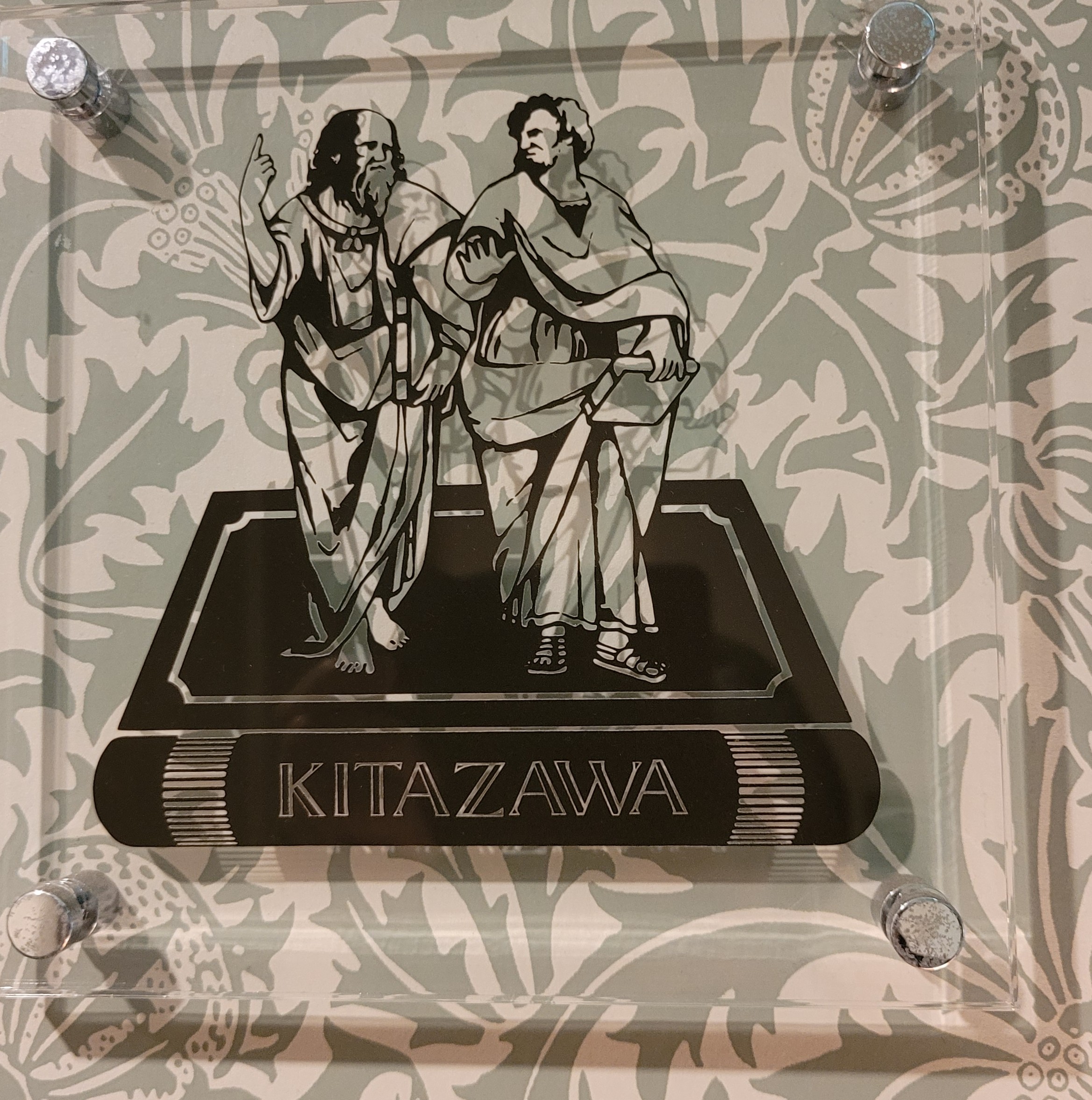
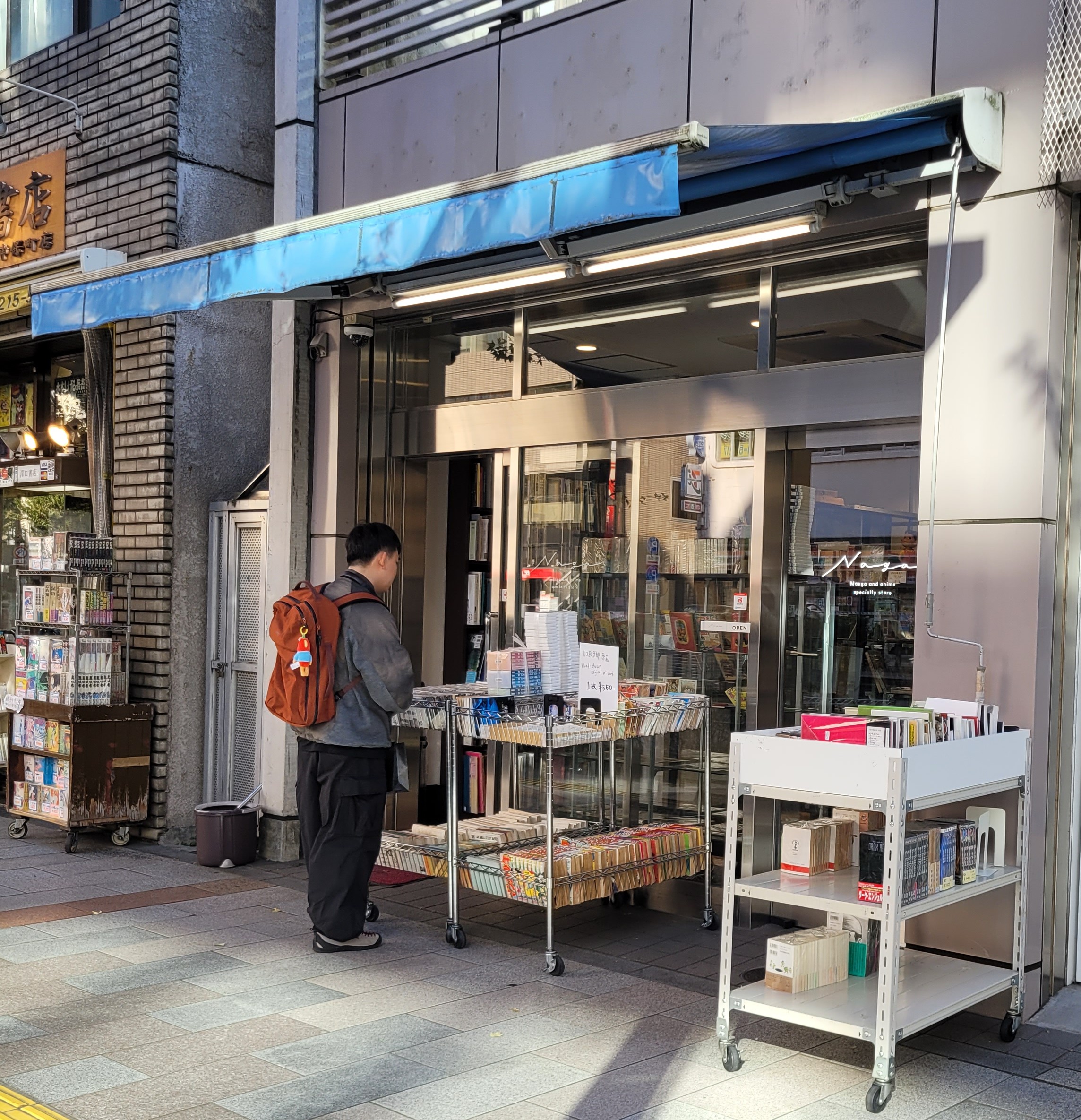
This welcoming door invites you into Kitazawa Books, an English-language bookstore in the Jimbocho neighborhood of Tokyo, a wonderful neighborhood known for having over 100 bookshops of all types: different languages, arts, comics, travel, music, literature, history, etc.
At Kitazawa you just walk in this charming shopfront and spend a very happy next two hours of your life. Or even three. Okay, three and a half.


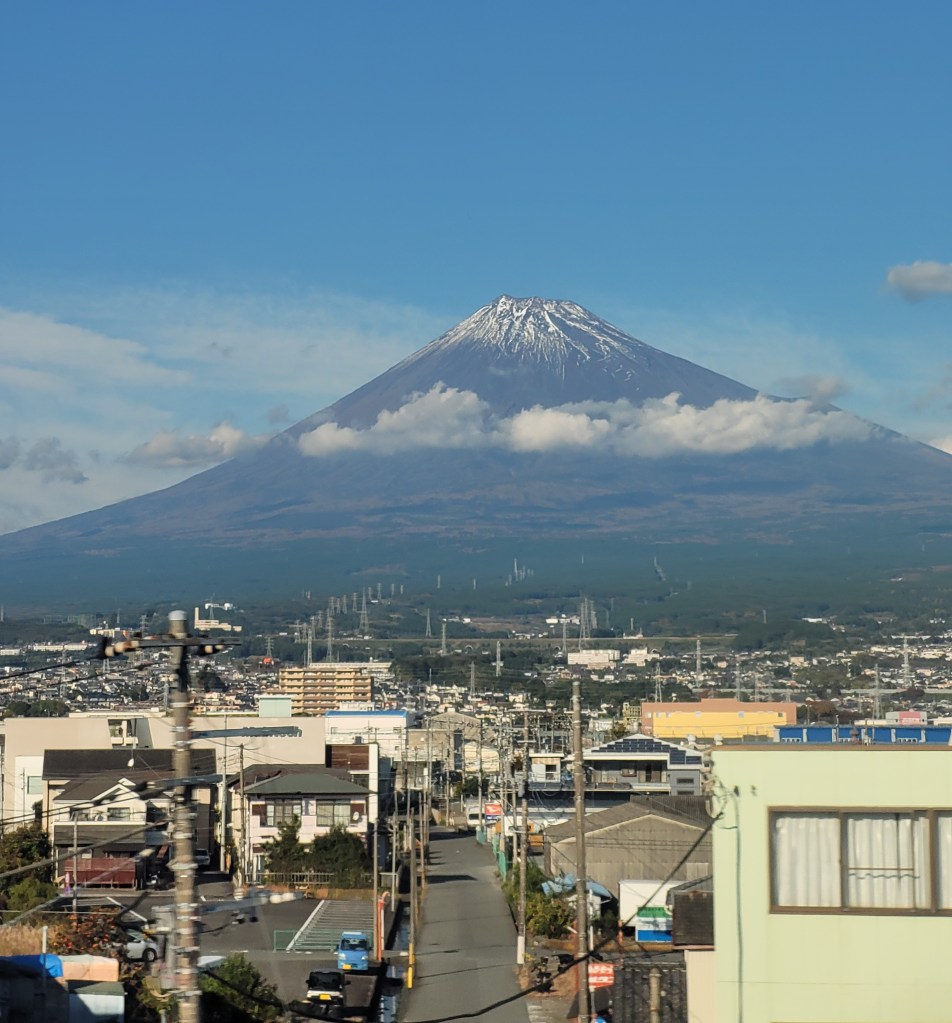
On the Shinkansen bullet train back to Kyoto you will want to sit on the right window side, so you can gaze at Mt. Fuji for the first time, towering in snowy majesty.
Everyone asked me what I thought of Tokyo when I returned from my Official State Visit to the campus of Temple University-Tokyo. “Tall,” I said. “It is very tall there.”


Back in Kyoto it was time for more excursions.
Historic Himeji Castle is a hill-top castle dating from the 1300s, past Kobe to the south of Kyoto, and as a world heritage site makes for a very fine day trip. Since it looks like a white bird taking flight it is nicknamed White Heron Castle.
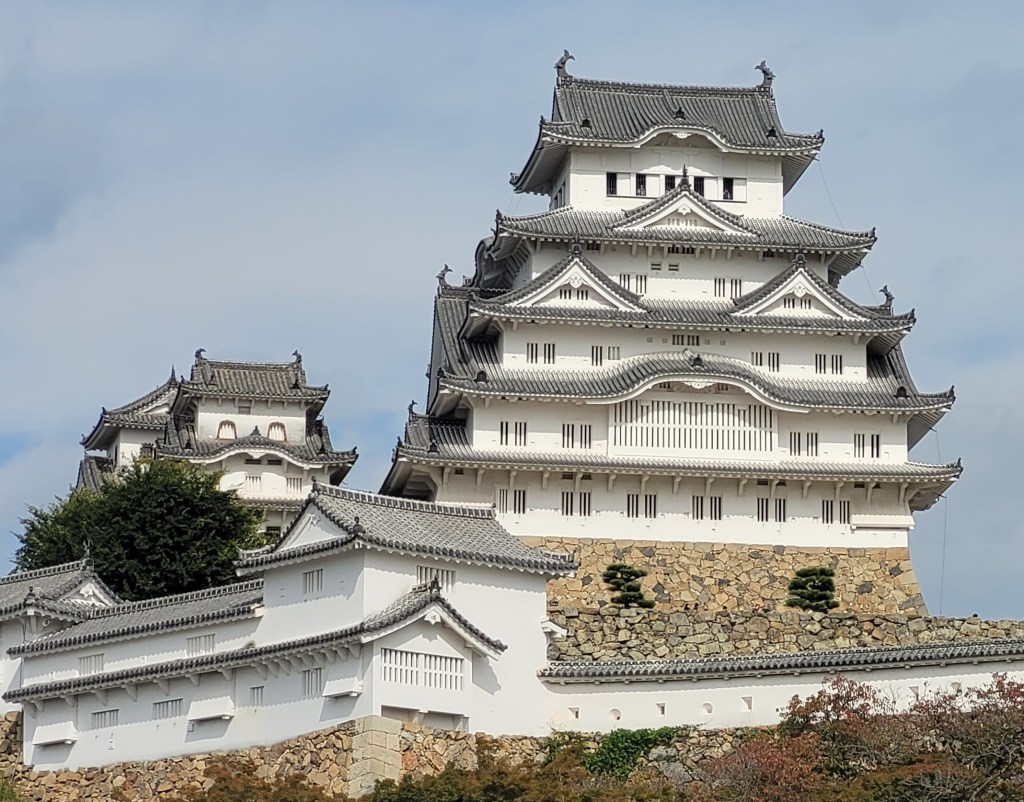
You can tour many of the floors up to the top!


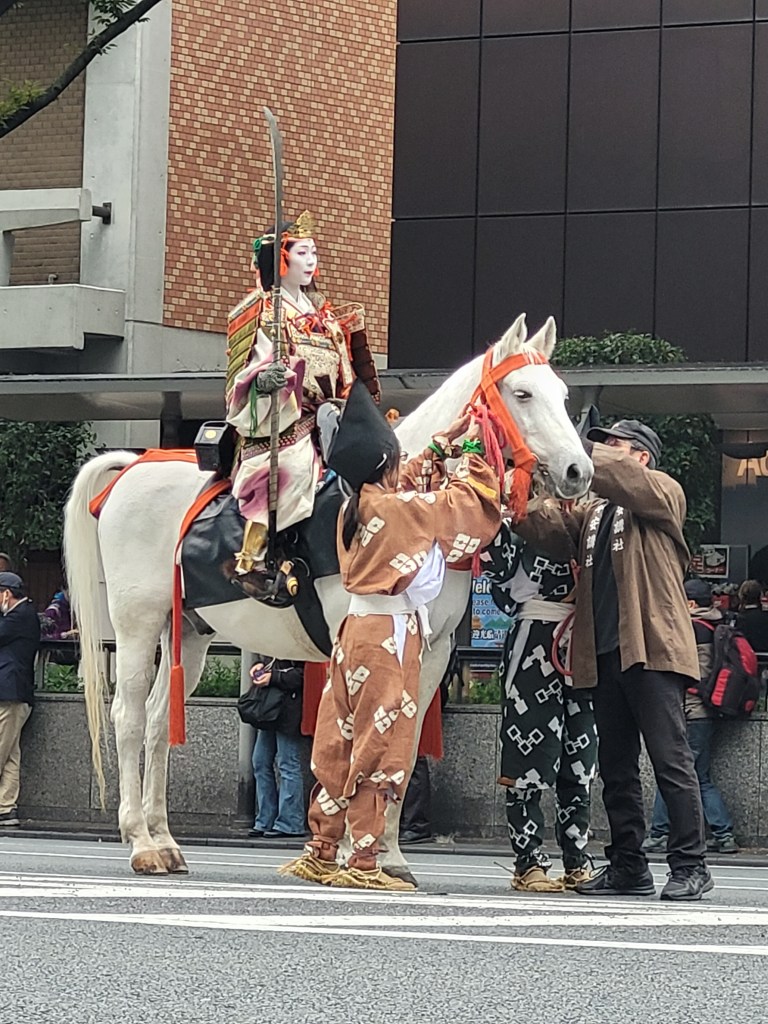
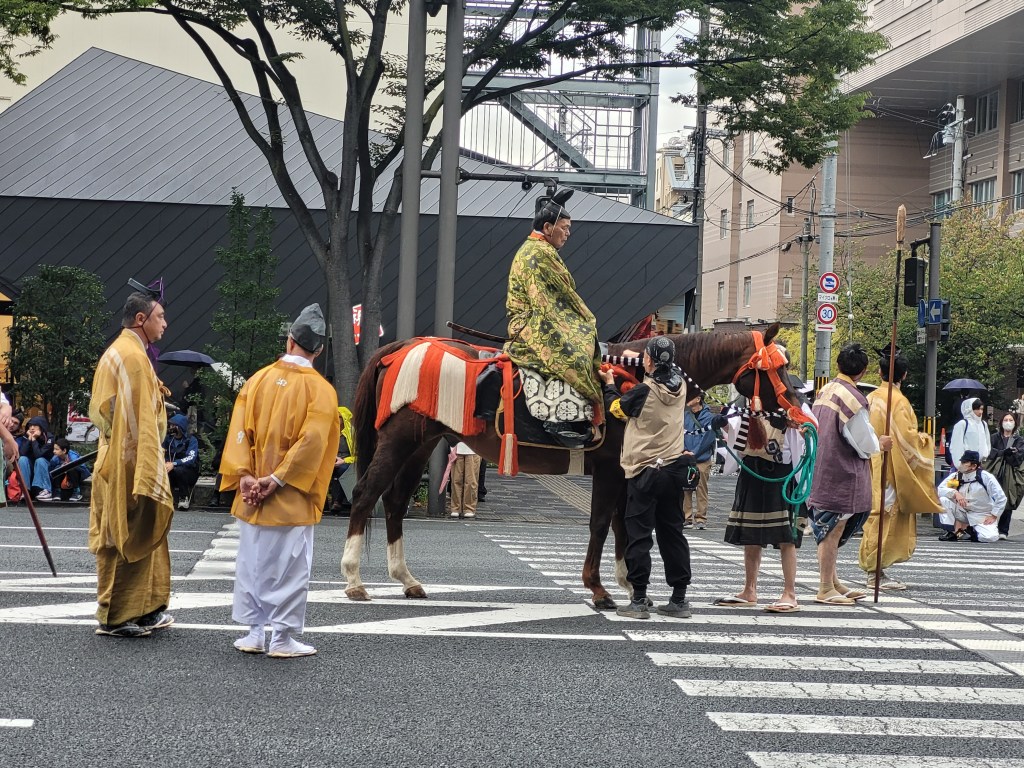
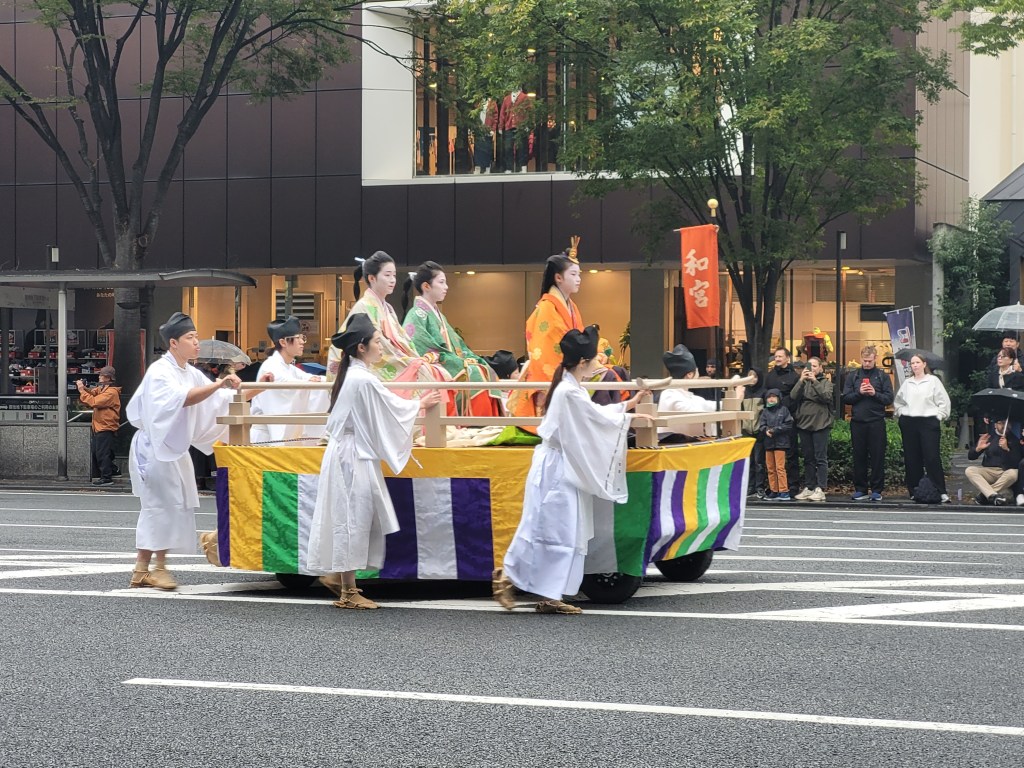
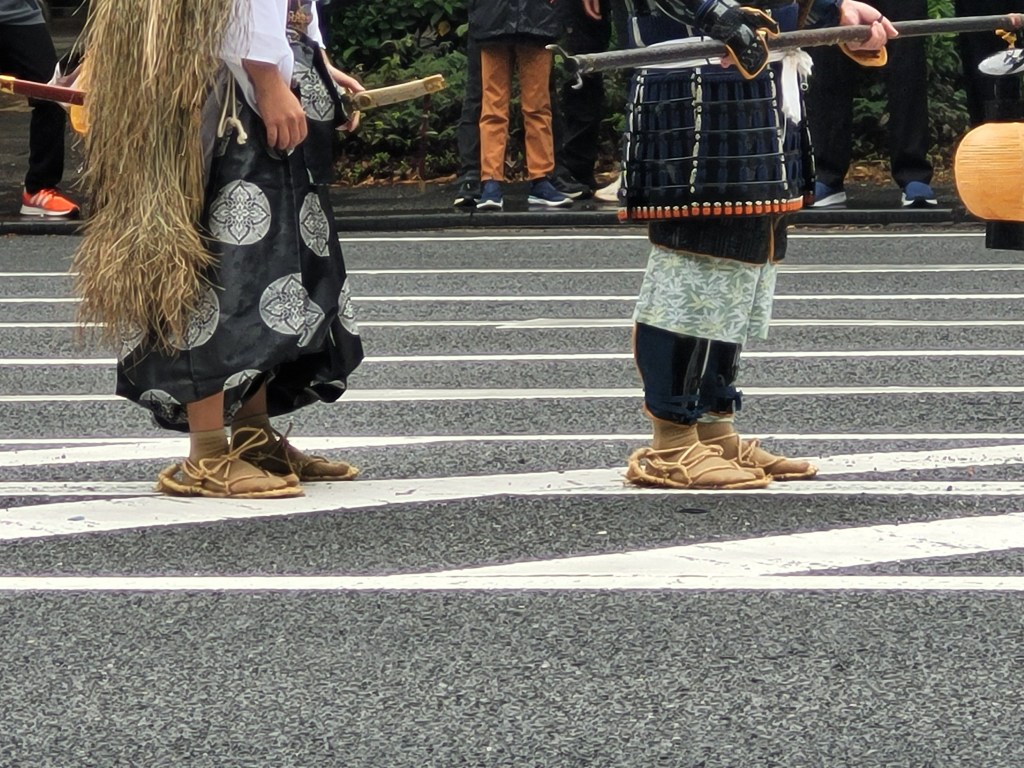
Each October 22nd to commemorate the founding of the city, Kyoto holds the Jidai Matsuri festival, an hours-long replication of history told as a costumed procession. Groups march a parade route dressed in the garb of specific historical periods. There are horse-drawn vehicles, workers and farmers, gentlewomen and generals, all portrayed in accurate dress, even down to the straw shoes.



But seriously, GIANT salamanders?Why on earth are they this big?
Salamanders are supposed to fit in your hand! Not in a trombone case.

Sometimes too much thought of large aquatic creatures is just too much thought, and thus a pleasant beverage can provide a worthy and useful distraction. In these cases, I highly recommend an afternoon tour of the Suntory Yamazaki Whisky Distillery at the foot of lovely Mt. Tennozan, accessible via a few short train rides into south-western greater Kyoto.

There is a tour and then a whisky tasting, after which you will be able to absolutely ace any quiz out there on absolutely anything to do with the single malt whisky produced at this fine establishment.


You may not remember where you live, but you will absolutely ace that quiz.

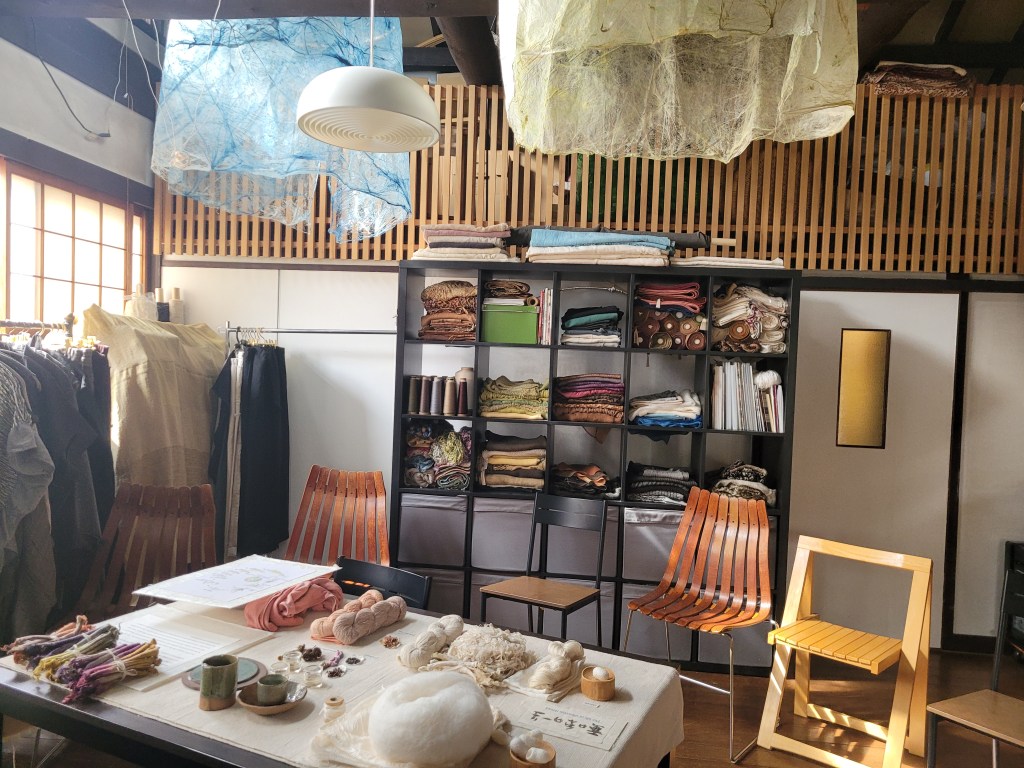
CreativeMornings.com is a global network of workshops on arts, culture, and ideas. This one in Kyoto was on silk, a way to make silk that preserves the life of the silkworm, and softness. We learned about the innovations of textile artist Akihiko Izukura, and we ate marshmallows.
So much art! There are so many museums and galleries. I particularly enjoyed an exhibit on the history of kimono silk dyeing techniques, and have been to many ceramics displays. This show at the Kyoto City KYOCERA Museum of Art was a huge retrospective of the print work of a very well-known Japanese artist, Yayoi Kusama. You may have seen her dotted pumpkins before — she is quite famous for them.


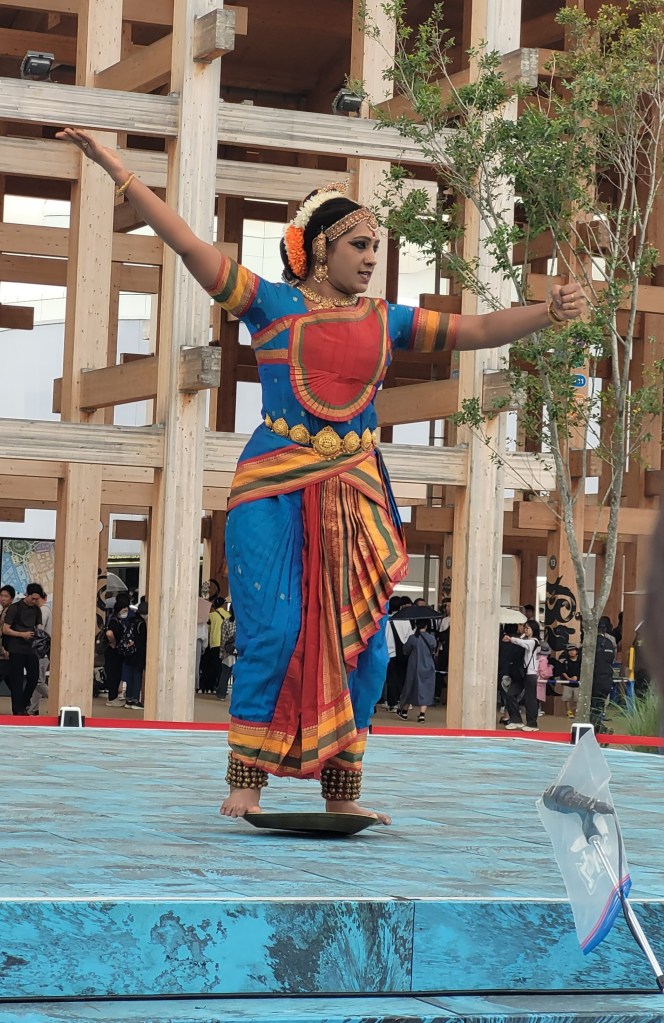
Oh boy, the World Expo in Osaka! Huge crowds, booths, shows, queues, and a zillion pavillions!
I went as a chaperone with a group from college, and thank heavens I did not have to do anything except watch this Indian dancer atop a brass tray hop about with surprising balance.
And then go find some ice cream.
There is absolutely no way to communicate the sheer scale of random nutso bonkers-o-rama of a World Expo. Expect anything. I am sharing: a picture of the official mascot, which some highly paid international marketing team decreed would be an inexplicable explosion of googly-eyes on a blue puffy creature-thing; some of the forest of 6000-year-old fossilized trees dug up and brought over from the Czech Republic for some no doubt noble (but wholly elusive) purpose; a photo of the crowds from atop the towering wooden ring periphery structure of the Expo built atop an artificial island outside of Osaka; and what is that thing that looks like a giant white toilet in the middle of my nice photograph?


The main theme of a World Expo seems to be “Long Lines of People.” You go to the World Expo, and then you just line up and wait. To get into a nation’s pavillion, to buy some cheesecake, to enter a bathroom. Some pavillions shut their lines when they reached an estimated 2-hour wait time. Some of the pavillions may have been worth a 2-hour wait to enter, but I seriously doubt it. I think there are mostly random things on display and propaganda, usually in the form of a tediously “uplifting” video everyone has to sit through before the exit doors reopen into the gift shop.
I happened to find out some highly classified intel about the display in the USA pavillion before I went to the Osaka World Expo, though, because an esteemed colleague had already been. The USA pavillion at the Osaka World Expo touted American success stories in exploration and ended with the grand finale display in the special grand finale room: a moon rock. But here is the kicker: The USA pavillion at the last World Expo, in Dubai 2020, touted American success stories in exploration and ended with the grand finale display in the special grand finale room: a moon rock.
That’s right: “We’re the USA! You gotta World Expo? If you gotta World Expo, we’re comin’! And we’re bringin’ OUR ROCK!”

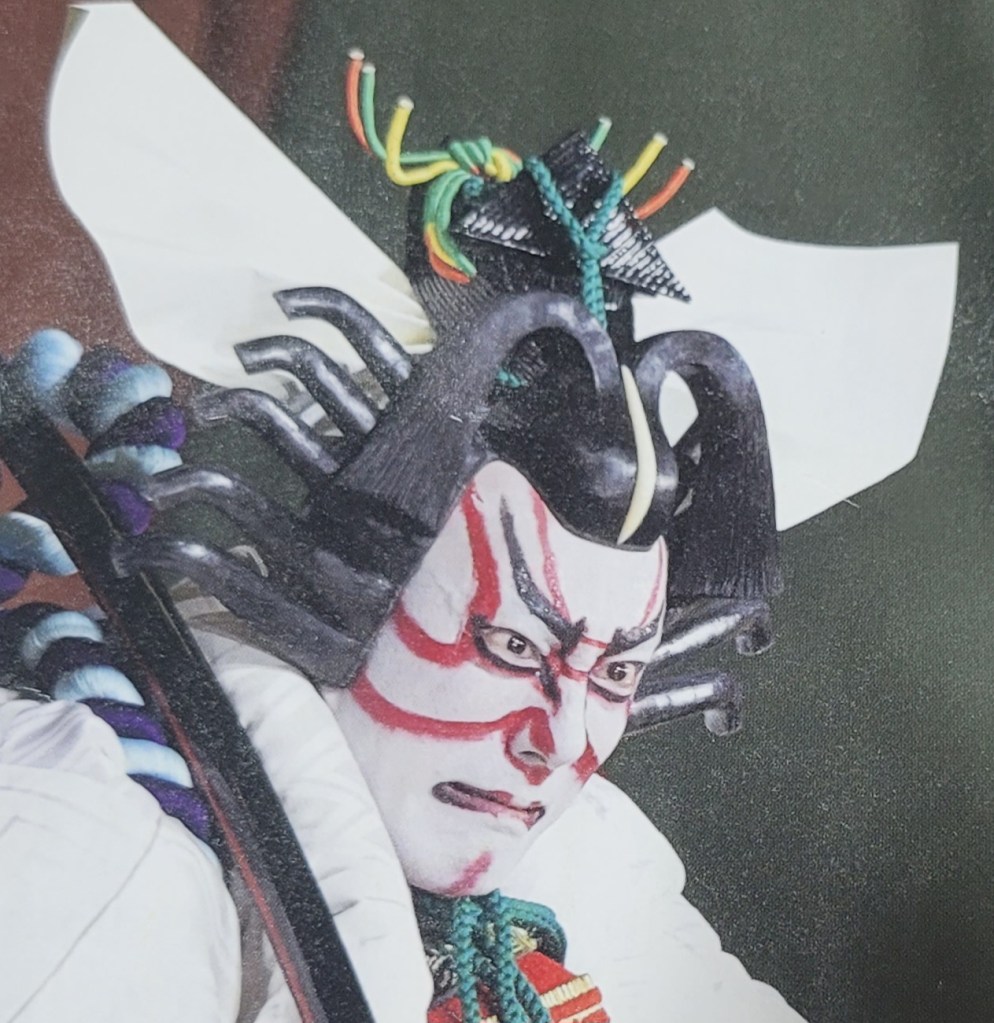
Kabuki is a form of Japanese drama which originated hundreds of years ago in Kyoto, very near to where I have been living. And nearby, just across the Kamogawa, or Duck River, is the beautiful Minami-za Kabuki Theatre. All of its antique-ness has been preserved, but the performance tech is state-of-the-art.
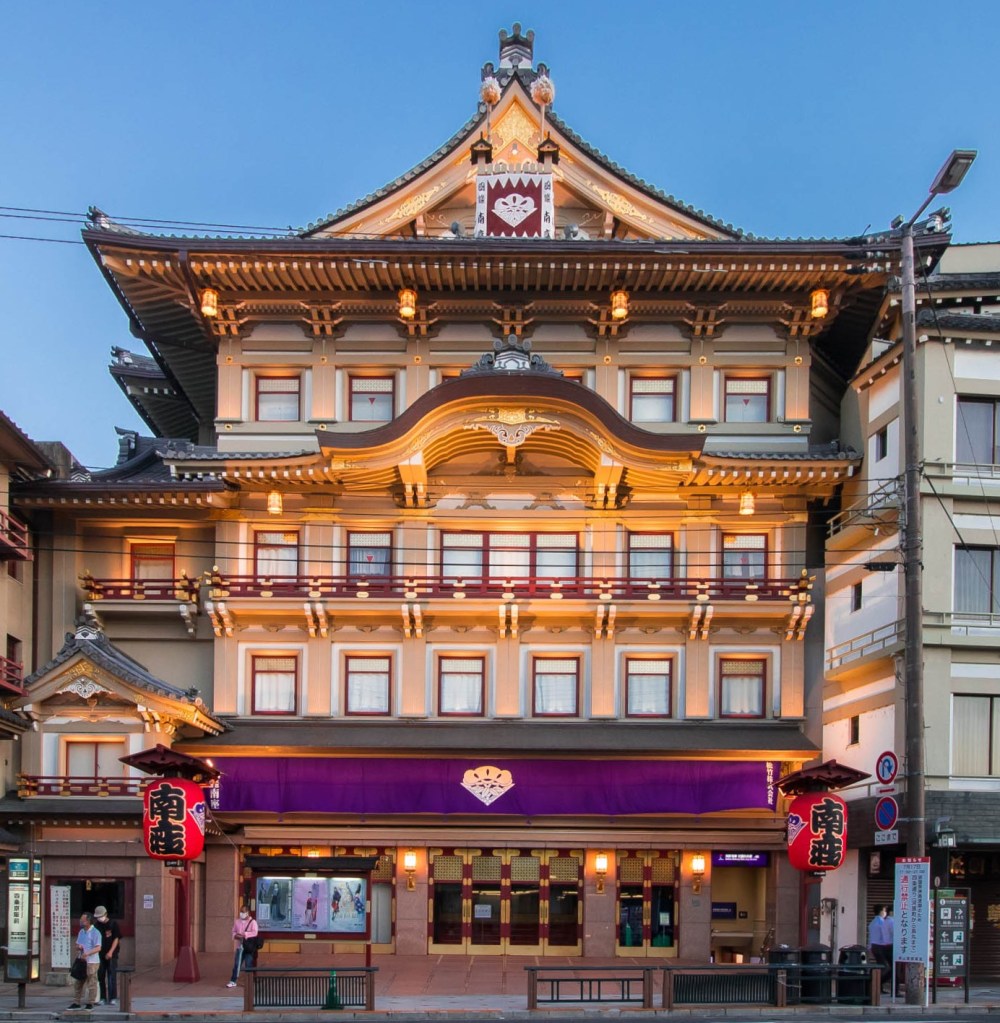
Kabuki stems from an extremely popular all-women performance and dance tradition from about 1600, which by 1630 had been declared unfit for women and taken over by men. Men continue to don the extravagent multi-layered costumes and makeup and play all the parts to this day. The shows are riveting and very dramatic, with dance, live music, and lots and lots of emoting. Kabuki theatre stars have many enthusiastic fans. I saw a very impressive show here one afternoon and the theatre was packed.
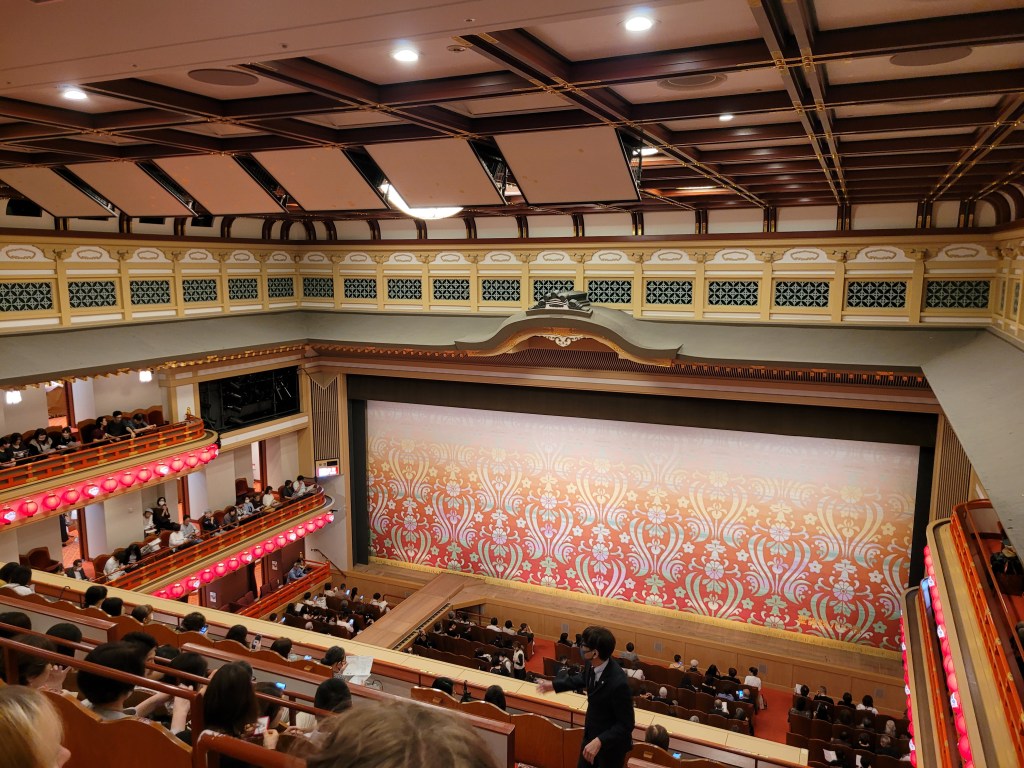


The Takarazuka Revue Company is a super-popular Broadway-style all-women performance troupe based in Takarazuka, a town on the outskirts of Osaka. A railway executive founded the company in 1914, thinking that western-style all-singing, all-dancing shows performed by women would be appealing, and would bring people to the town, and so he built them a huge theatre. Now there is also a theatre in Tokyo, and also a Takarazuka school, where young women train for two years, and then sign 5-year contracts with the company. The students are put into tracks early on to play either female or male roles; the “male” performers sing in alto voices, and use male pronouns within the company. Takarazuka shows rapidly sell out their two 2500-seat theatres, have die-hard fans and an official fan club, and the lead performers become beloved superstar celebrities.
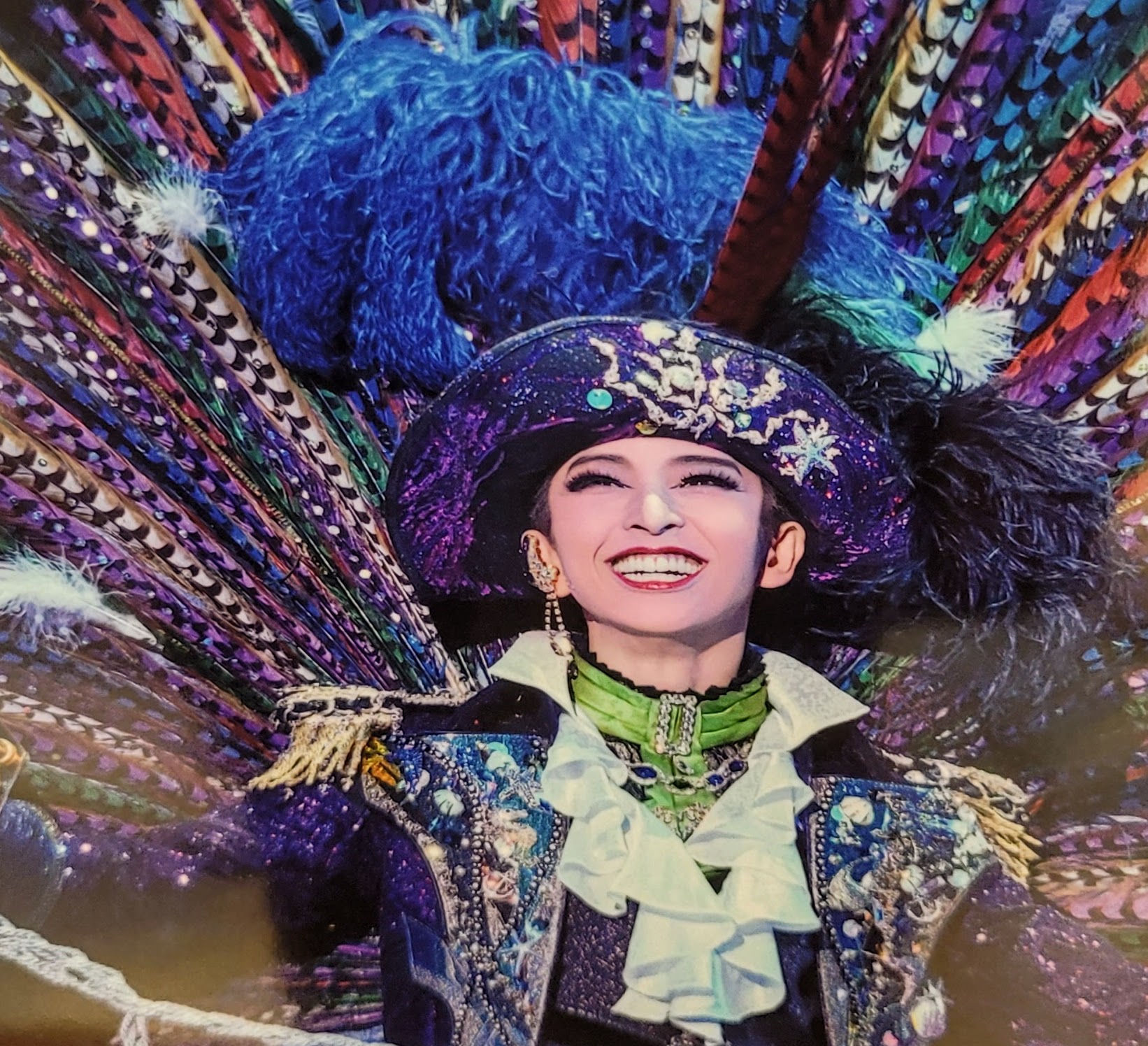
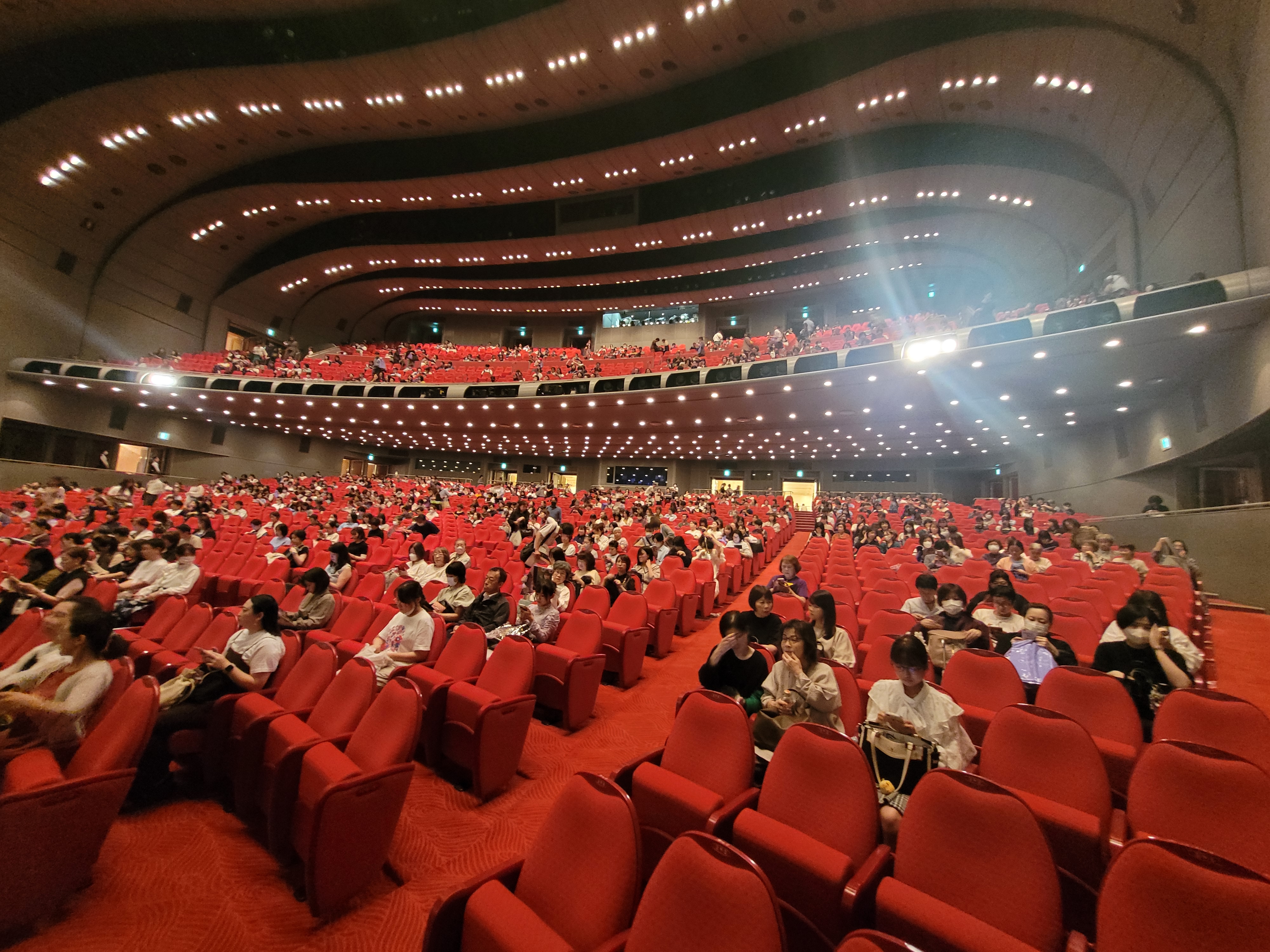
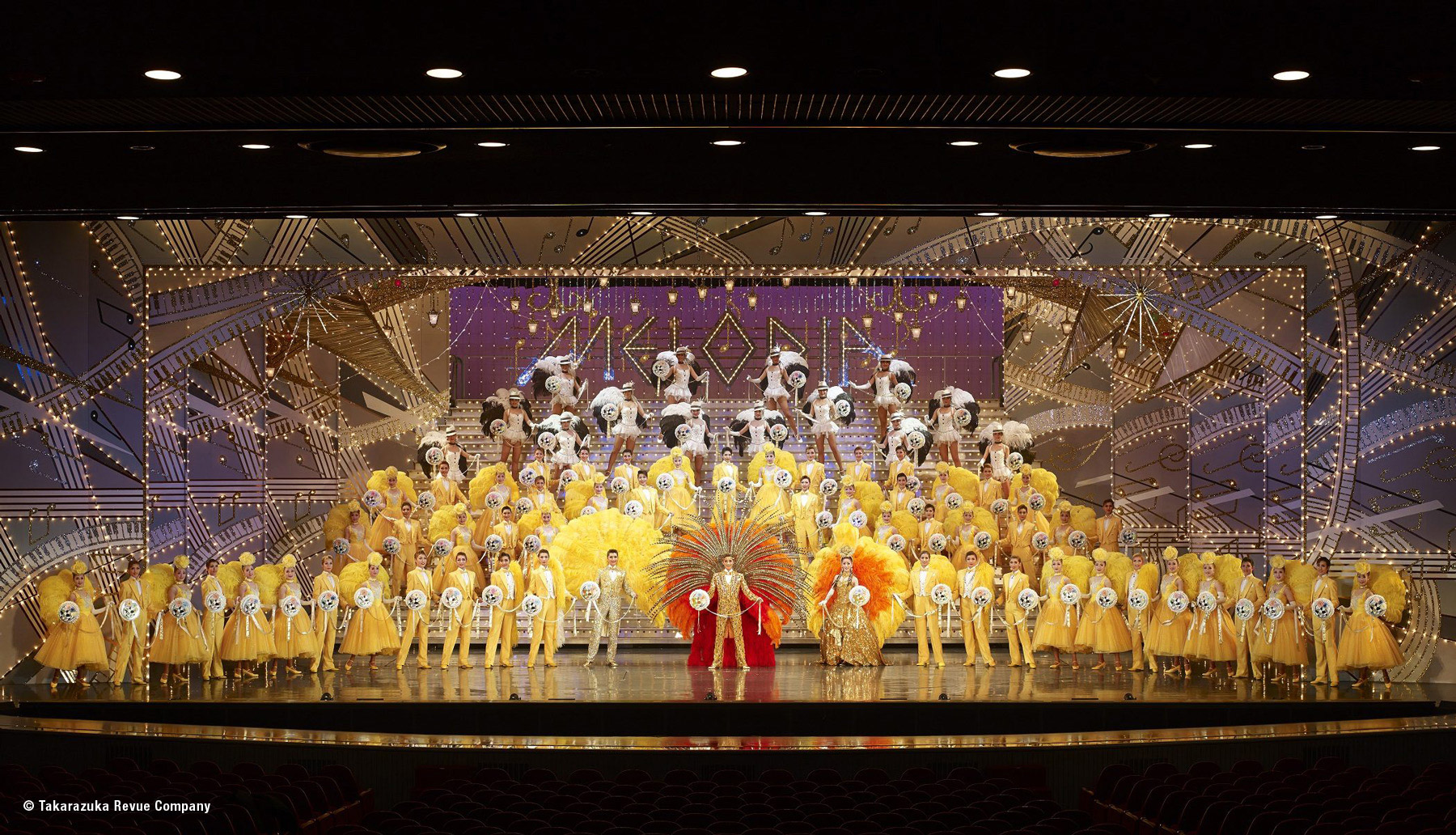
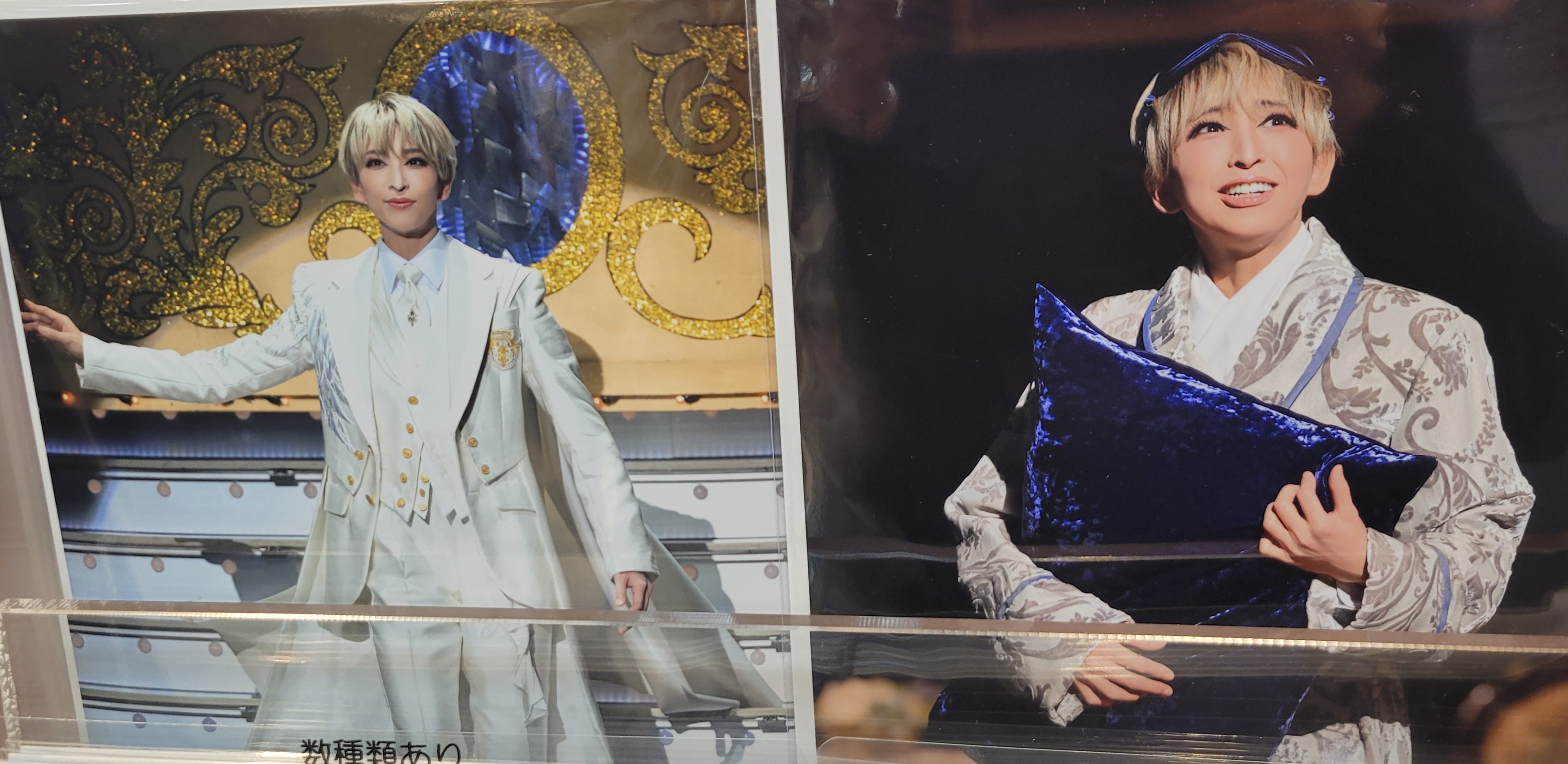
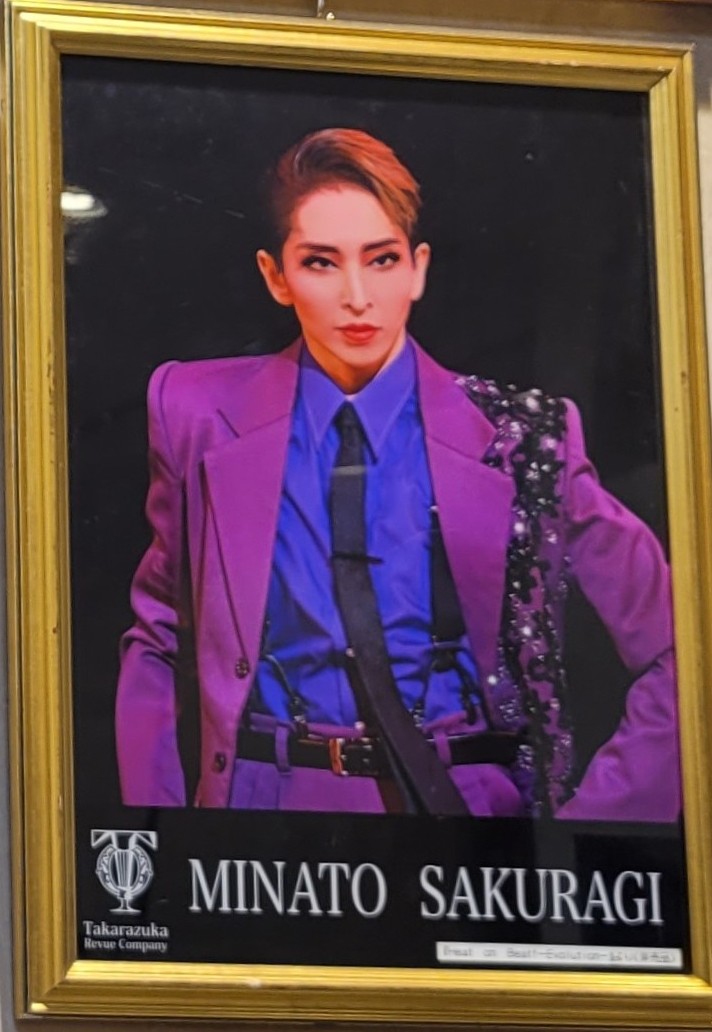
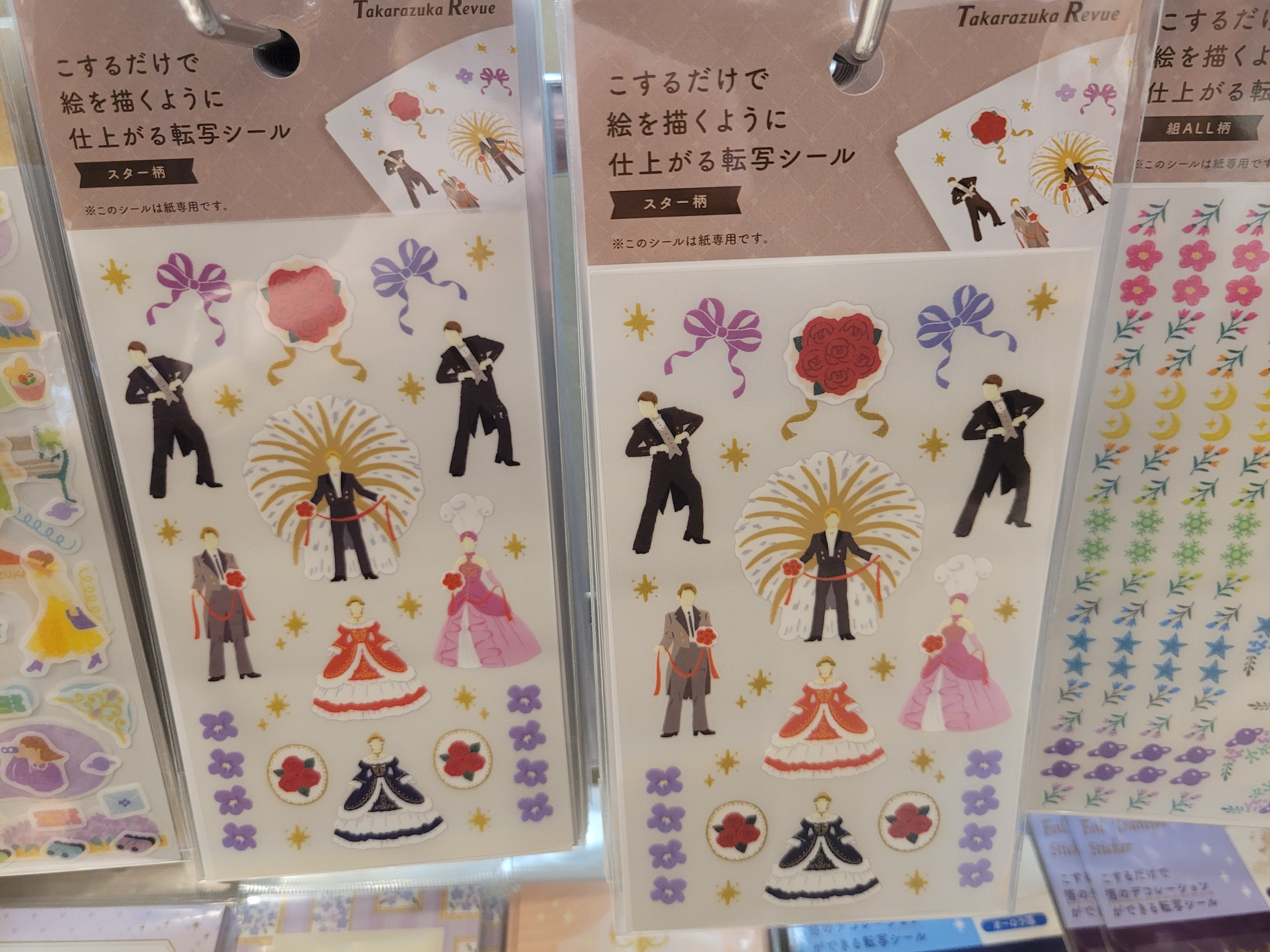
It’s as if Drag King, the sibling of Drag Queen, went to Broadway or the West End, and just stayed for 100 years, adding more and more sequins and feathers along the way. I saw a wonderful show called “Prince of Legend,” which could not have been more electric and fun, and full of show-stopping numbers. Here is the plot:
Him: “I am your half-brother, and I am in love with the woman you love!” Other Him: “And I will enter the competition to become Prince of Legend and win her love, and blow you away in the process!”
Both: “Now we sing!”

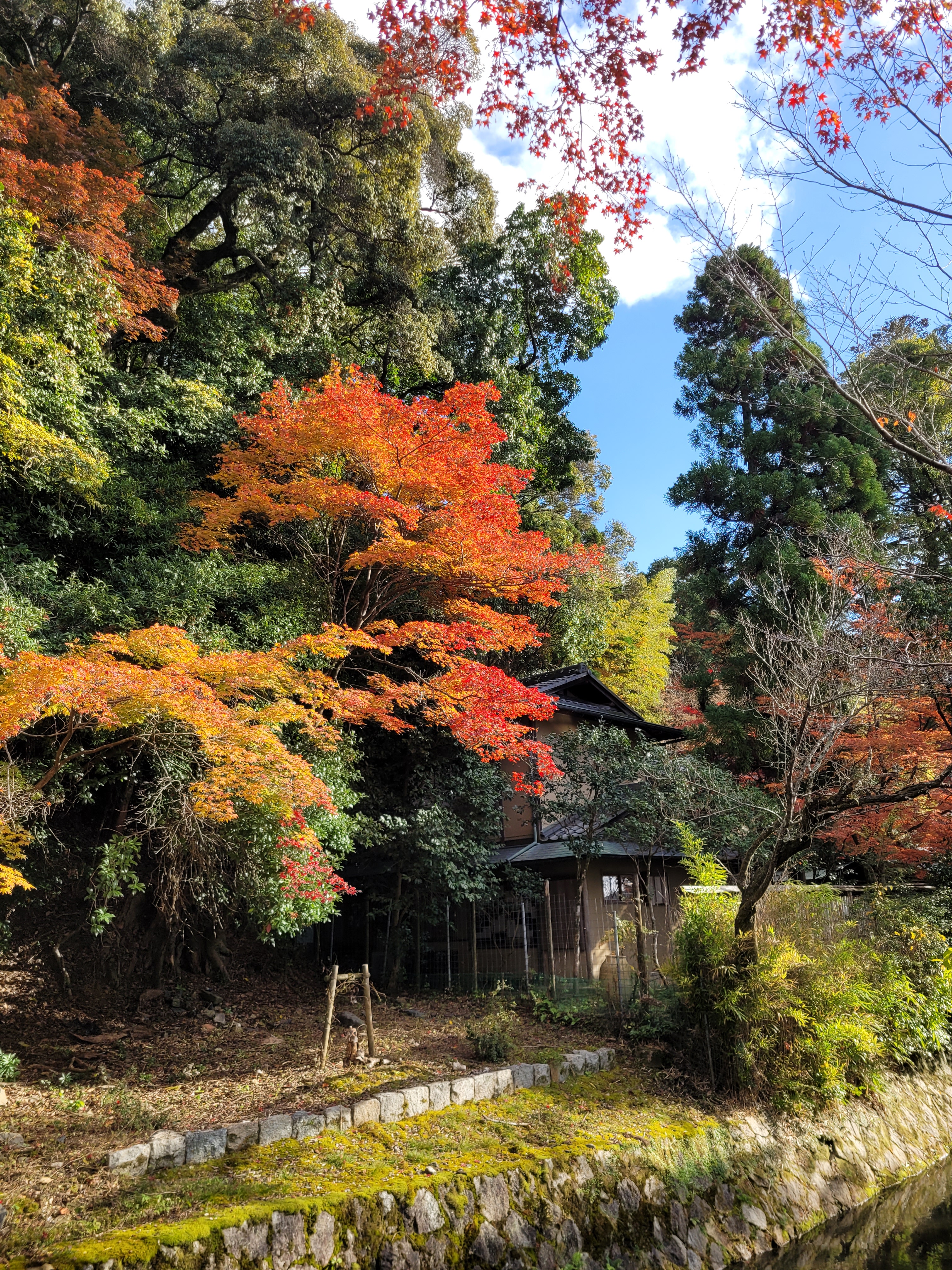
The autumn foliage has been spectacular! In Japanese the words are either Koji for the fall color in general or Momiji for the red maple leaves. These pictures are from: Uji, the town of matcha tea; the Philosopher’s Path; the wee town of Yase at the foot of a mountain; I have no idea, how the hell am I supposed to remember every flippin’ tree in Japan.

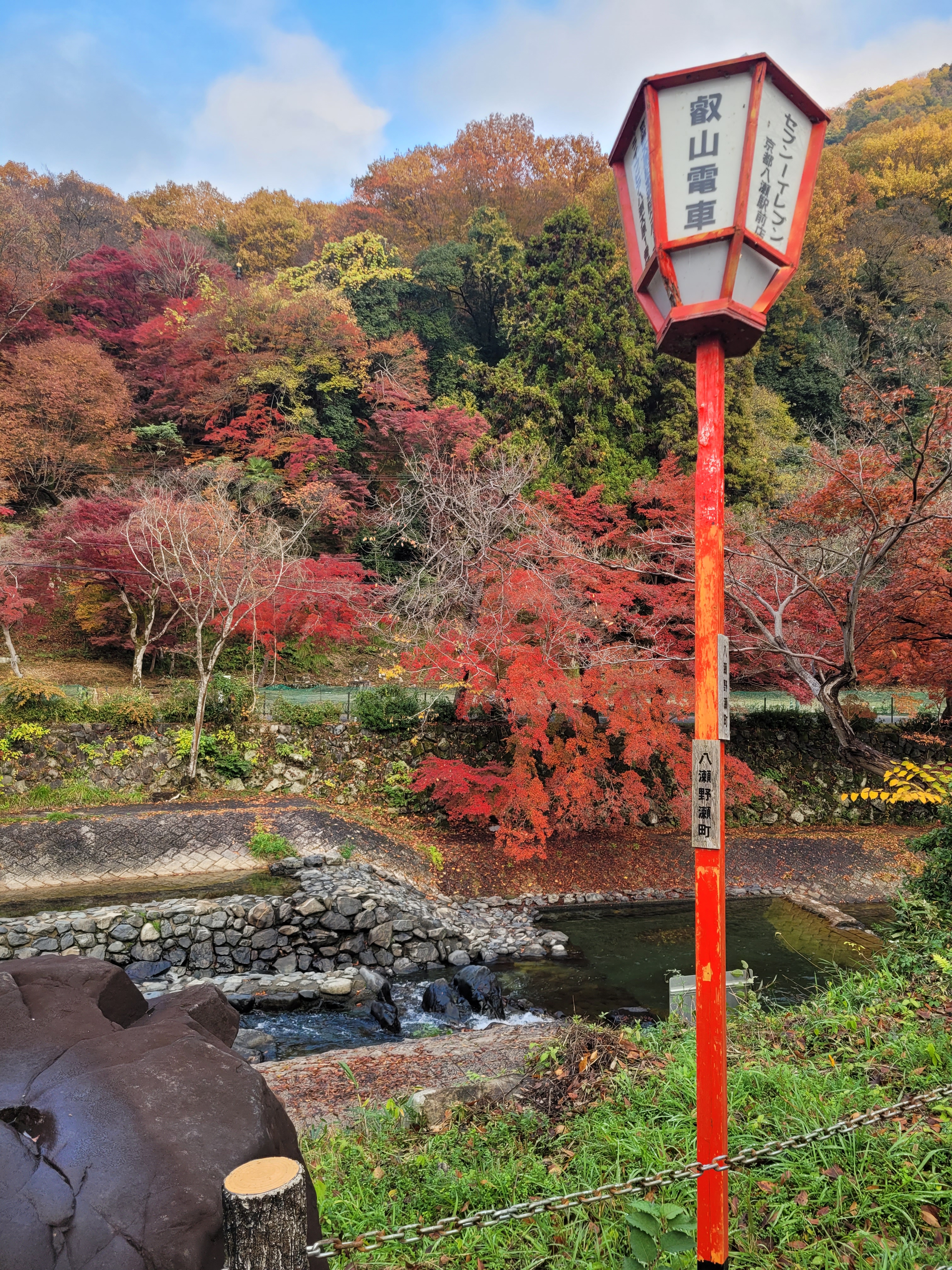
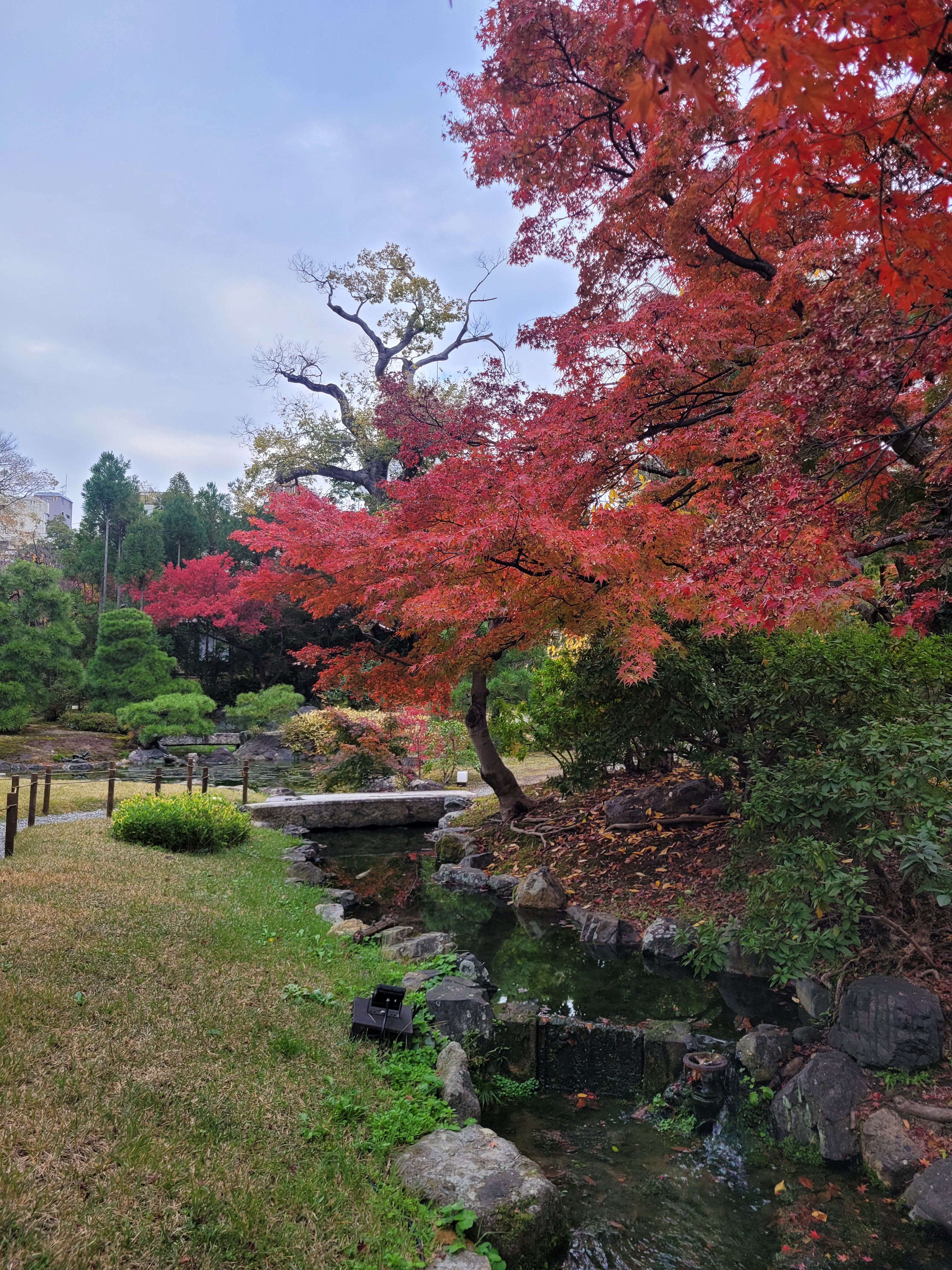


When your two brothers come to visit, and it’s the first time you have been together since way before the pandemic, you definitely take them up Kyoto’s Nidec Tower, built in the 1960s, to take in the 360-degree view of Kyoto. The tower is 100 meters tall, reached by an elevator, and there is a really nice space saucer vibe once you get up there.

This is a cat I met. She lives in a nice home with many cat beds, baskets, and pillows. So of course she will only sleep in this box. Her name is Najah.


Which is just so cat.

Rakugo is Japanese comic storytelling, from a long tradition of telling funny tales, and there is a troupe who perform in English sometimes. I saw their show in my neighborhood at a Buddhist temple. Here we are awaiting the show, and then greeting the performers after. In between we all laughed a lot.


On the island of Shikoku in the south of Japan there is a famous 745-mile pilgrimage to 88 temples. People travel from great distances to walk it over many days, or to drive sections, or to bike, sometimes experiencing life-altering spiritual revelations.
I have not been to Shikoku. But in Kyoto you can walk a mini-version with 88 chapels in the woods up behind the Ninna-ji Temple on Mount Joju.

That is what I did with a group from Temple University on an official excursion, following the steep 2-mile route for two hours one damp Saturday morning. It is very peaceful, very wooded, and very up. Mostly I experienced the spirituality of up.

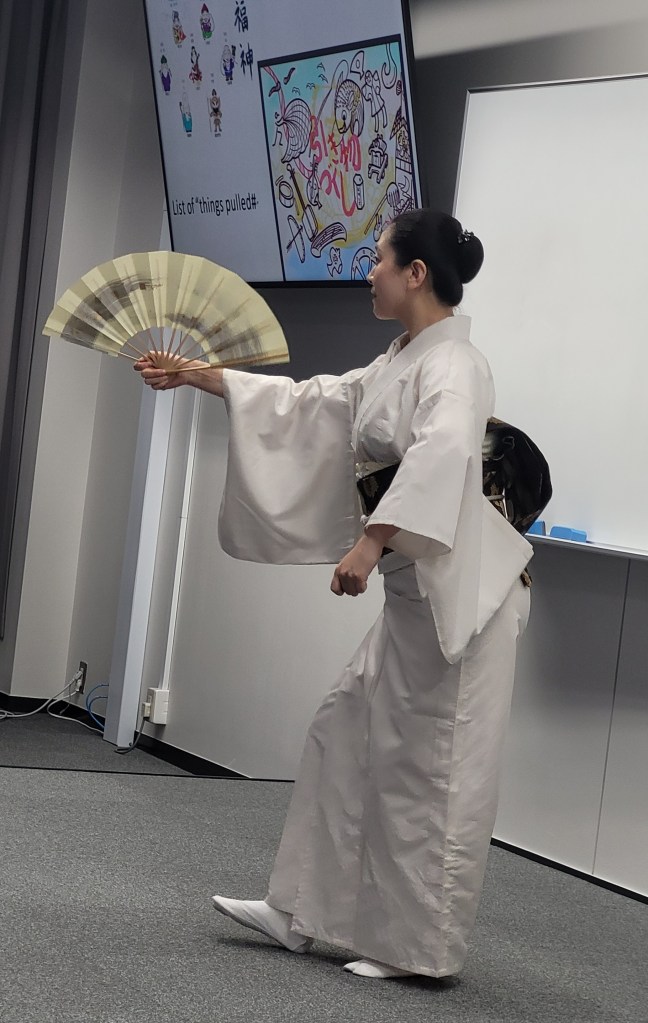
Nihon Buyo is Japanese classical dance, and I got to sit in on a lecture-demonstration one day at college. This graceful performer showed how the movements tell stories from folklore and everyday life, sometimes incorporating props like a fan. I noted how the dancer manages to be both restrained and extremely forceful simultaneously.




I’ve been twice to Kyoto’s excellent symphony, to witness a rare timpani concerto, where a percussionist is the soloist, and also Rimski-Korsakov’s “Scheherazade” under the baton of the incredibly nimble Nodoka Okisawa, who became the first female Chief Conductor of the City of Kyoto Symphony Orchestra in 2023. (My photo of the stage, and images from Nodoka Okisawa’s website.)
If you have not been to the symphony, you should go. You just wear something fabulous, and make sure you say at some point in the evening, “The acoustics are marvelous!”

One of the most incredible things I have seen in Japan would have to be the religious bonfire festival called Gozan Okuribi, or Daimonji Festival, which is held in Kyoto on the night of August 16th. The absolutest giantest bonfires are lit on the sides of five of the mountains which ring Kyoto, in specific shapes, meant to guide the departed ancestors back to their world, after the brief summer Obon Festival when they come to visit and are honored.
The thousands of wood slats for the fires are brought to a temple, where people inscribe messages and wishes, which are then officially blessed. Next teams of men haul the wood along with other combustibles like hay up the mountainsides in the summer heat to assemble the specific bonfire shapes.
All I had to do to see the fires was to figure out how to get onto the roof of my 10-floor apartment building. (If the building management happened to post a warning in the elevator in the days leading up to the event about not going up on the roof, I could always point out that I don’t happen to read very much Japanese.) I did a discreet reconnaissance mission a few days before and there was a door which I could open with my key, and then stairs to the roof above. With great anticipation I made my way there on the 16th, and joined a few of my equally determined neighbors in the humid evening fog. And at exactly 8 pm the first of the sacred shapes came alive! It was the kanji for “Great” burning on the side of an eastern mountain, and five minutes later we saw “Myo-Ho” or “Buddha’s remarkable teaching” on another mountain, then the ship that carries the ancestors, then another “Great,” and finally a tori, or shrine gate.


These are not the finest photographs, as I am not the finest photographer, so you will have to imagine how thrilling it was, perched on the roof just to get to see the fires. It was hard not to be impressed by the effort and the spectacle.

In November my pal Karin came to visit for a week to see the leaves and practice her Japanese. We had a splendid time exploring places; she has been to Japan several times over the years. She suggested tickets to a new exhibit by an arts group called teamLab, who had just opened a thing called Biovortex in Kyoto. I kept calling it “the lights show” before we went, and Karin, who had seen a prior teamLab thing in Tokyo, kept laughing every time I said this.
I actually had a vague idea that it would be some sort of immersive series of rooms lit in unusual ways with projected images and things that move and weird sounds, and of course I was right about this, because I already know all about art that is moderne. And I don’t need the teamLab website to tell me that “Everything exists in a long, fragile yet miraculous, borderless continuity.” You want long borderless continuity? Try those endless queues at the Osaka World Expo.
So off we went to the Biovortex. Which looks like this:


Yup. Everything in the Biovortex looks like a set from Star Trek: The Original Series.
You know, this could be a really good game called “Biovortex or Set From Star Trek: The Original Series?”
Okay, you have 15 seconds to identify the images below! Biovortex or Set From Star Trek: The Original Series?

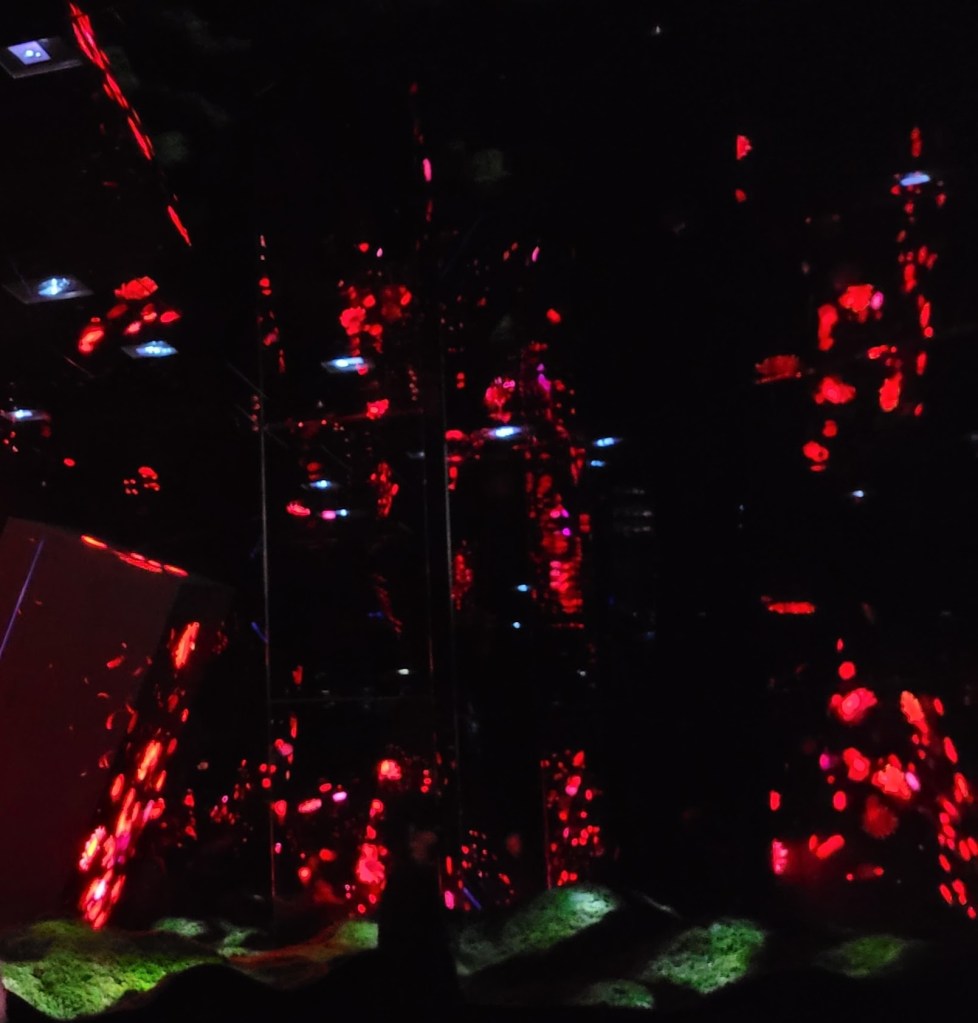
You got it right if you said: “The Horta from the episode ‘The Devil In The Dark,’ Season 1; Episode 25, first broadcast on March 9, 1967, and Biovortex ‘Megaliths in the Eternal Existence of the Open Universe!’”
I know, that is the best game!
The sprawling Biovortex room called “Graffiti Nature and Beating Earth” was immersive and interactive. You got to choose an animal picture to color in, and you could keep it if you wanted to.
I went with Japanese Giant Salamander, and got to work with the crayons, a creative medium I am somewhat familiar with.

Then you could also hand your picture to the staff at a weird scanning machine and in seconds your drawing came slithering out onto the floor as a life-sized animation, and started lumbering across the room.
The Biovortex is a strange and wonderful place to visit. And the only good Japanese Giant Salamander to hang out with is a polka-dot cartoon one.


And this is not a picture of going anywhere! It’s a picture of heading home. This is a picture taken inside the No. 5 bus going to the bus stop nearest to my apartment in Kyoto. Because sometimes “back home to the apartment in Shijo” is the only excursion you want to take.
All of us here at Where No Mangoes would like to thank you for dropping by, and we wish you some very nice holidays this holiday season!


 Where No Mangoes
Leave a reply to nealfriedmane760205a7c Cancel reply