
Huckleberries and Hamburgers, that’s right, coming soon. . .
When last we glimpsed our two stalwart protagonists, they were in a bright yellow truck heading westward out of Iowa as the sun began to set, hoping fervently that Nebraska had at least one decent motel. Let’s leave them for a while as they meander along the highway, chewing their now slightly stale bagels, washed down with whatever delightful local delicacy the road-side gas stations stock in their non-alcoholic beverage sections…





Meanwhile in Kyoto. . .
It’s time for some updates from Japan! Here today are some highlights from my recent time in Japan, before returning (in the next thrilling blog installment) to see if I actually make it to Japan. Oh, the suspense of it all!
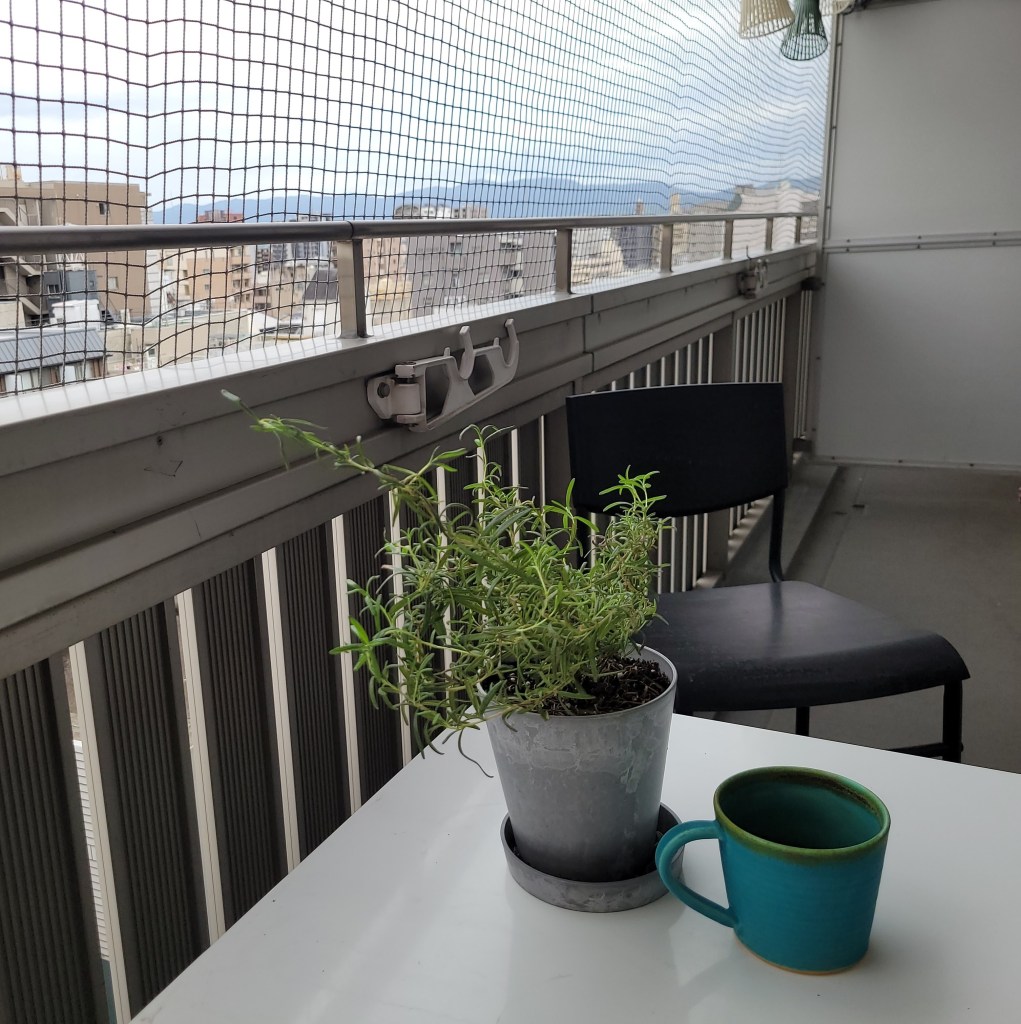
Everything was good in my neighborhood. My balcony was waiting for me.
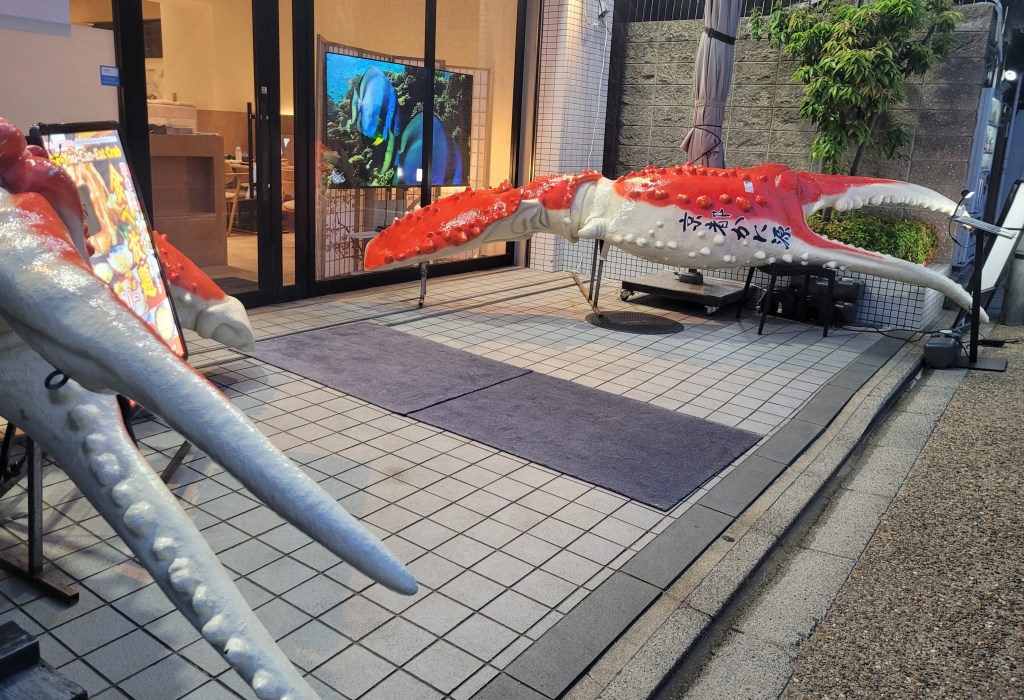
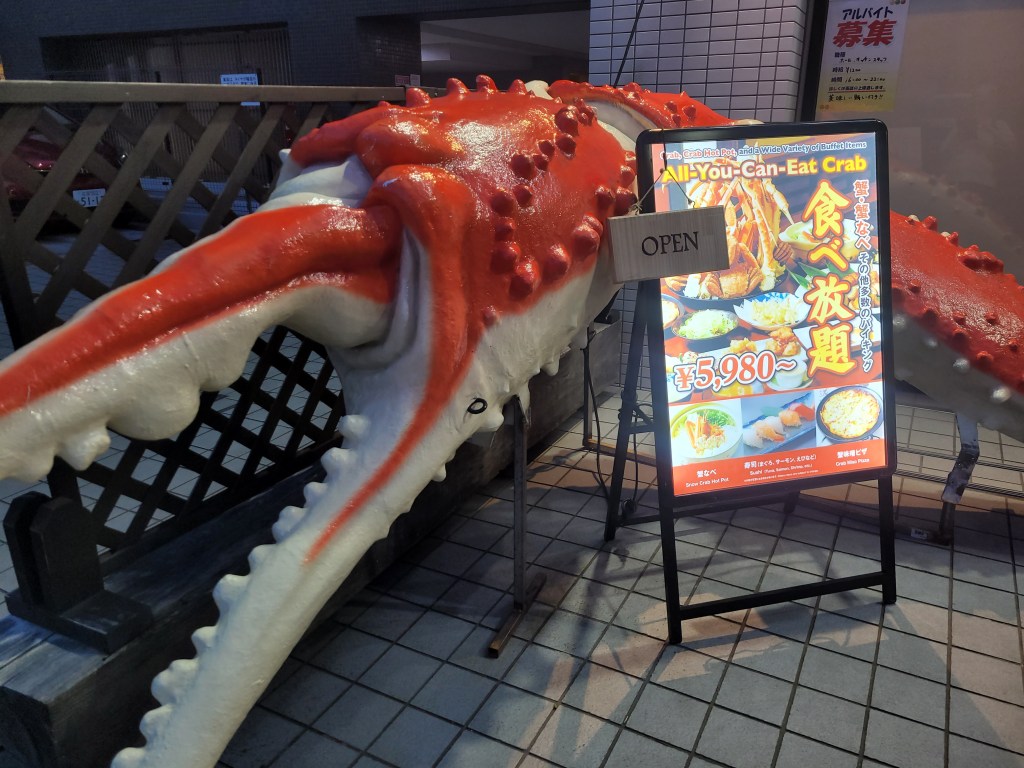
A bonkers new all-you-can-eat crab restaurant had just opened not too far away. I probably won’t be eating there because it is $$$ phenomenally expensive, and also truly, with the giant crab claws, bonkers.
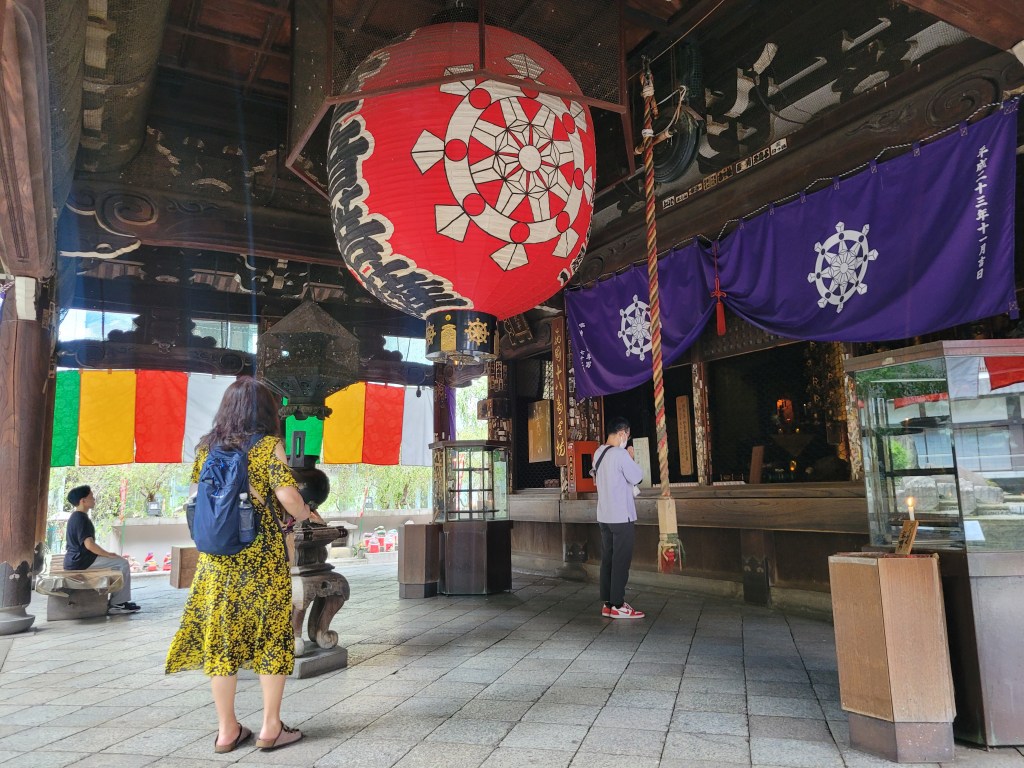
Shortly after I returned I stopped by my local and favorite temple to put five yen in the box and say hey to the Buddha. (I mentioned that we could use that “world peace” thing about now. Really, anytime now would be fine.)
I brought one of my bicycles with me to Japan this time, which would need to be put back together, but I did not get started on that right away. The bike store did a very good job of packing it/ disguising it as a piece of conceptual art.


There was theater to attend! This is the opening curtain of a Takarazuka show, the all-women musical theater company, in a gothic vampire drama.
“Vampire” in Japanese is kyuketsuki or bampiira.
With all the really necessary Japanese vocabulary I still need to learn, I am not sure I want to allocate any valuable brain real estate for “kyuketsuki.” The vampires, though, may have taken root there already.
Then it was the Obon season, a time of year when the beloved who have passed away can travel back to visit the living and be honored with welcoming festivities. I was really happy to be back for this.
People set up altars in their homes and head out to clean up graves. Japanese people are very sincere about this event which mixes very ancient beliefs in spirits with later Buddhist rites to honor the dead.
On the final night of Obon huge bonfires are lit on the mountains surrounding Kyoto, the Daimonji (“big letters”) or Gozan no Okuribi (“five goodbye fires”), in specific shapes to narrate the voyage of the dead back to the other side. This event does happen in other places in Japan on a smaller scale, but Kyoto’s is the largest and most famous, with five massive mountain fires wrapping around the city in the night.
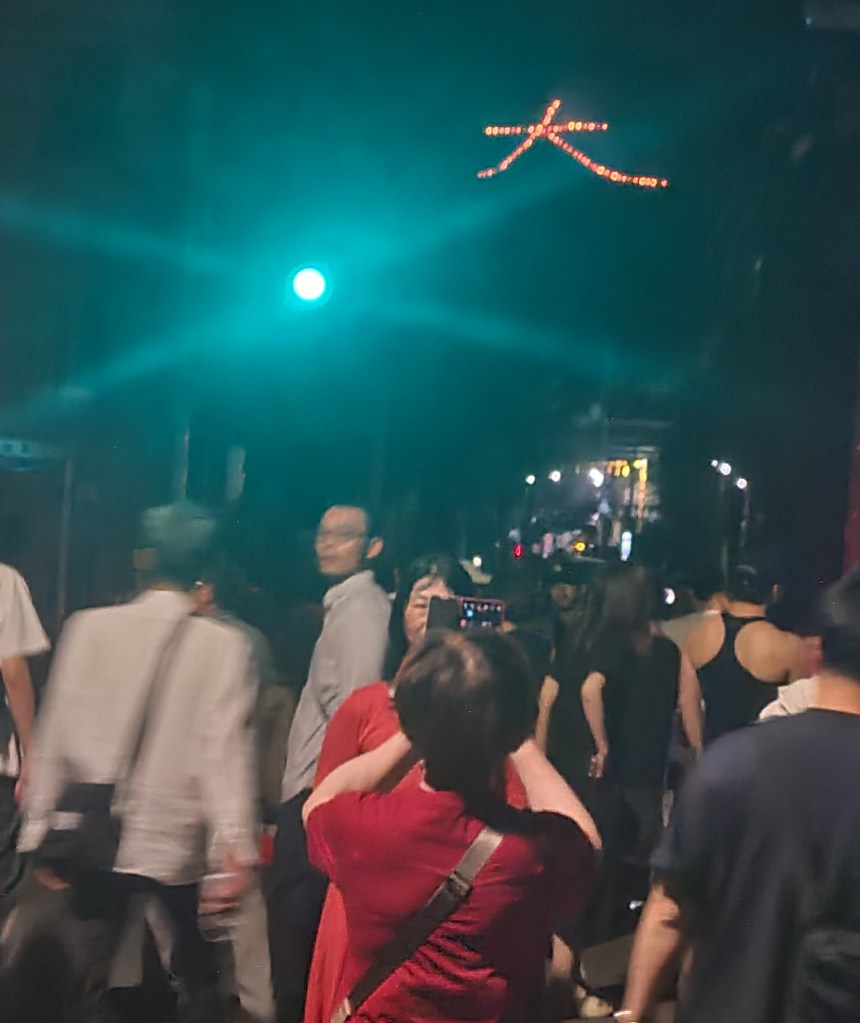
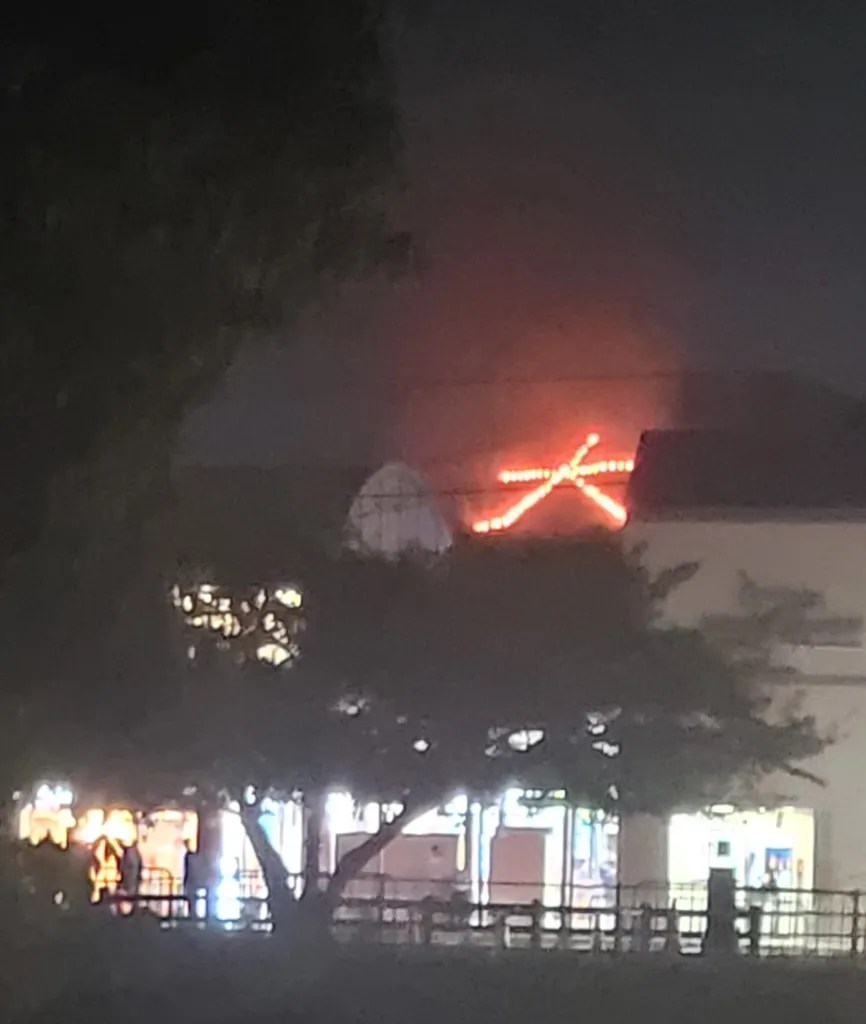
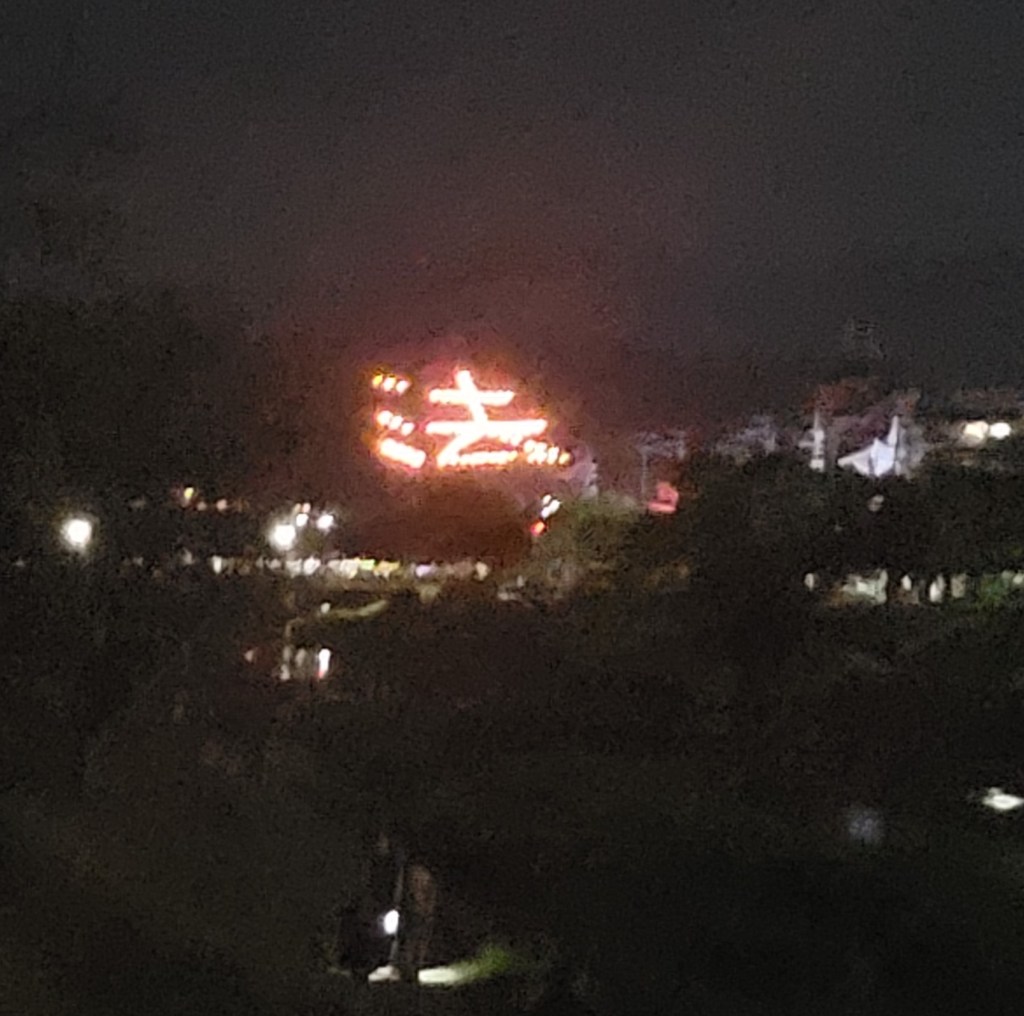
At 8:20 pm precisely the first fire is lit, in the shape of the letter “Dai 大” which means large. Every 10 minutes another fire is lit on other mountains surrounding Kyoto: 法, a letter referring to the Buddha’s teachings; then a boat to carry the dead back to the other side; the letter “Dai” again; and finally a tori gate, the traditional square-arch entrance to a shrine which divides the ordinary from the sacred space.
It is a surprisingly moving and exciting event, as the flames emerge in the darkness and the crowd shifts to see them, and everyone takes pictures, and some just stand in solemn remembrance, saying goodbye. Last year I watched this ancient rite from atop my apartment building with just a few other people, but this year I went with friends to see what the fires look like from street level, which is how people hundreds or even thousands of years ago in Japan would have seen them.
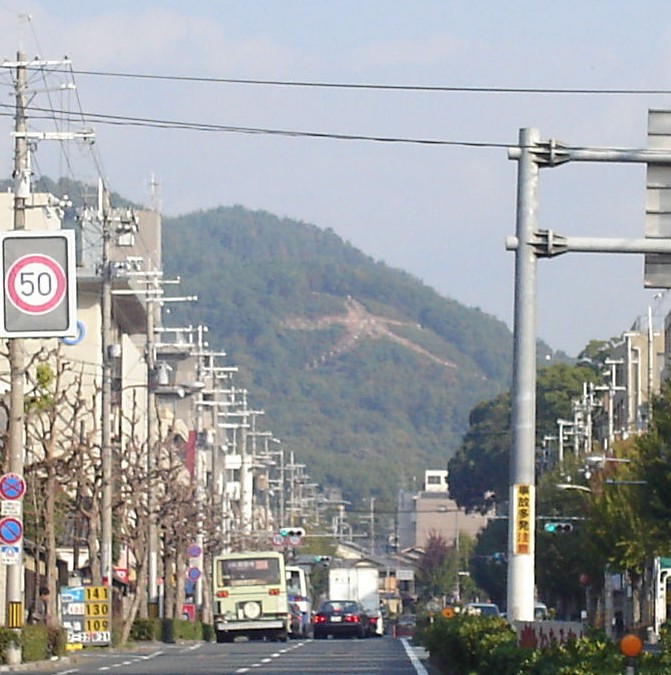
This photo called “Hidari Daimonji without fire” (by PlusMinus from Wikipedia Commons) shows how large the fire sizes are! Specific Kyoto families or clans are accorded the responsibility of building and lighting each fire, and it takes days to haul the wood and straw up through the forested mountainsides to construct these massive fire structures, at the hottest and most humid time of the year.
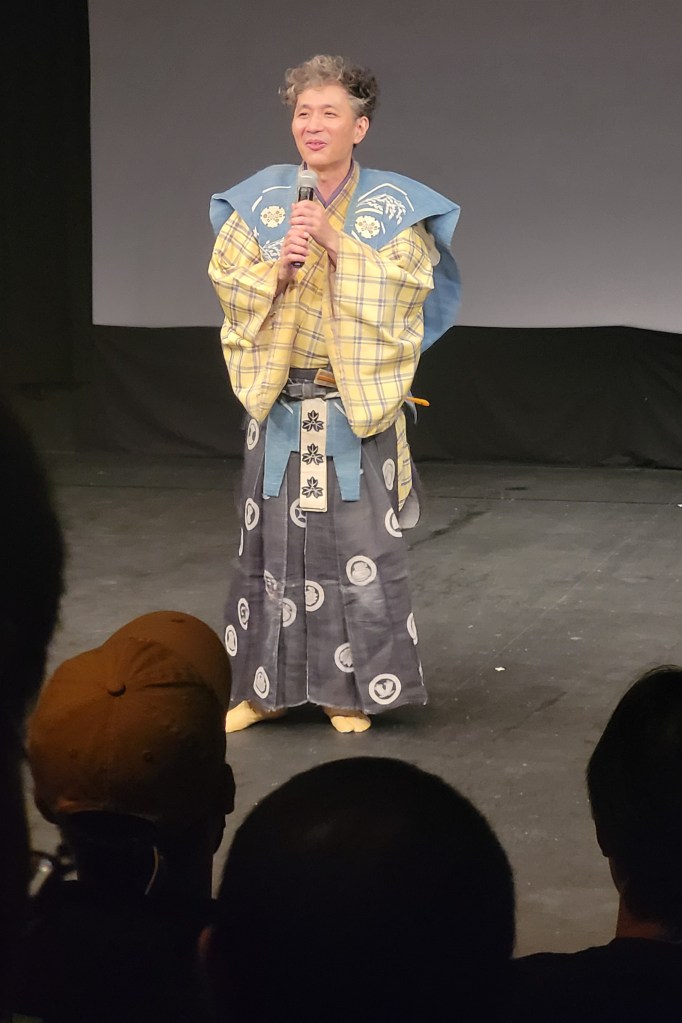
I also attended a Noho Theatre Group performance of Kyogen, the traditional comic plays performed in-between traditional Noh dramas — in English and Japanese. Kyogen in English is very rare. The novel scripting was done so one always knew what was going on even in the “other” language. It was very comical! Here featured actor Shigeyama Sennojō, who played the role of wily servant Tarokaja, addresses the audience after the show.
But I had a garden to work on! Got balcony? Need plants!
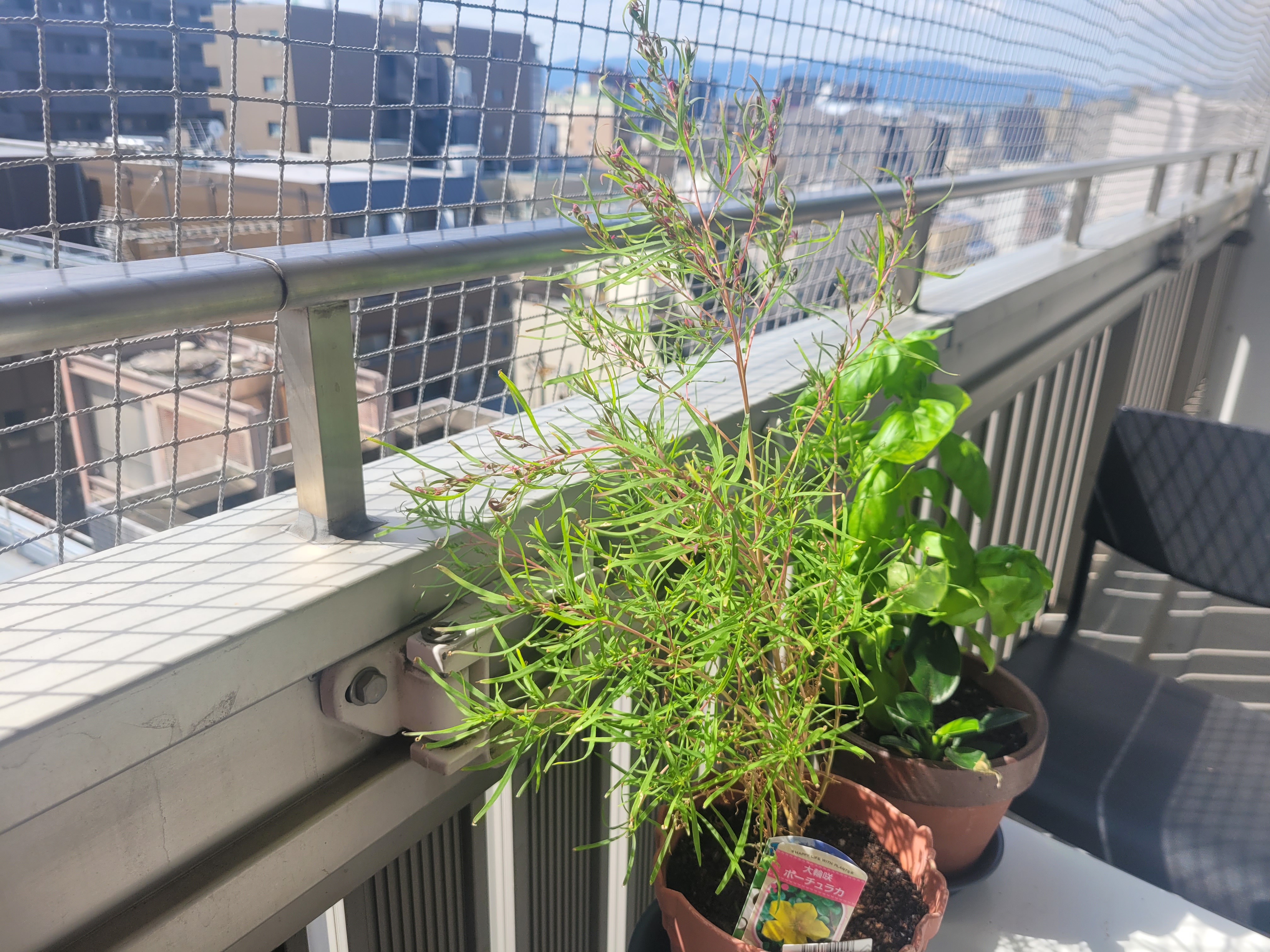
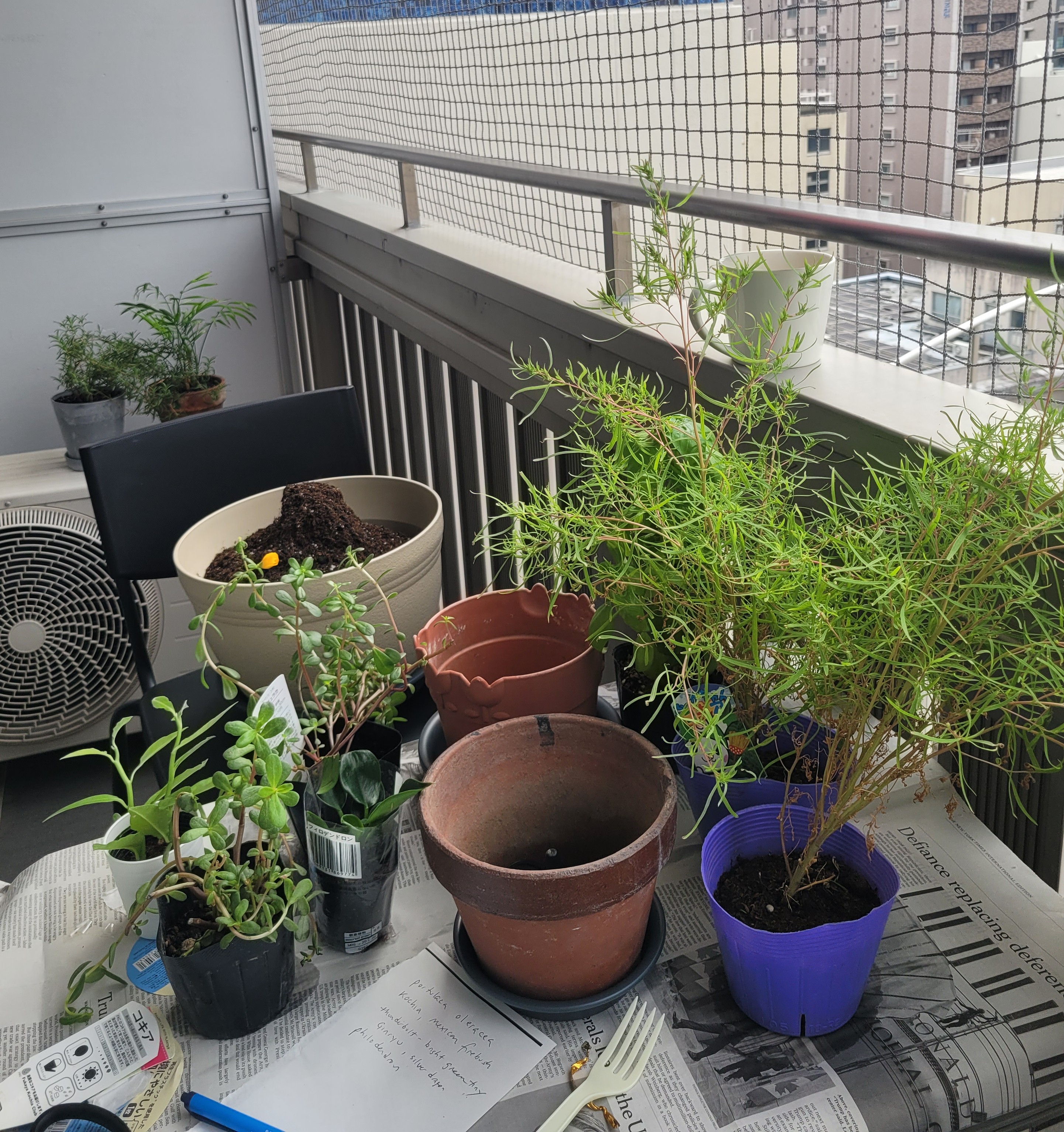
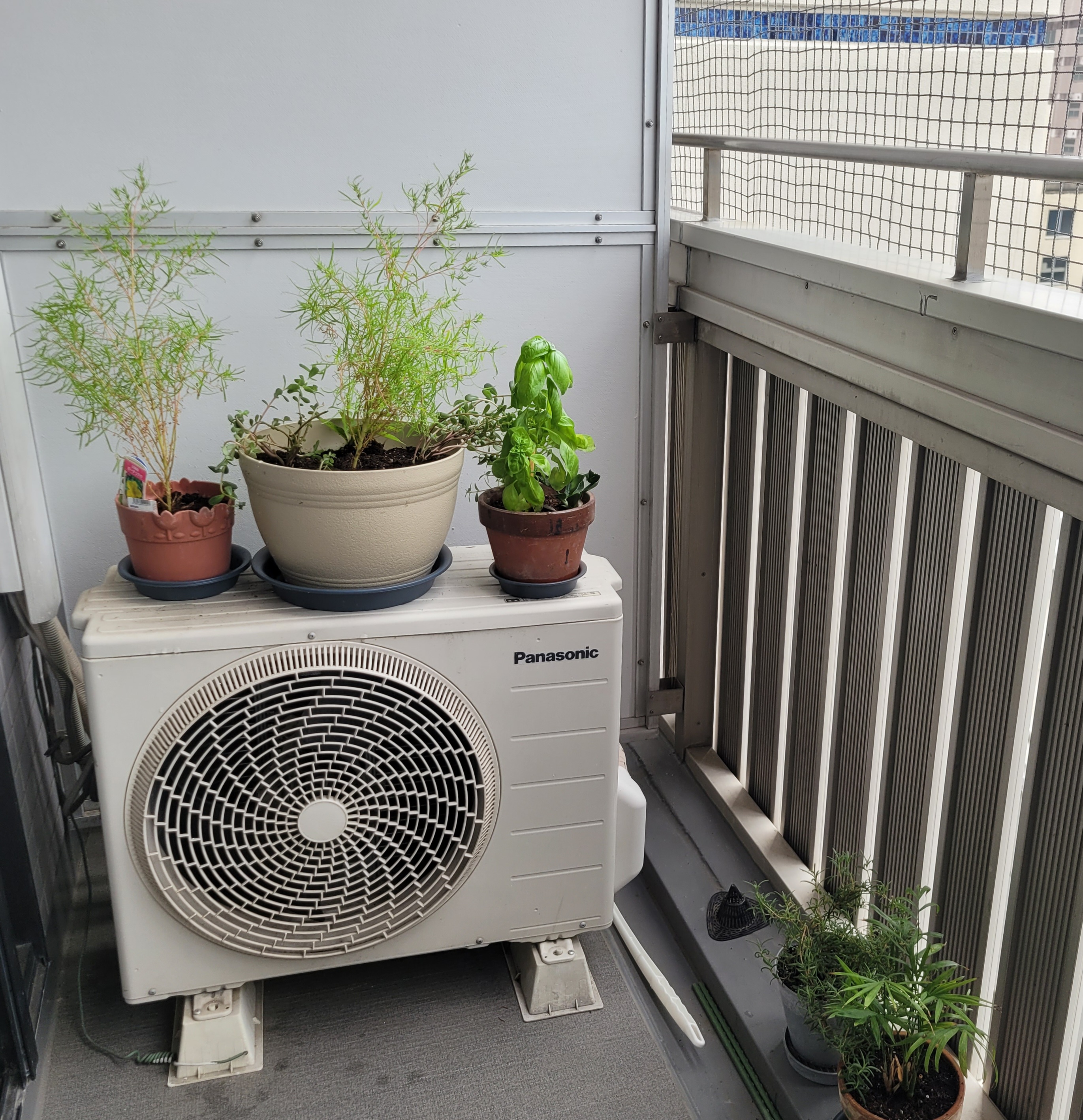
It is now all growing like gangbusters out there.
Quick Quiz: What is this ridiculously packaged thing I bought at a shop?
Hint: Remember, this is Japan.
a) ice cream!
b) a washcloth
c) sweets!
d) a washcloth
e) a washcloth
Dude. It’s a washcloth.

There was an absolute ton of prep to do for my classes, as college was going to start soon!
But I took a break from all the syllabus construction and inspired assignment design to visit museums in Arashiyama one Saturday, riding out to this western area of Kyoto in a rather cute old-fashioned trolley car.
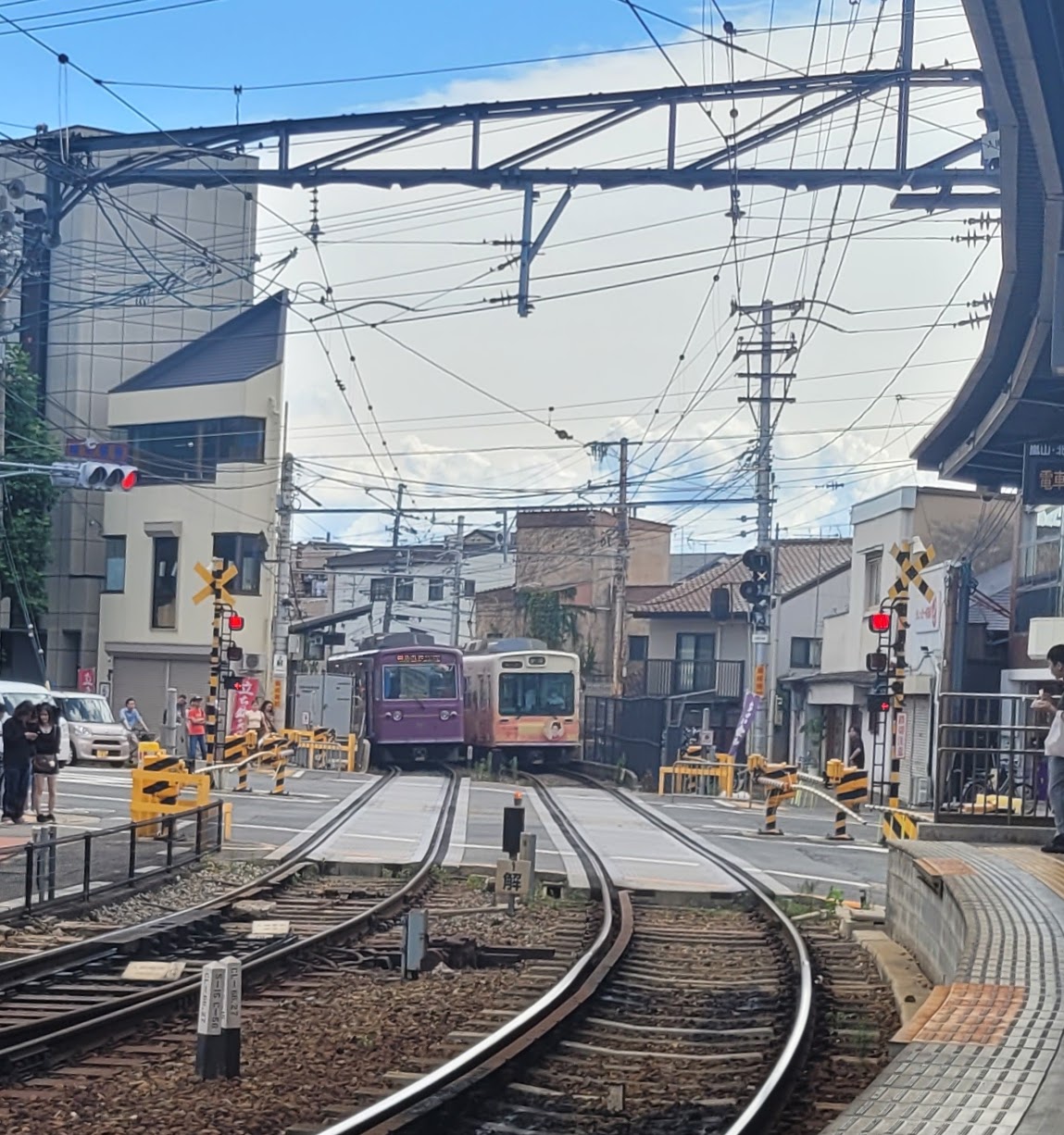
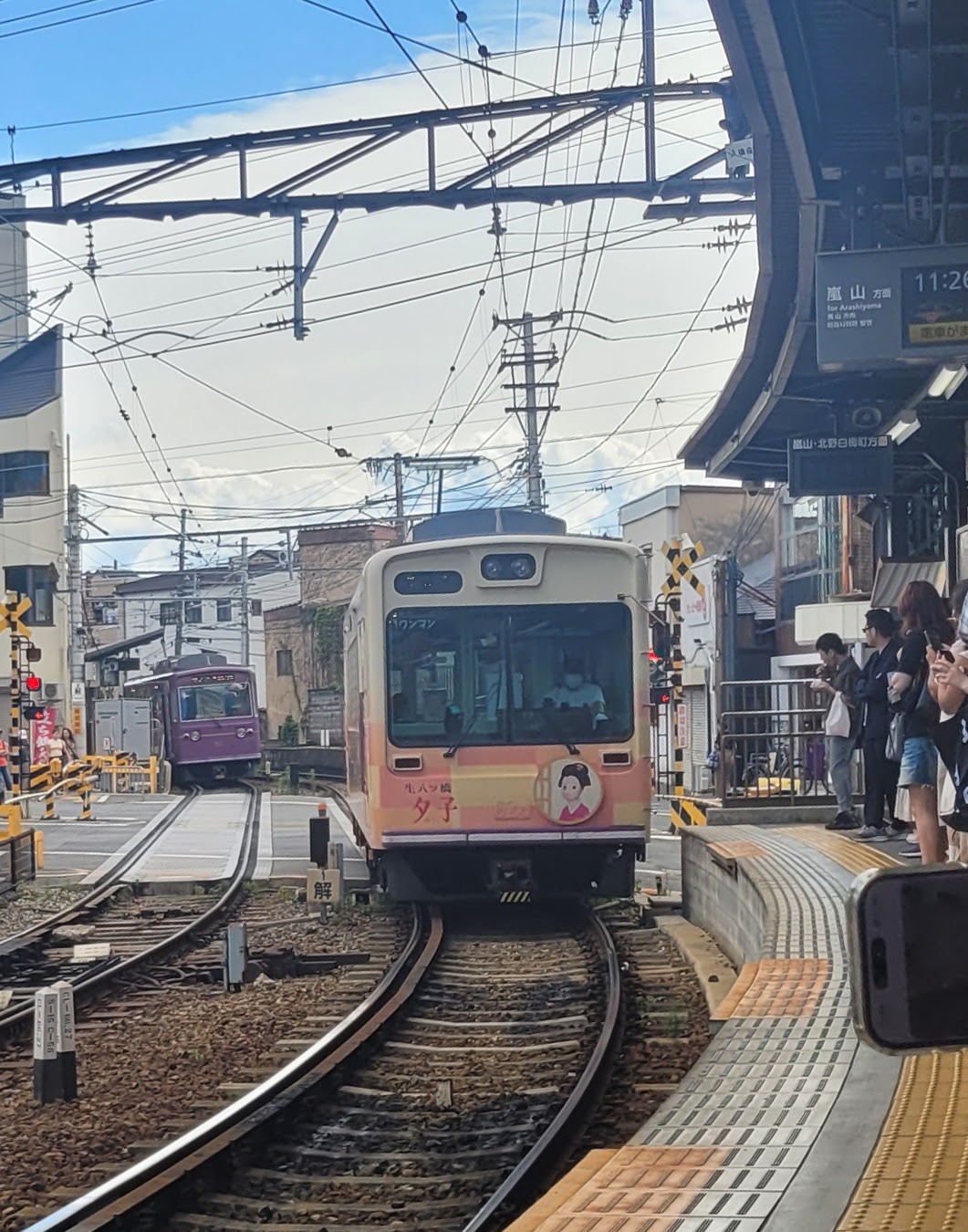
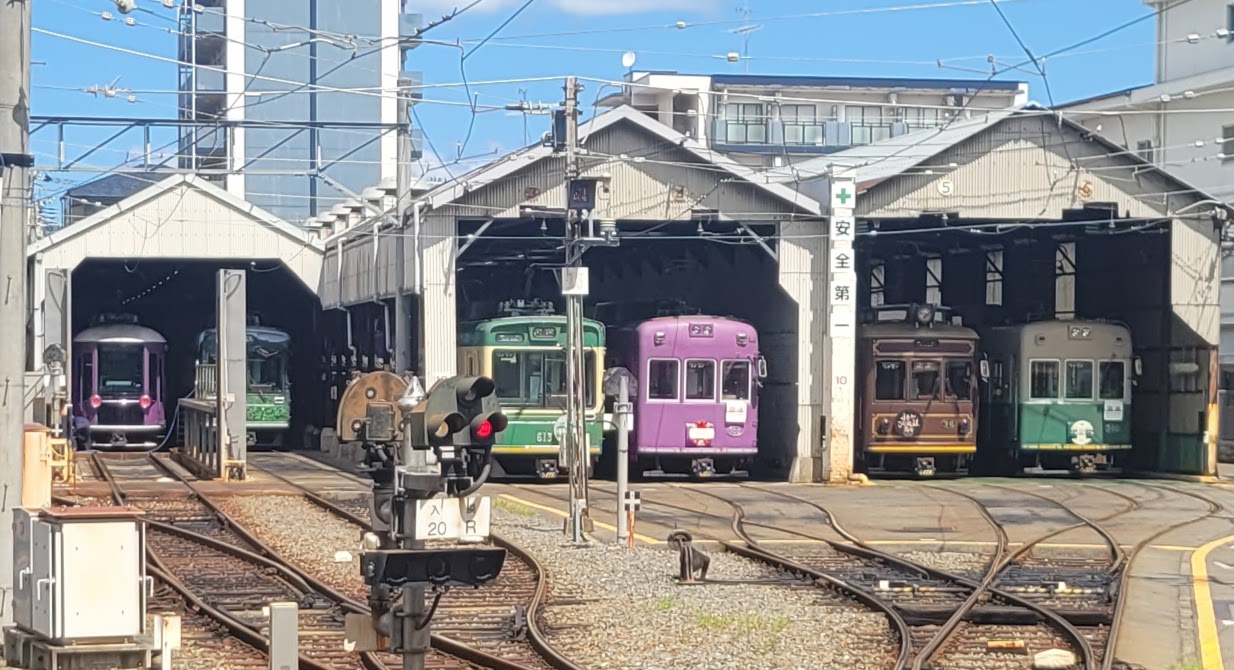
Arashiyama runs along the scenic Katsura river, or perhaps the Katsura river runs along scenic Arashiyama. At any rate it is very scenic out there.
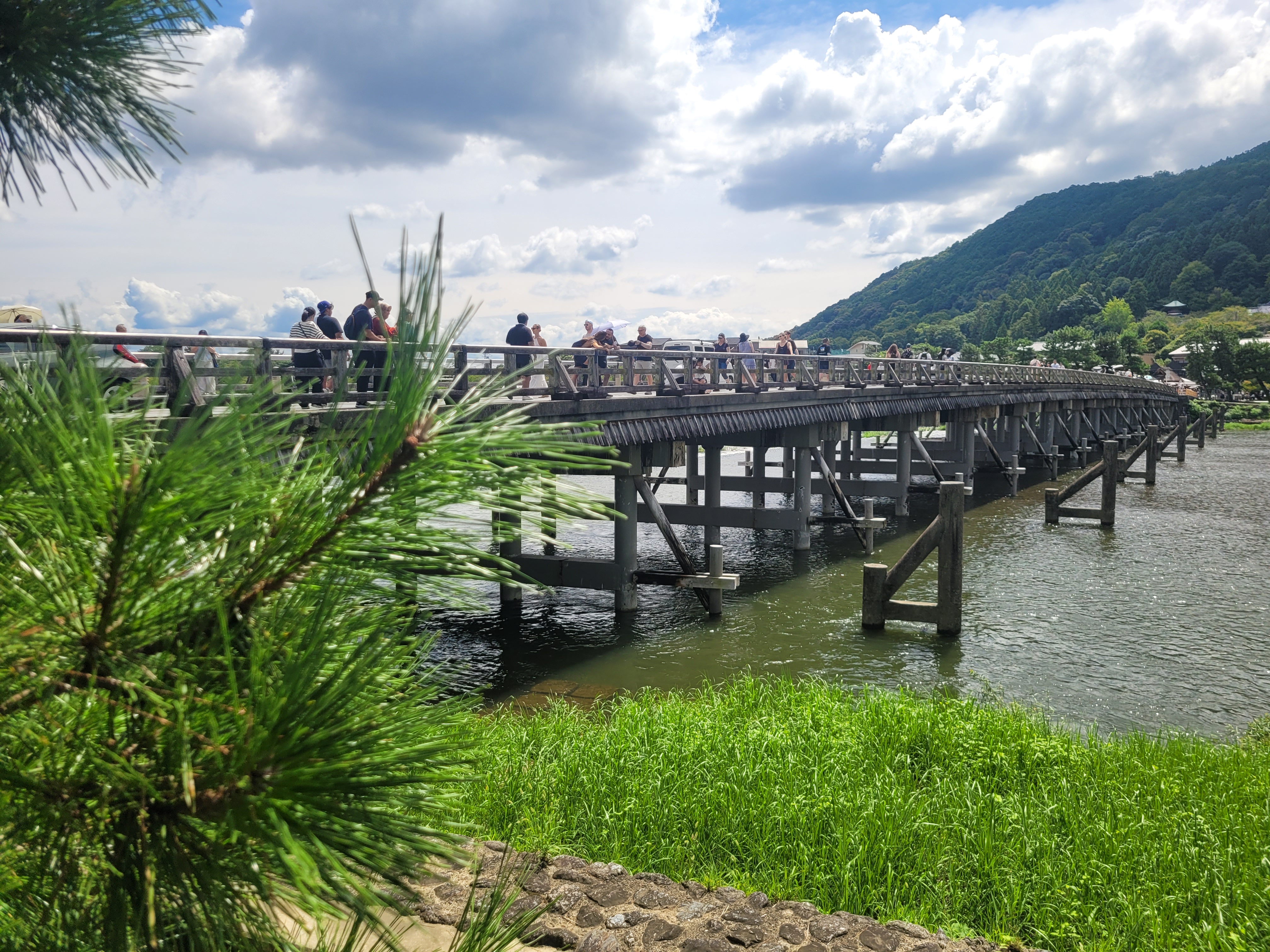
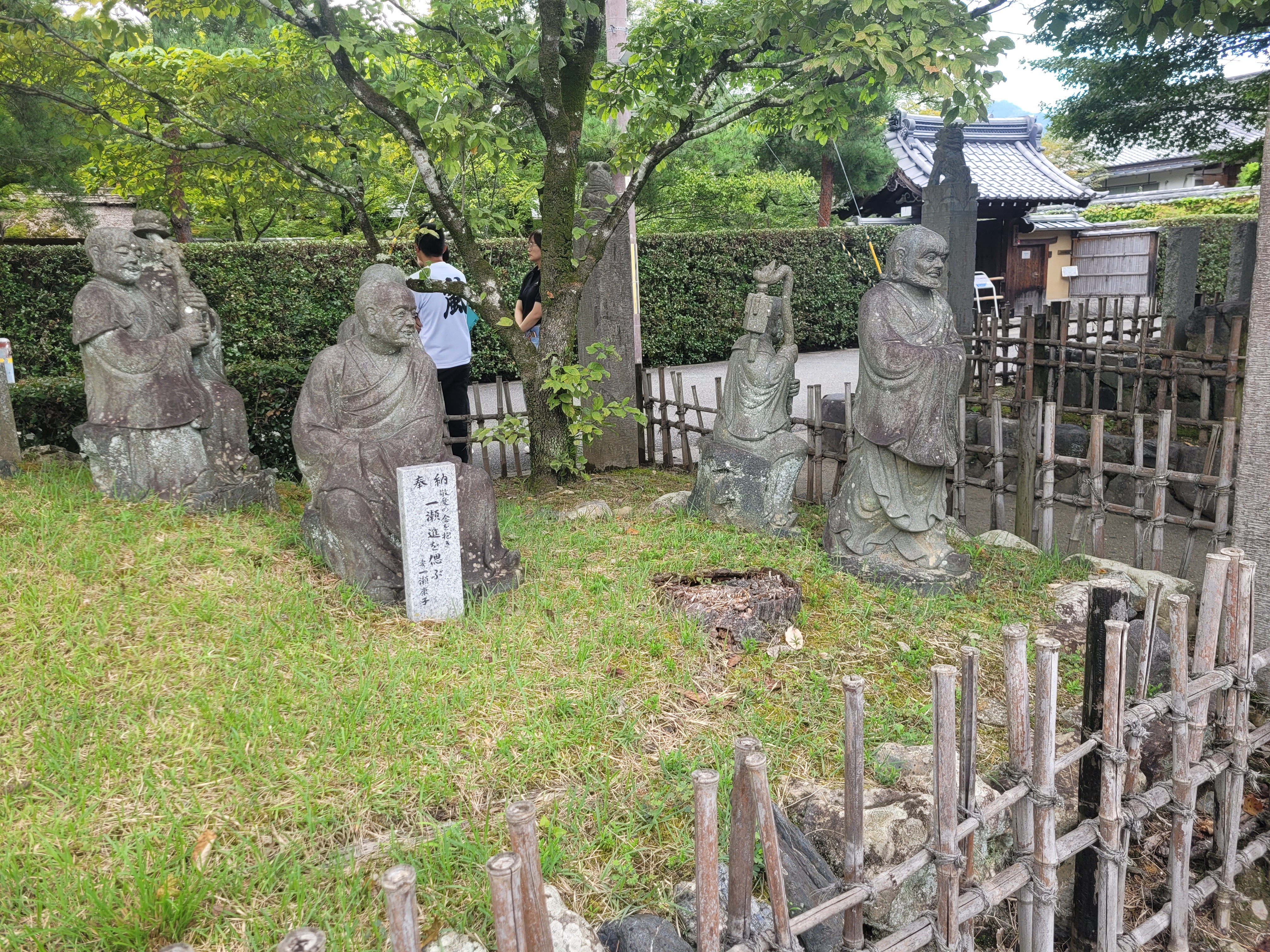
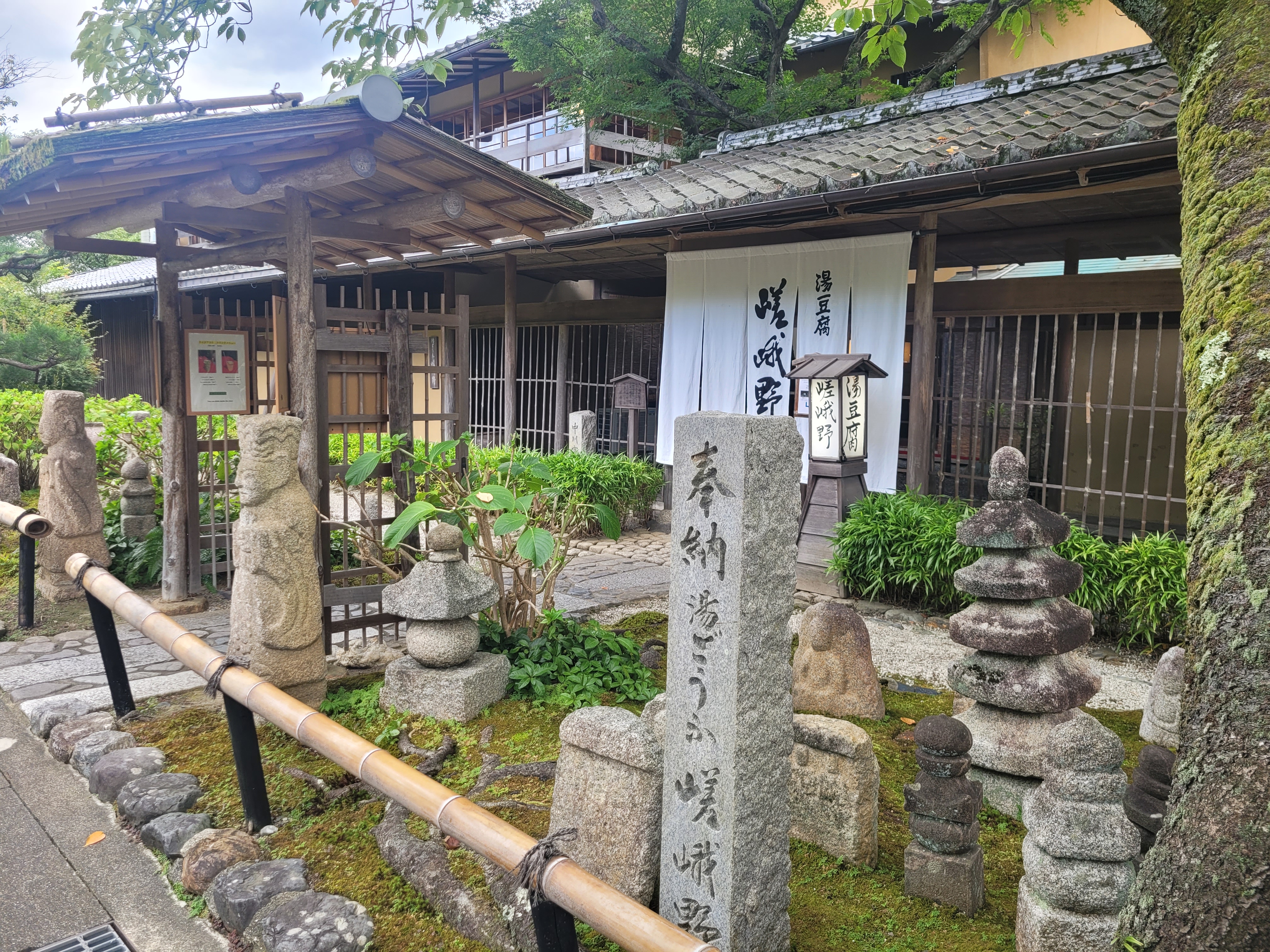
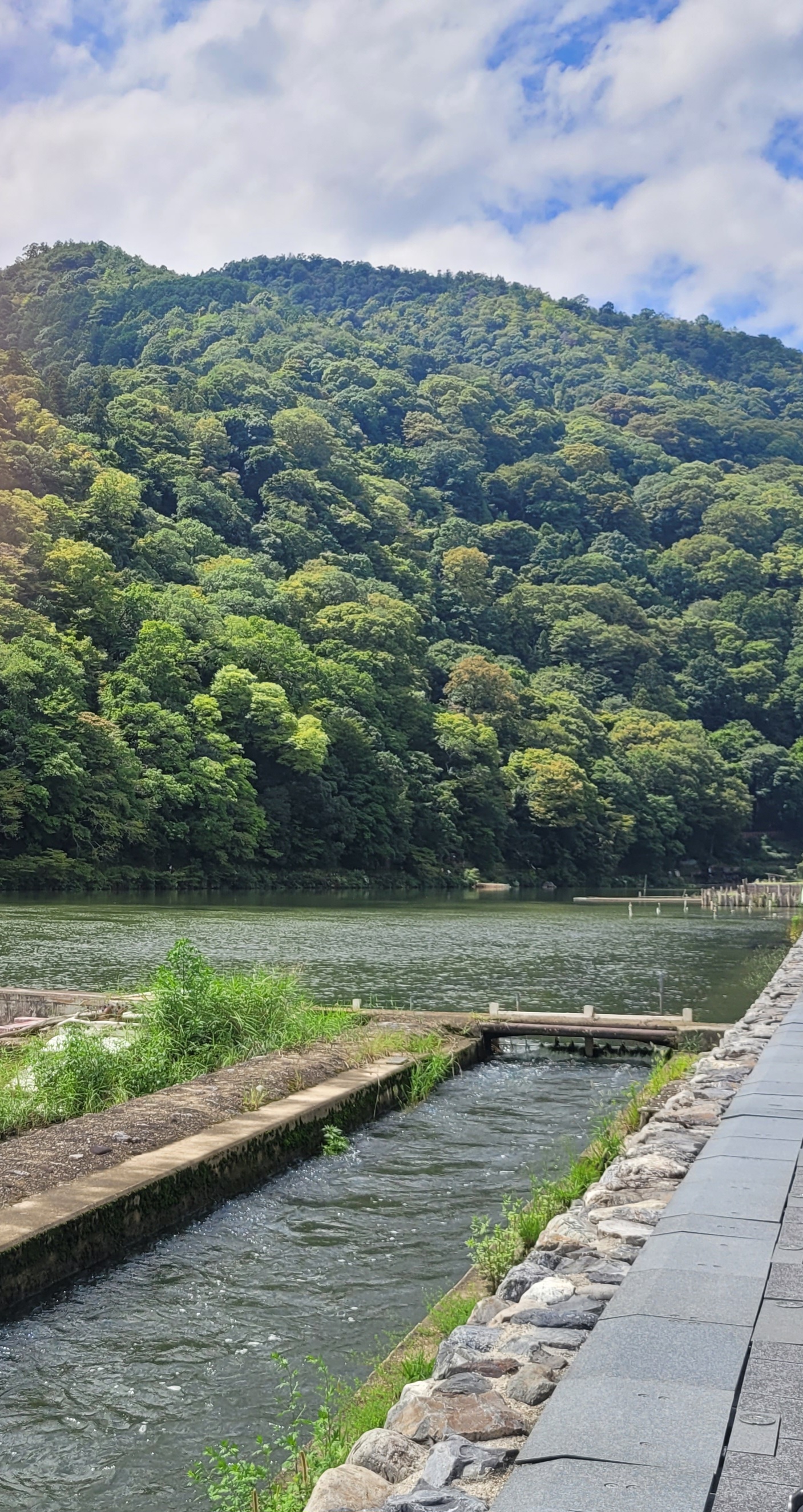
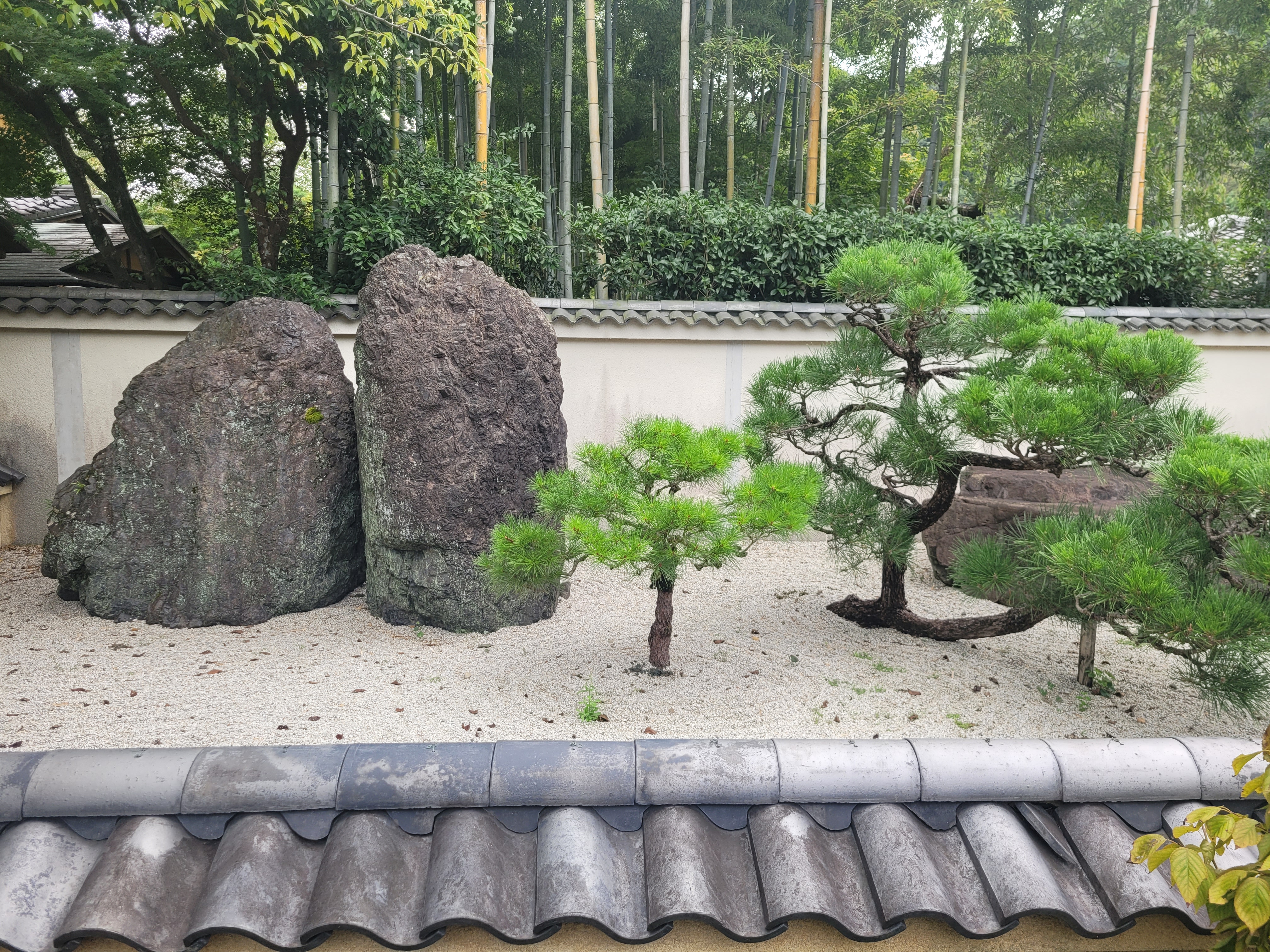
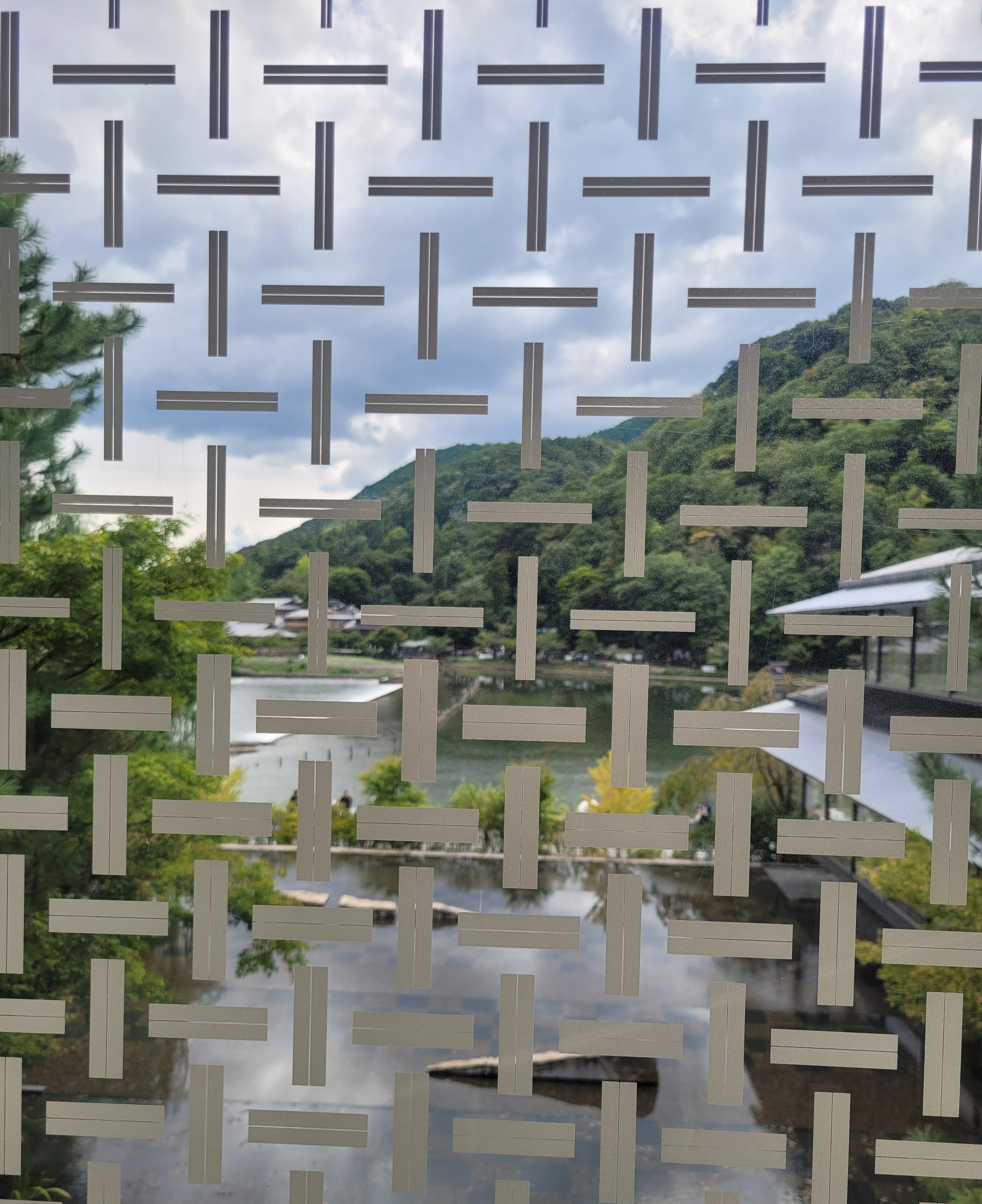
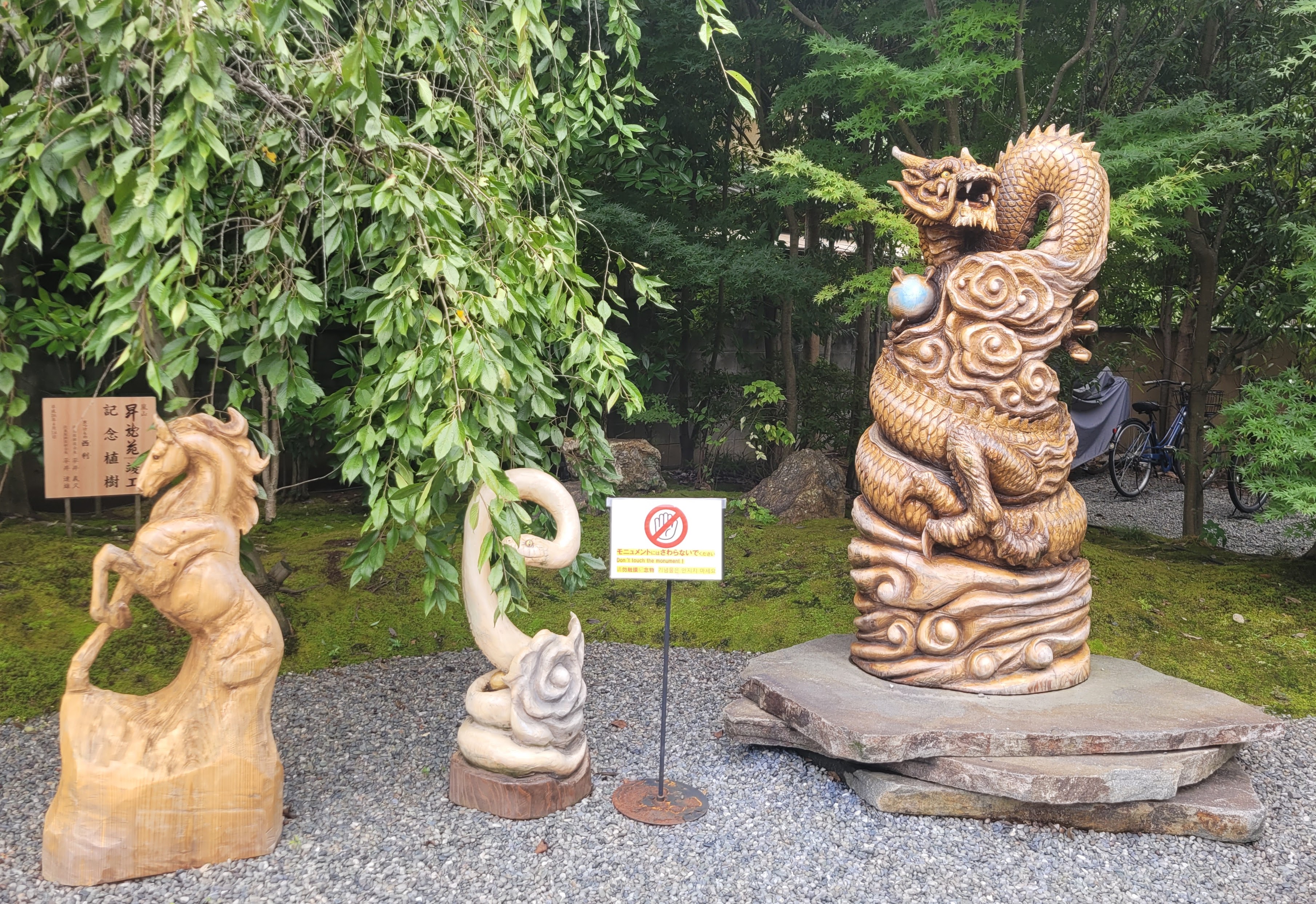
The Saga and Fukuda museums in Arashiyama are almost next to one another, and offer a combined bargain admission ticket to visitors, so I went to both. My original destination was the Saga, because it is a literature and art museum! It celebrates the early-1200s poetry anthology called Hyakunin Isshu or One Hundred Poems by One Hundred Poets. These are waka poems, short but structured traditional verses; the poet-anthologist, a noted local writer named Fujiwara no Teika, selected works from as early as the early 600s and up to his era, around the year 1235.
If you want to try writing some waka, you will need to sharpen your haiku skills for the first section of 17 syllables in a 5-7-5 syllable pattern, and then haul out and polish some more syllables for the final 14 (7-7 pattern).
This ancient poem
Which dates so very far back
Stays modern and loved.
Today’s kids read them in school
And play darn-fast verse card game.
Yes, there are decks of cards with the Hyakunin Isshu or One Hundred Poems by One Hundred Poets! And a fast-paced competitive card sport has arisen! Two players face off with cards arrayed between them, each card with the last two lines of a waka; a reciter starts to read the first three lines of a random Hundred Poems waka and the players slap! whack! the correct waka card with those finishing two lines to the side as soon as they recognize the verse! Players have all the poems memorized, and very fast reflexes too, for this super-speedy poetry game which is played in tournaments widely in Japan. Imagine ping pong with poetry.
Here are some of the 100 poems displayed at the Saga museum with their respective authors depicted:
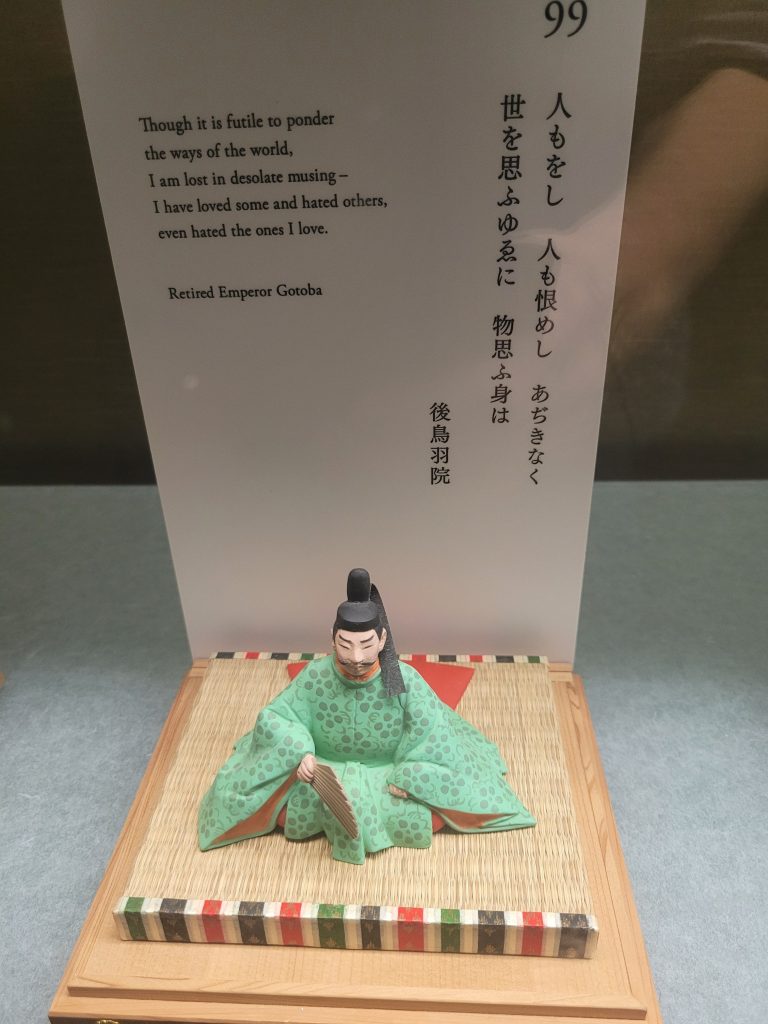
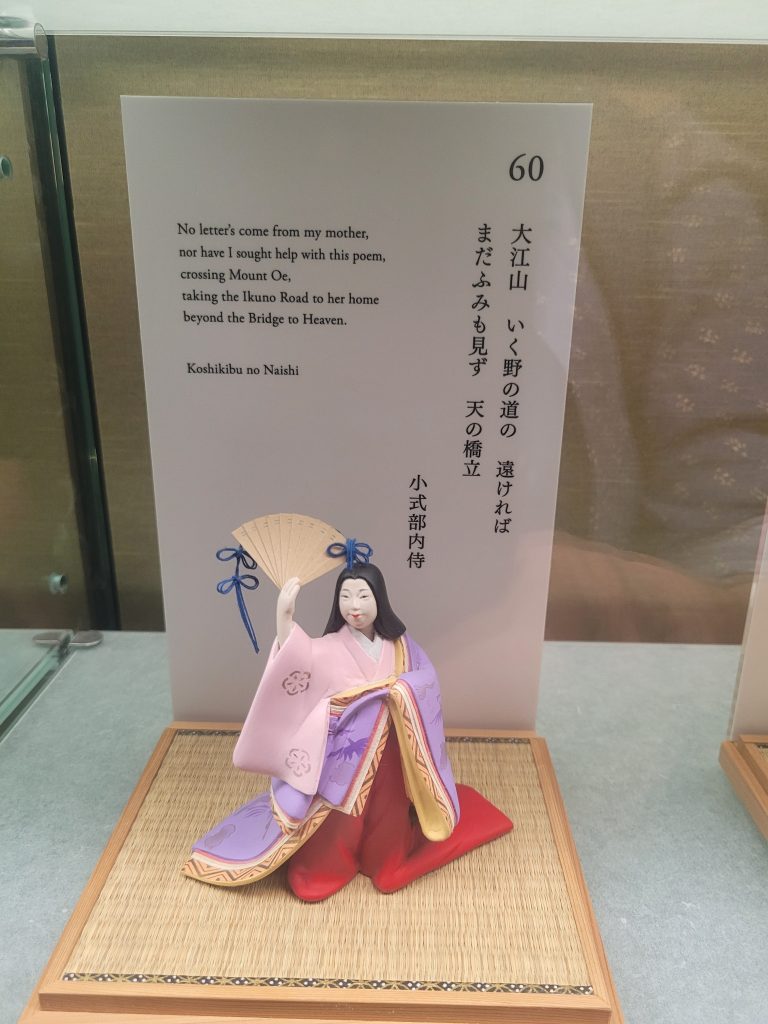
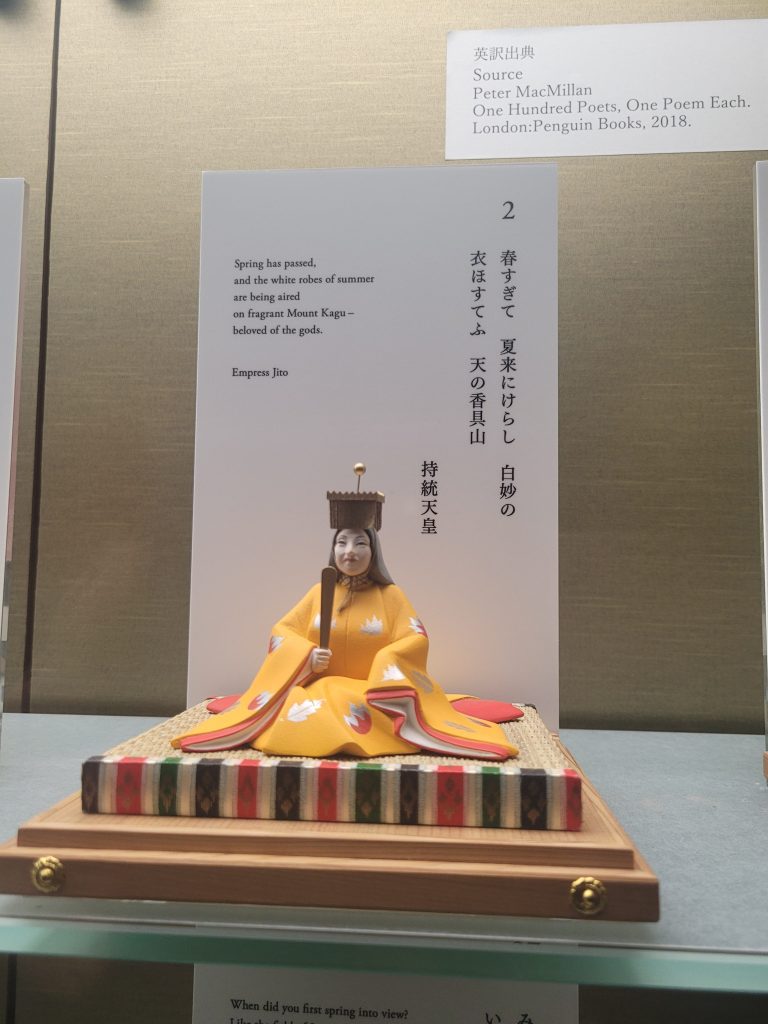
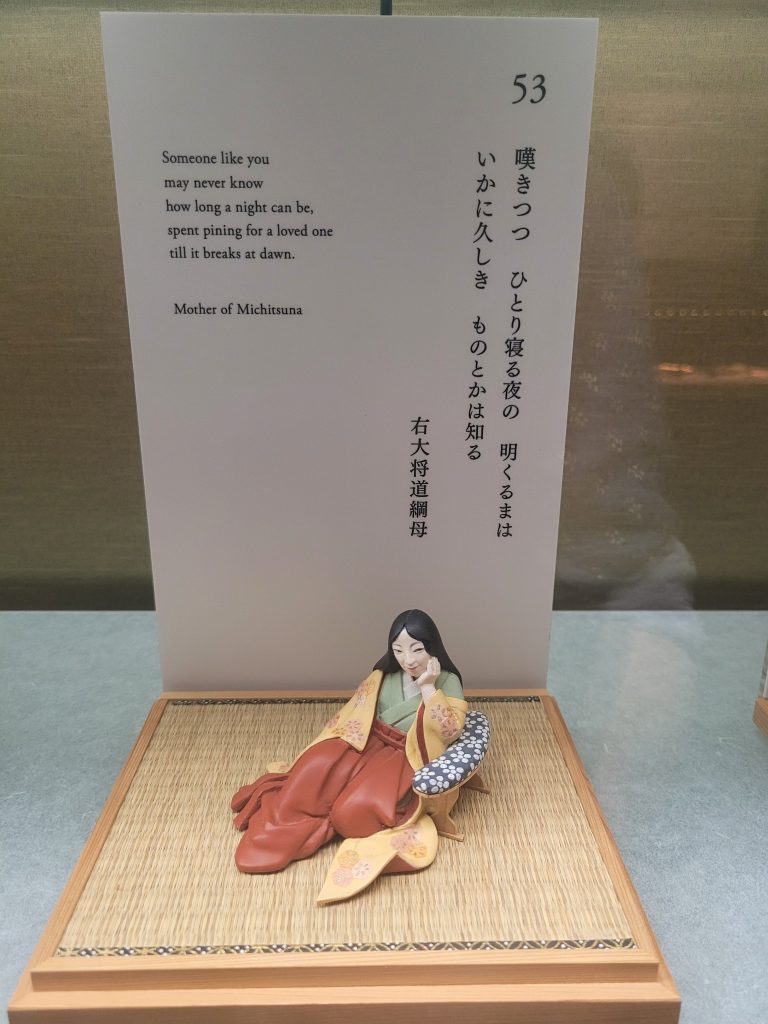
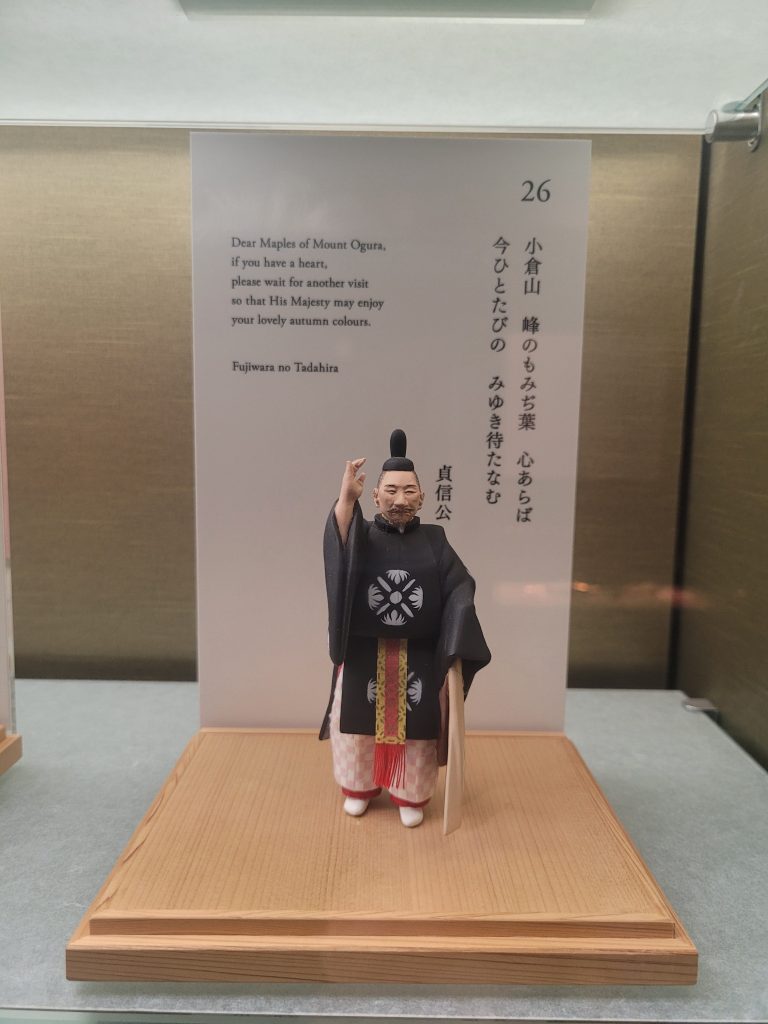
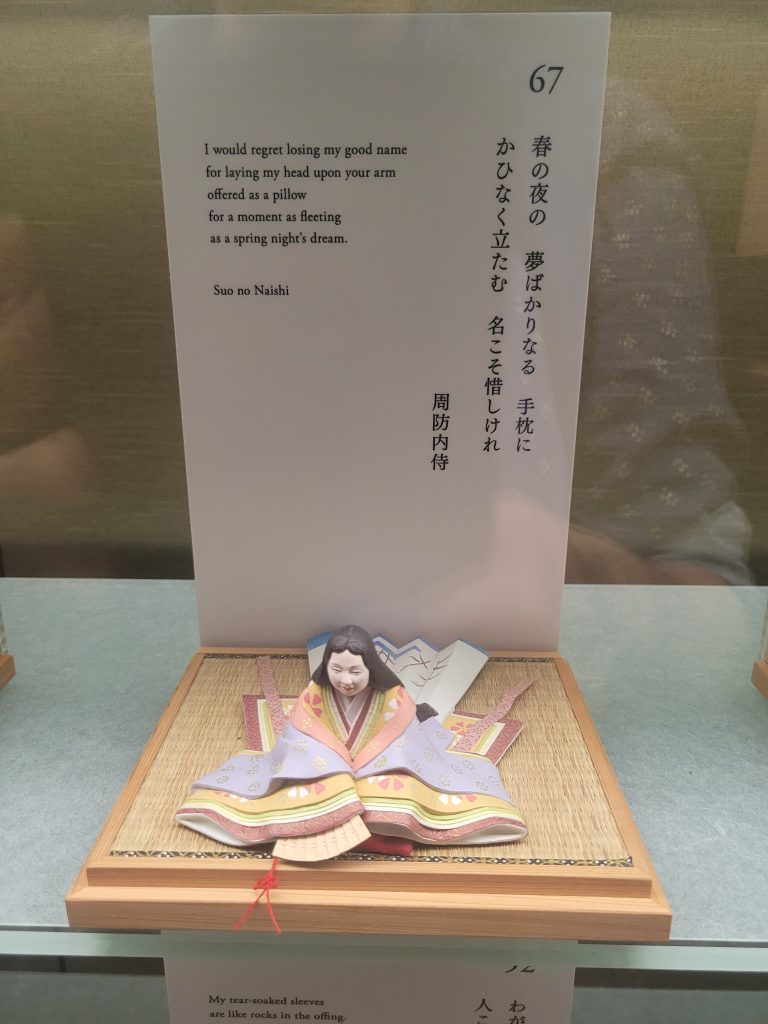
Good heavens, reading 100 poems and then watching videos of young people playing uta-garuta, the rapid-fire whack-a-poem card game, is exhausting!
So I retired to the Saga museum cafe for a very small coffee and a very large cheese toast.
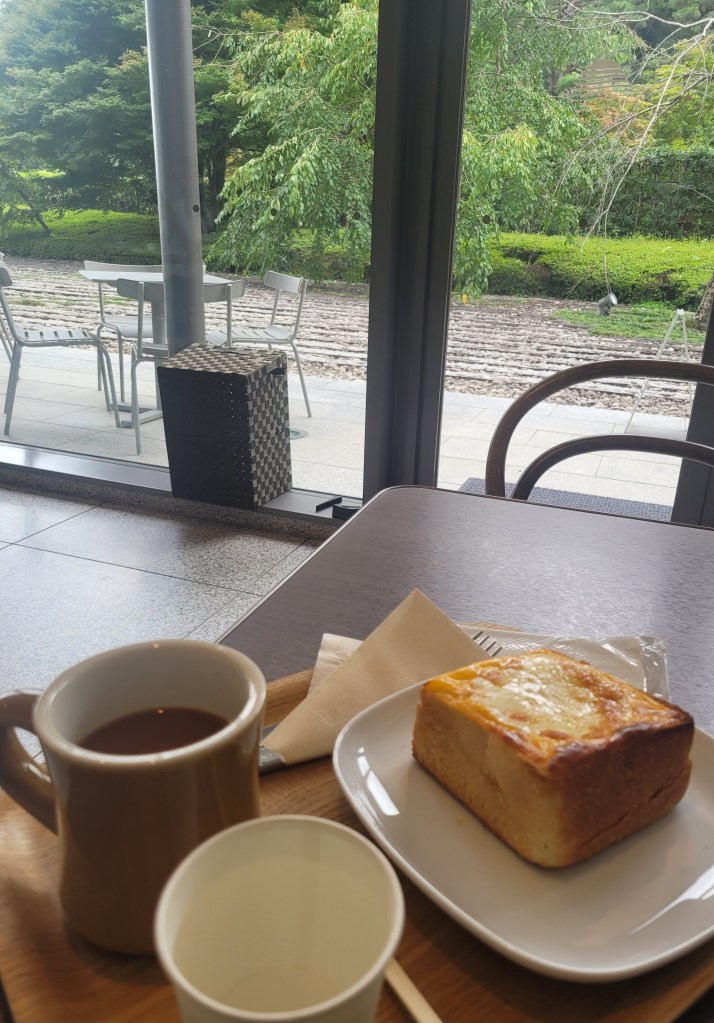
For those who are waiting for me to do the math, that is indeed a 791-year-old poetry collection still very active in public consciousness and culture here in Japan.
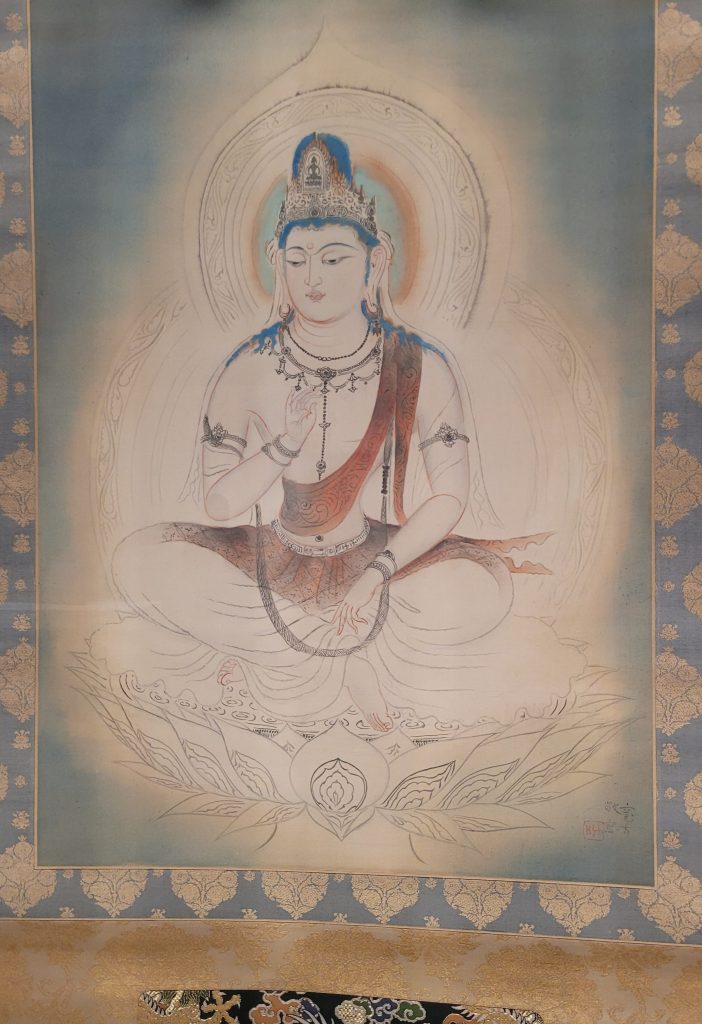
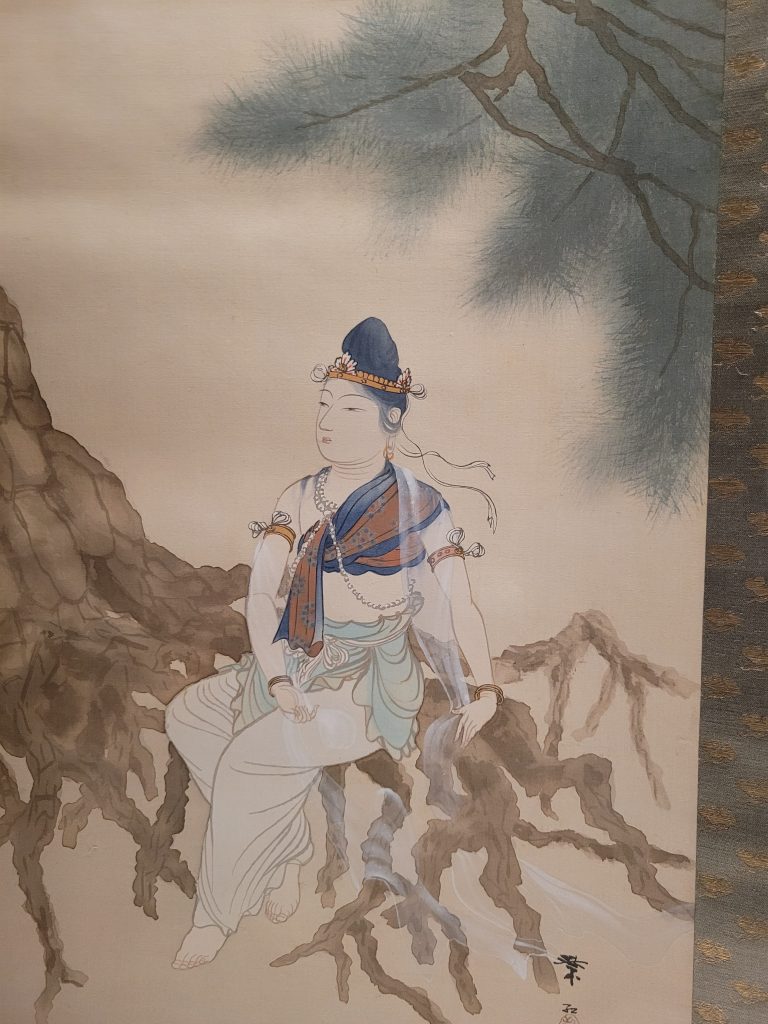
Next, the Fukuda museum with its Buddhist and auspicious art exhibit!
These are venerable Buddhist paintings, painted on silk with great delicacy and precision.
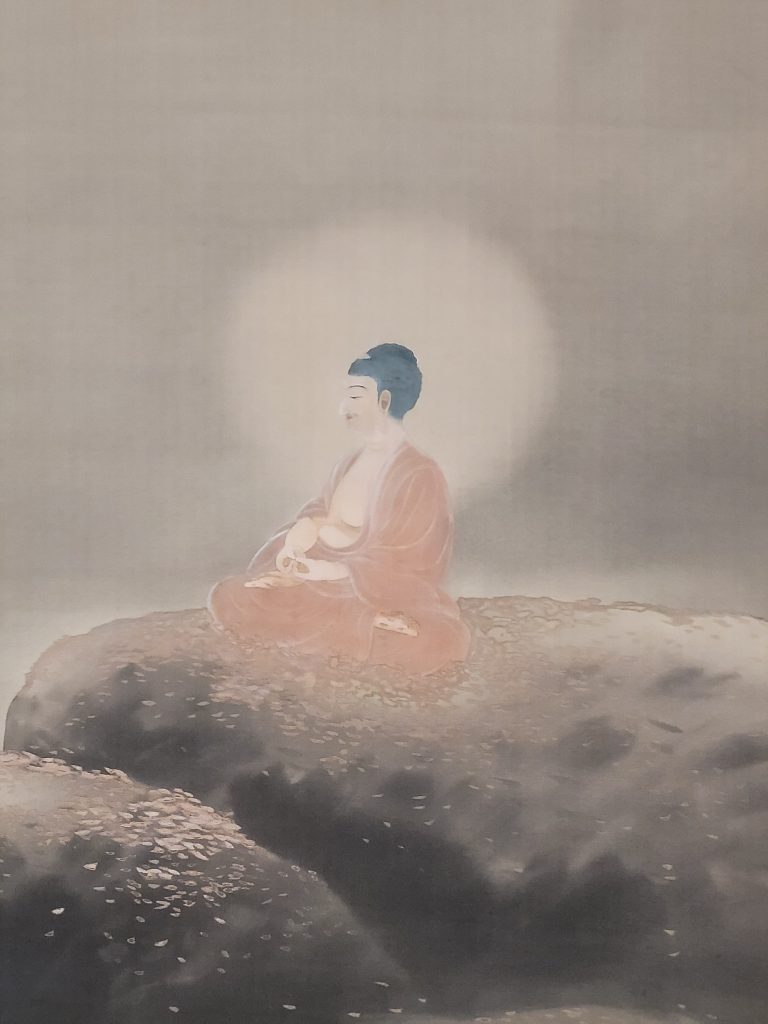
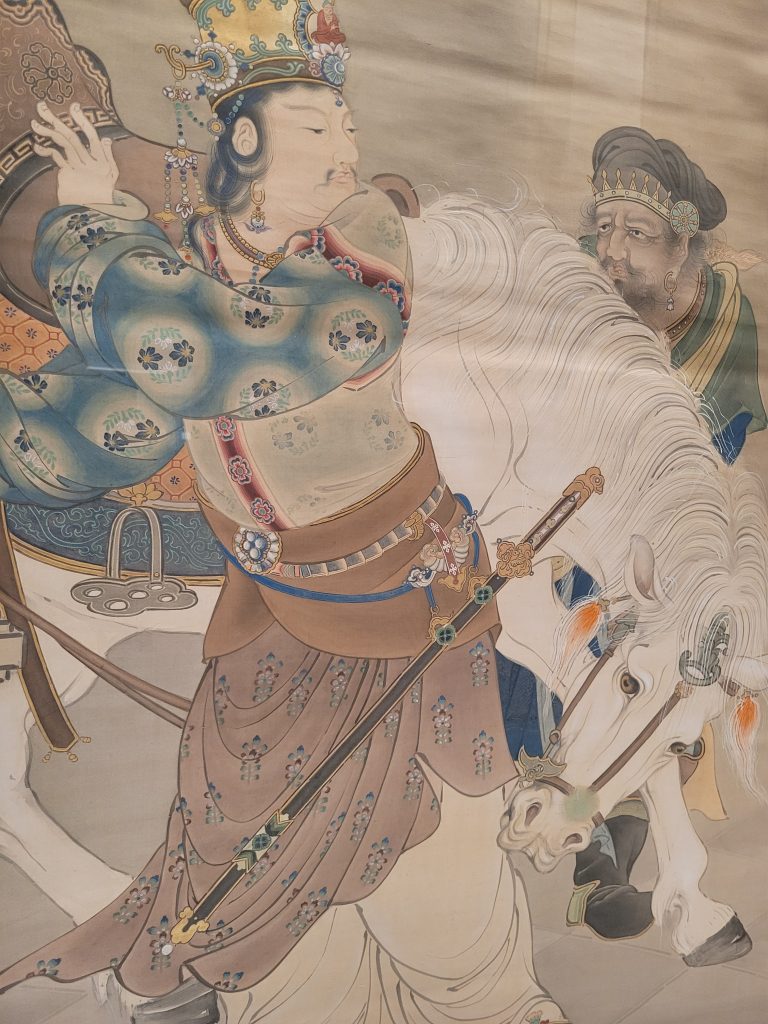
And these are venerable silk paintings of auspicious things, bringing good fortune and indicating bright outcomes!
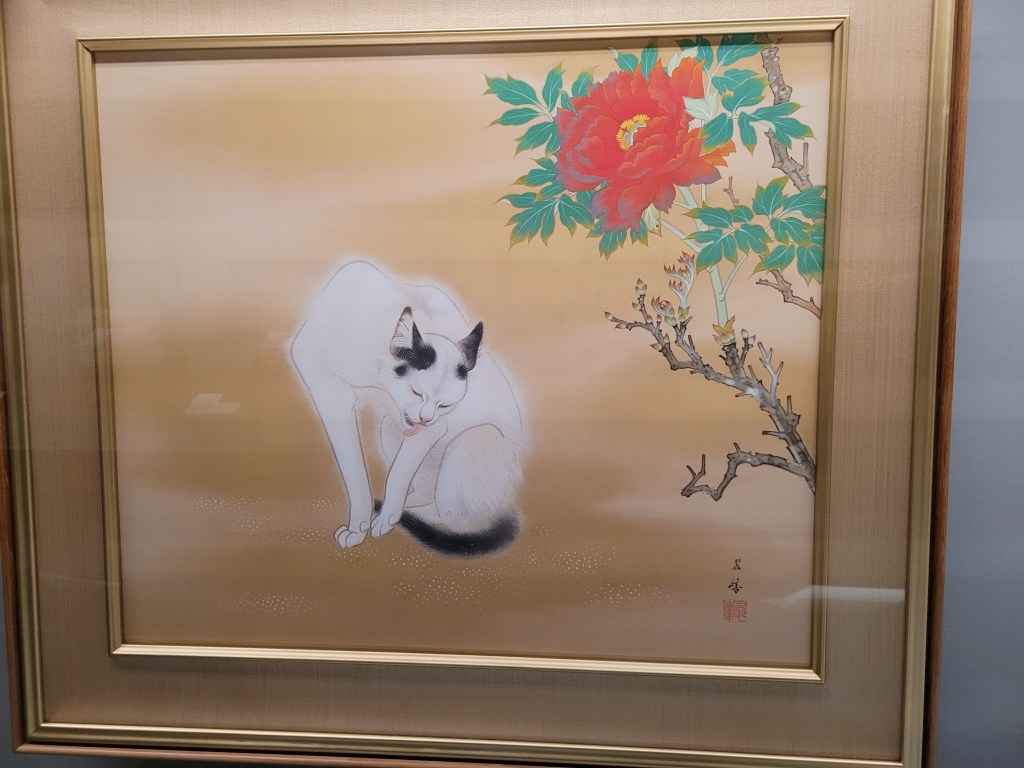
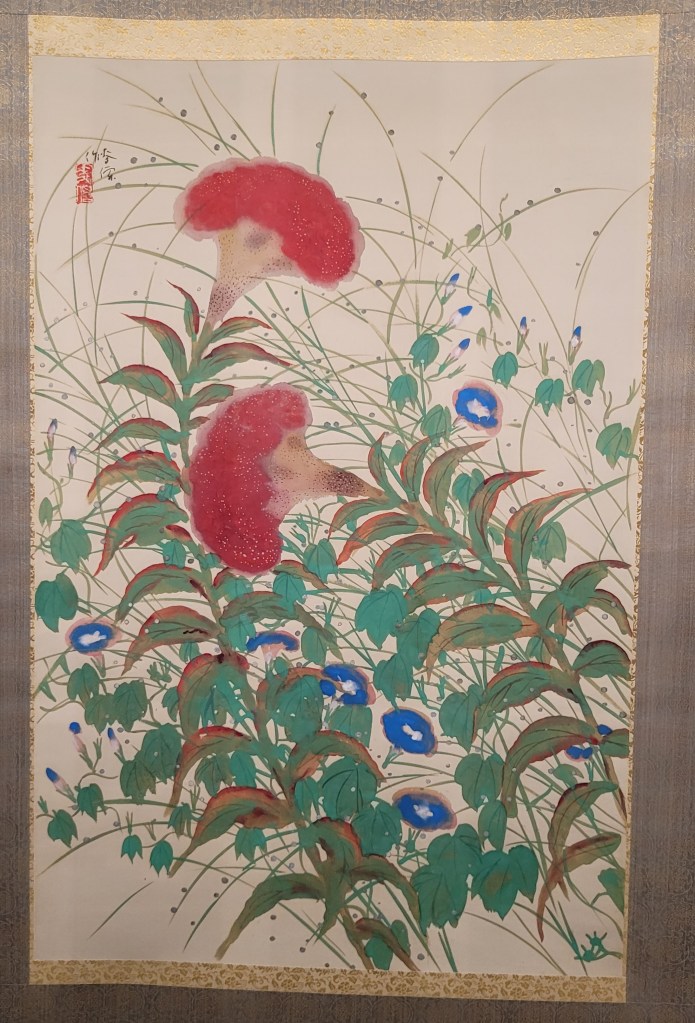
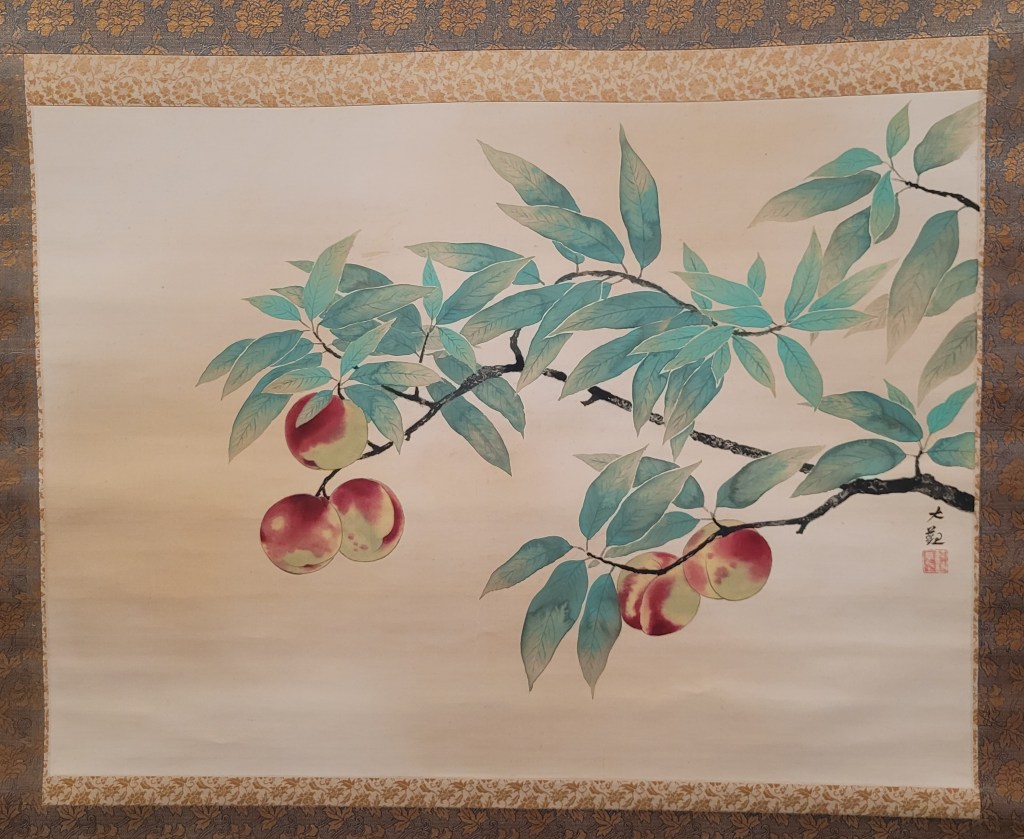
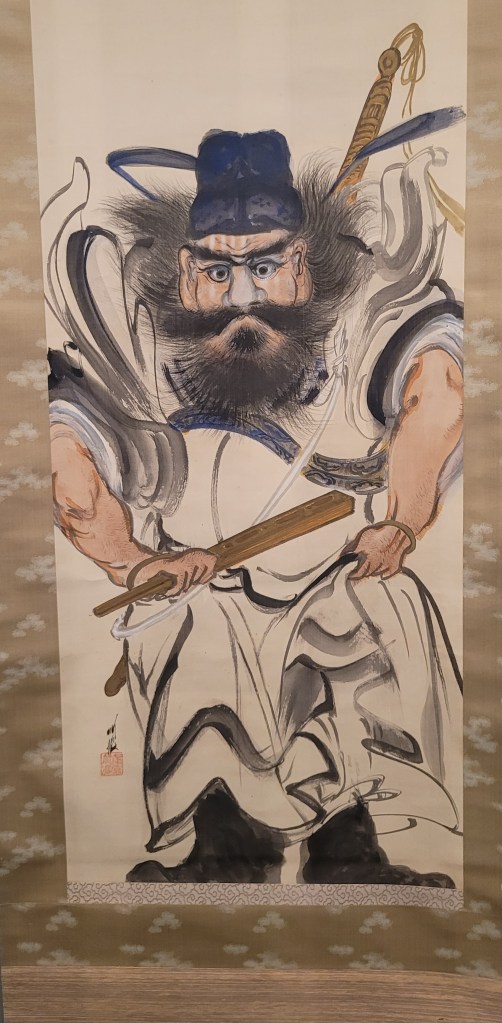
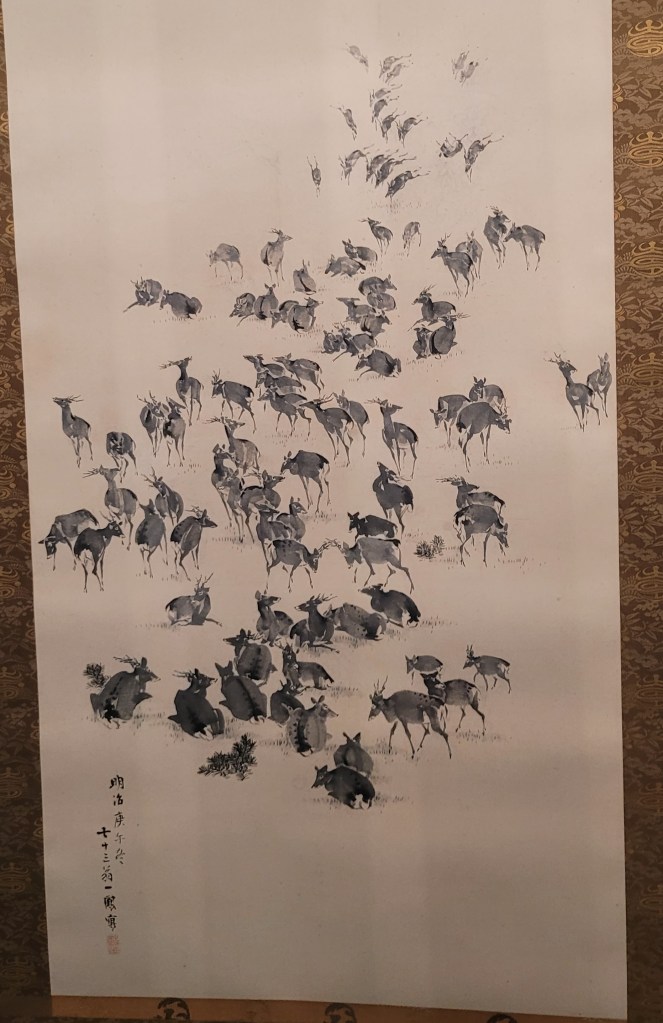
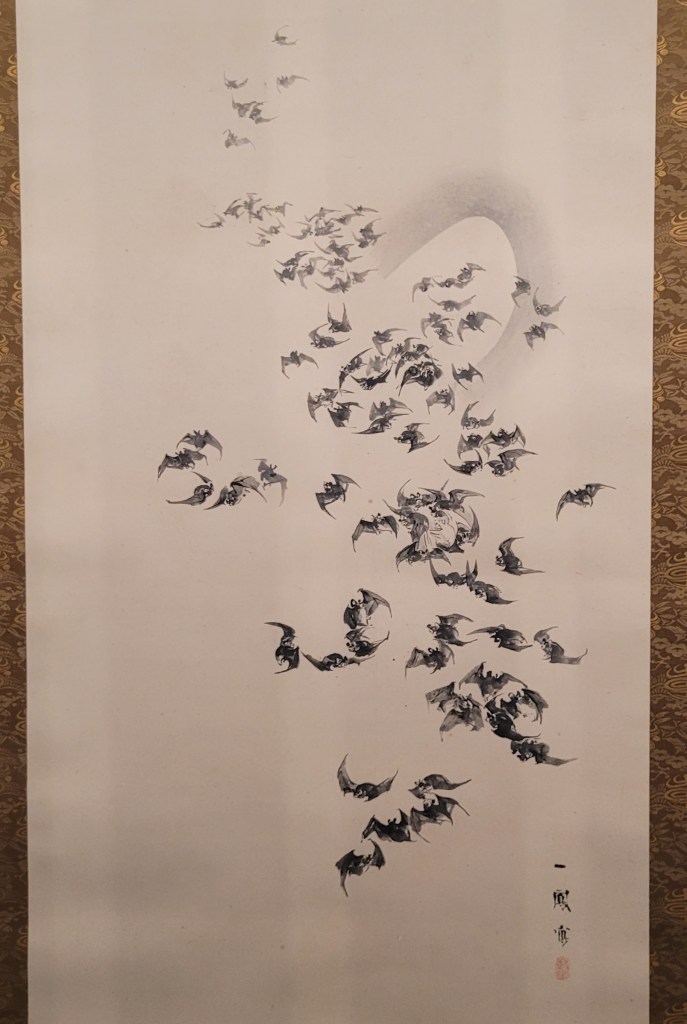
A cat, flowers, plums, a very intense-looking hirsute gentleman, 100 deer, and 100 bats are all very auspicious things.
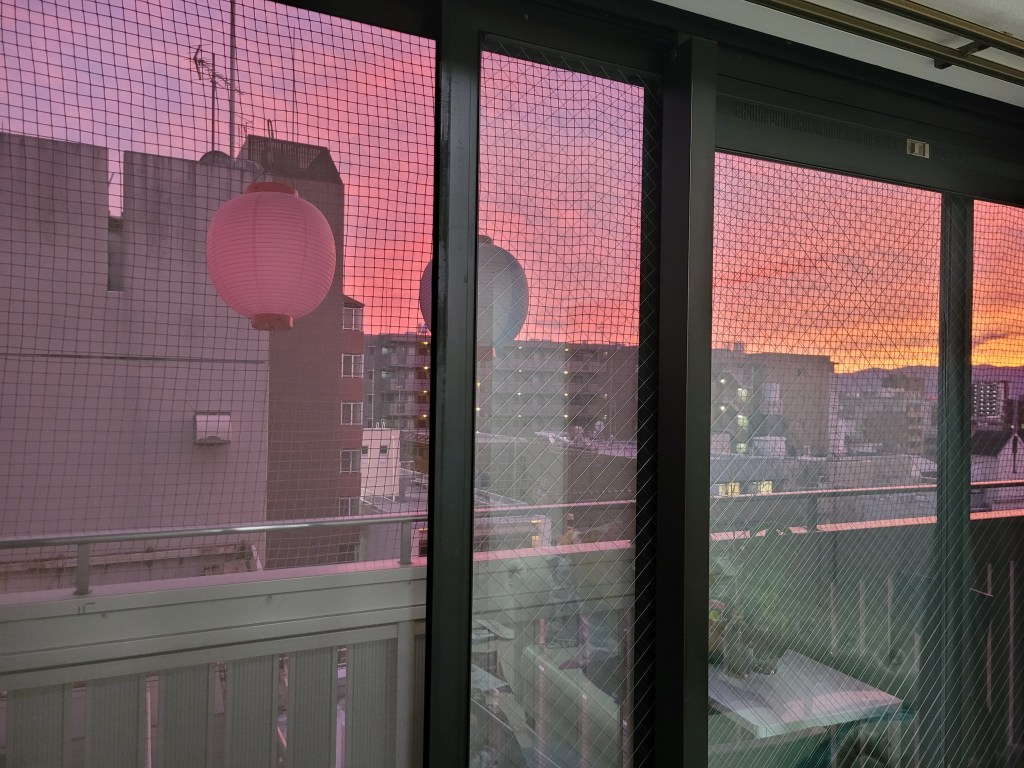
Very pink sunsets continue to be a thing here in Kyoto, seen from my balcony. I find them to be auspicious, too.
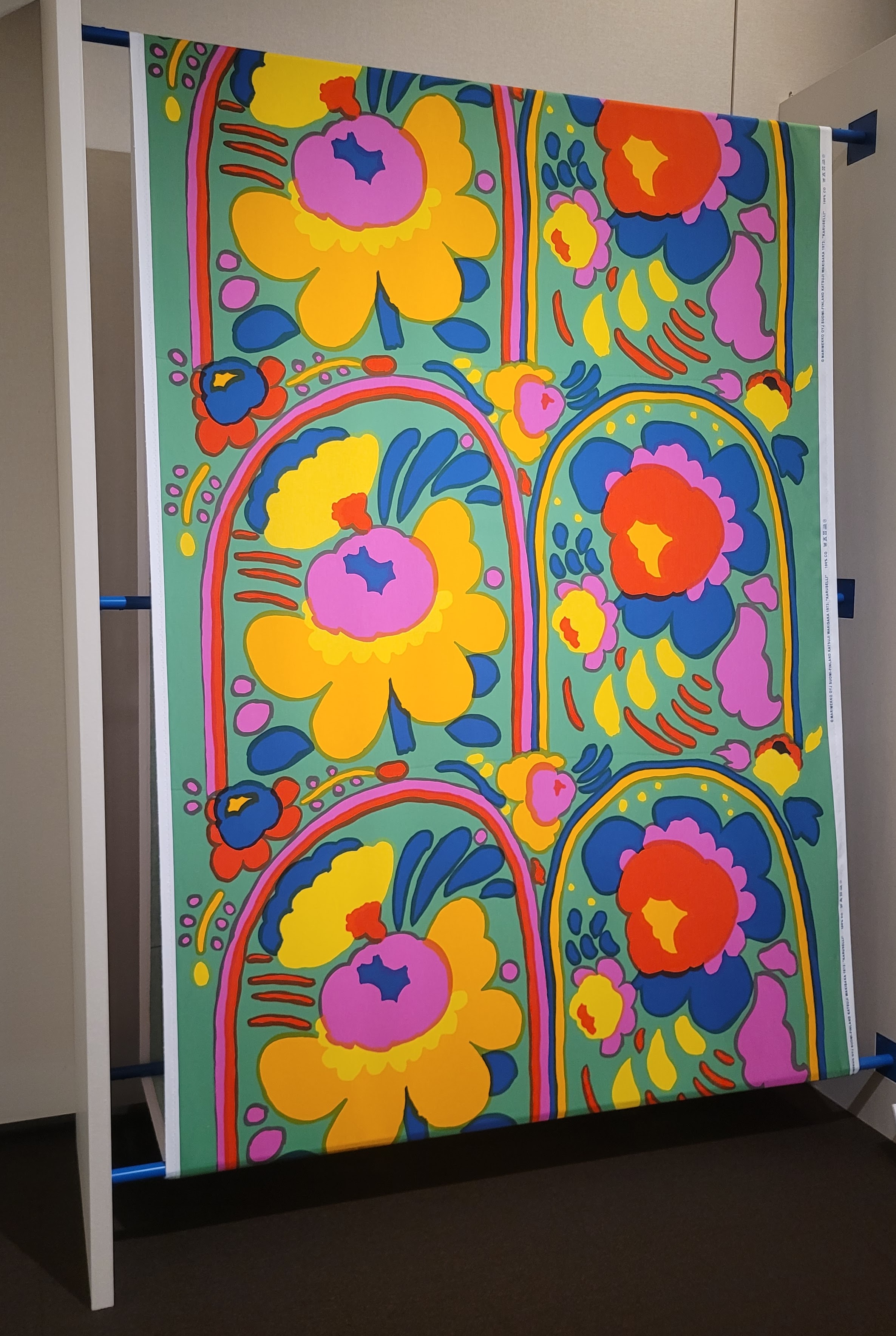
I thought I’d had enough museuming, but the next day I remembered that the Marimekko exhibit at the Kyoto Museum of Culture was closing. Marimekko! Our favorite Finnish fabric and fashion formulator! I plotted syllabi and designed inspired new assignments furiously so I could head over for its final afternoon.
Marimekko was founded by Armi Ratia (1912–1979) in Helsinki in 1951, and her bold designs and colors remain familiar to many of us from the 1970s when they burst into the US market.
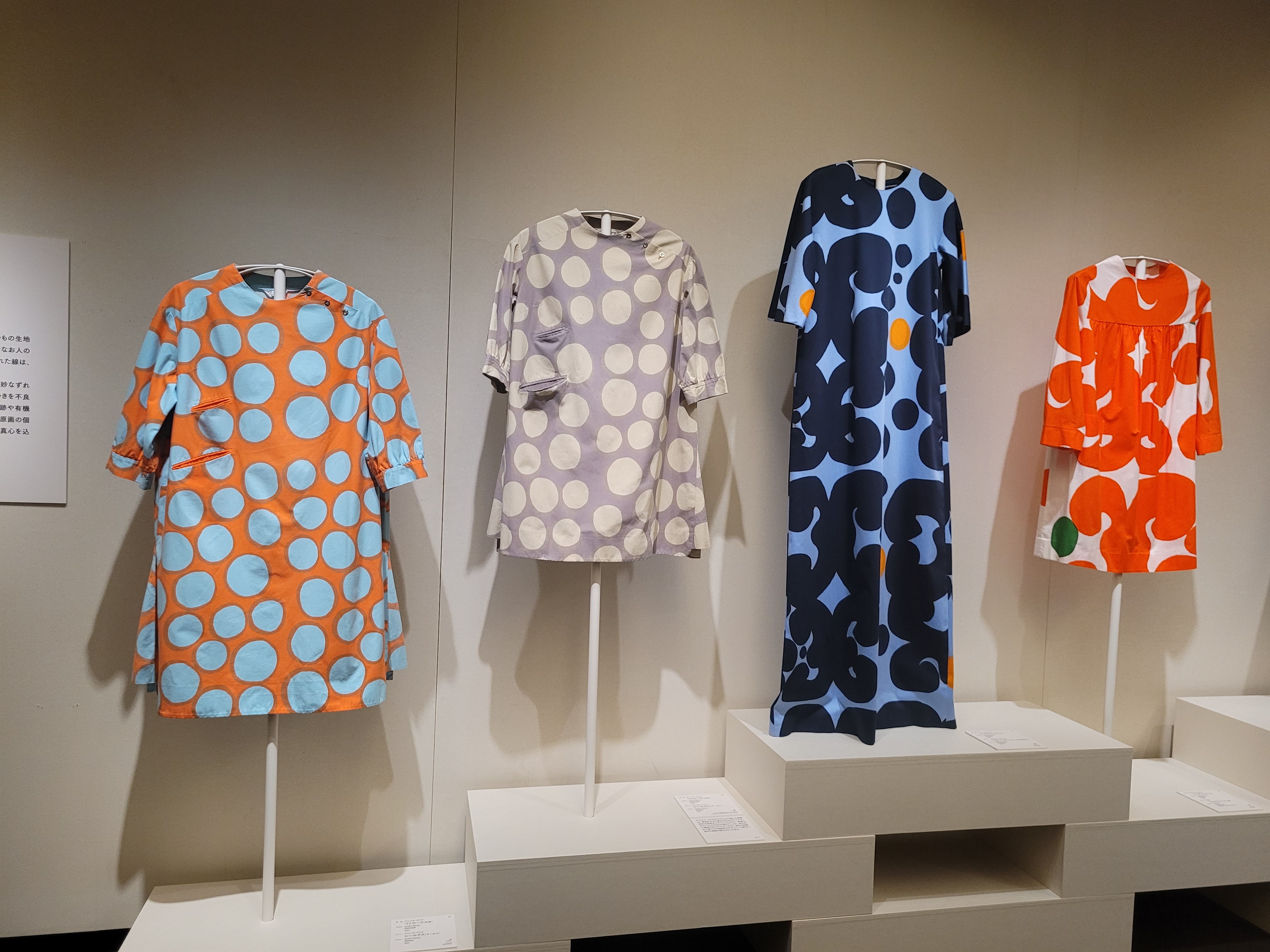
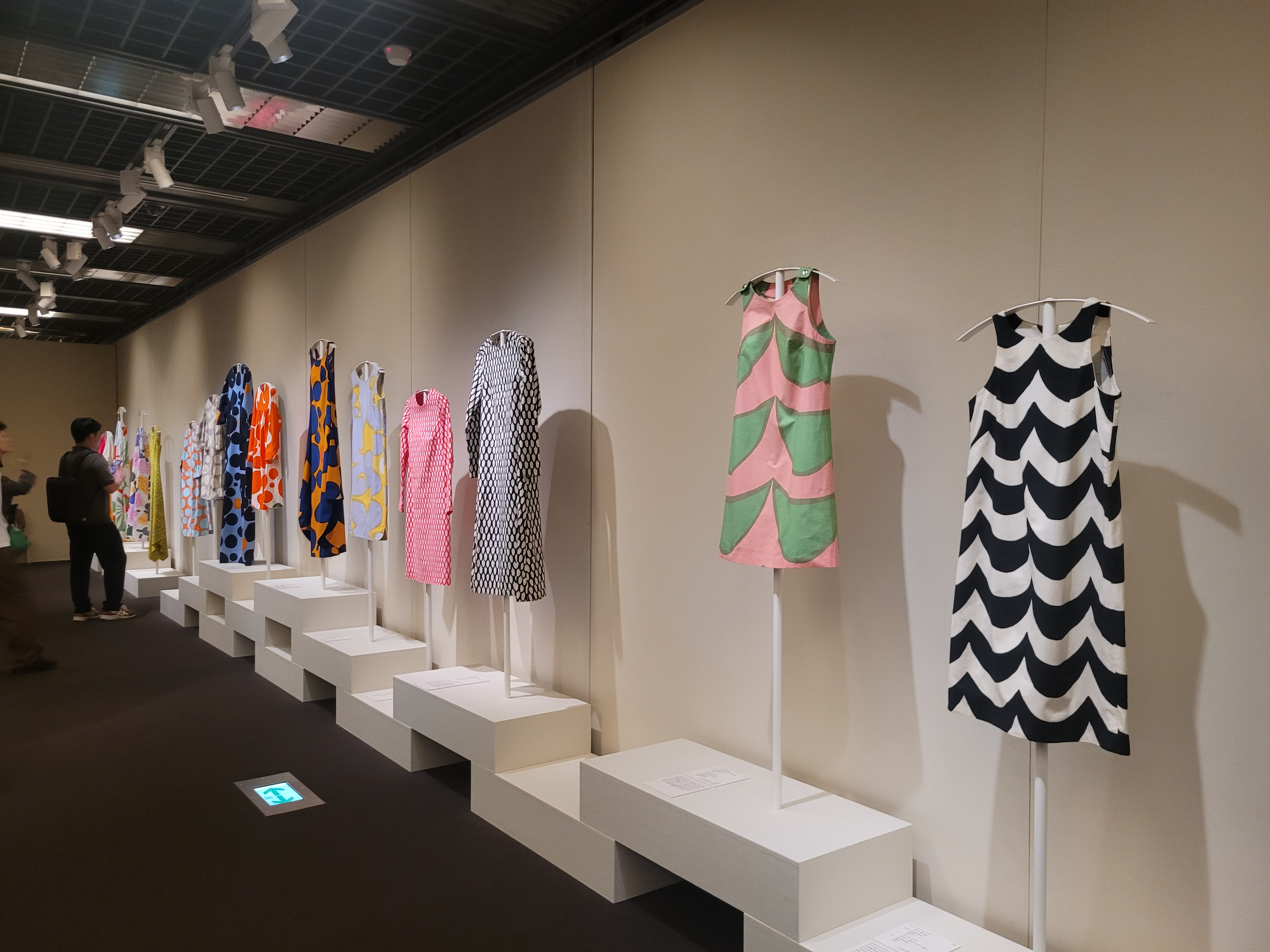
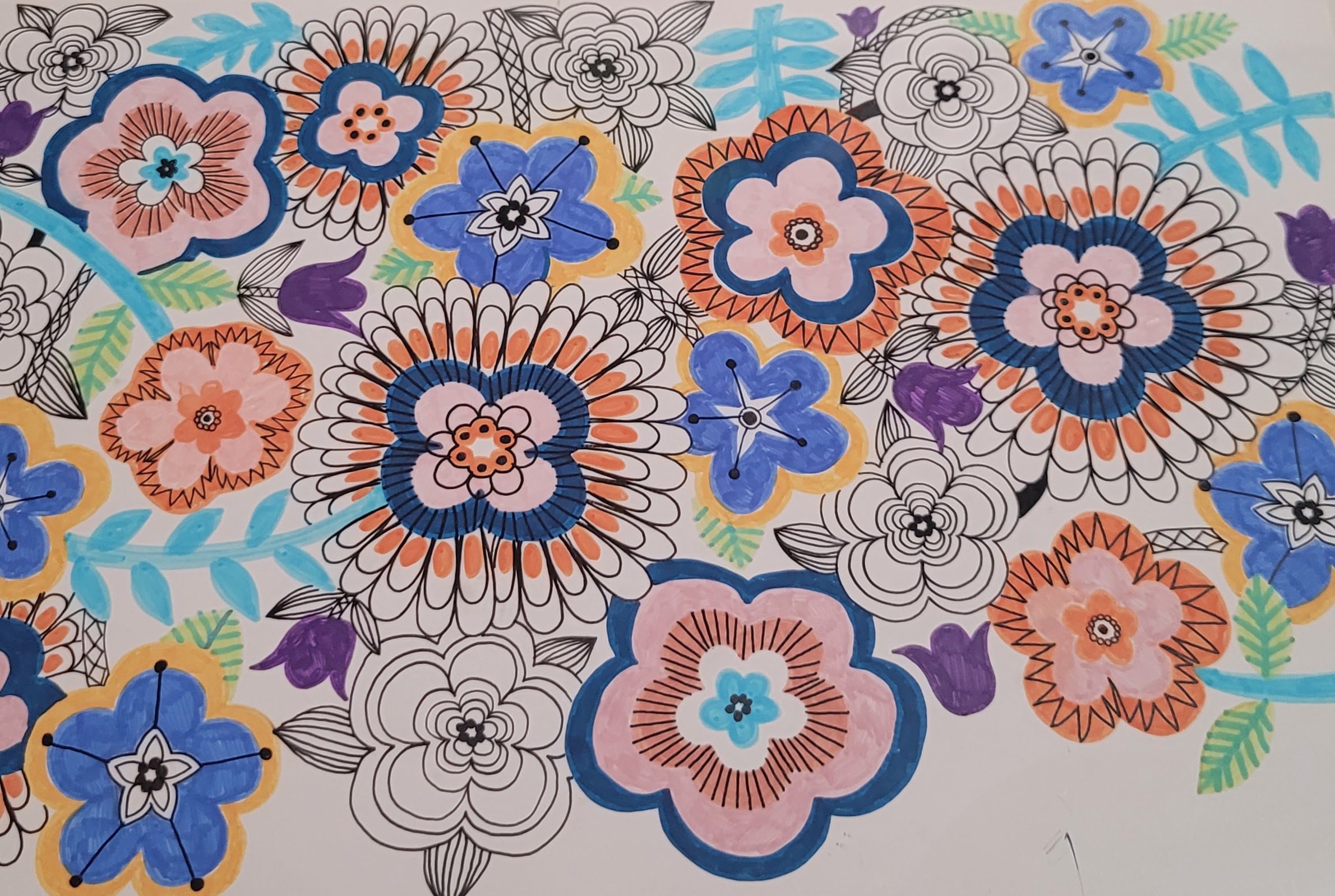
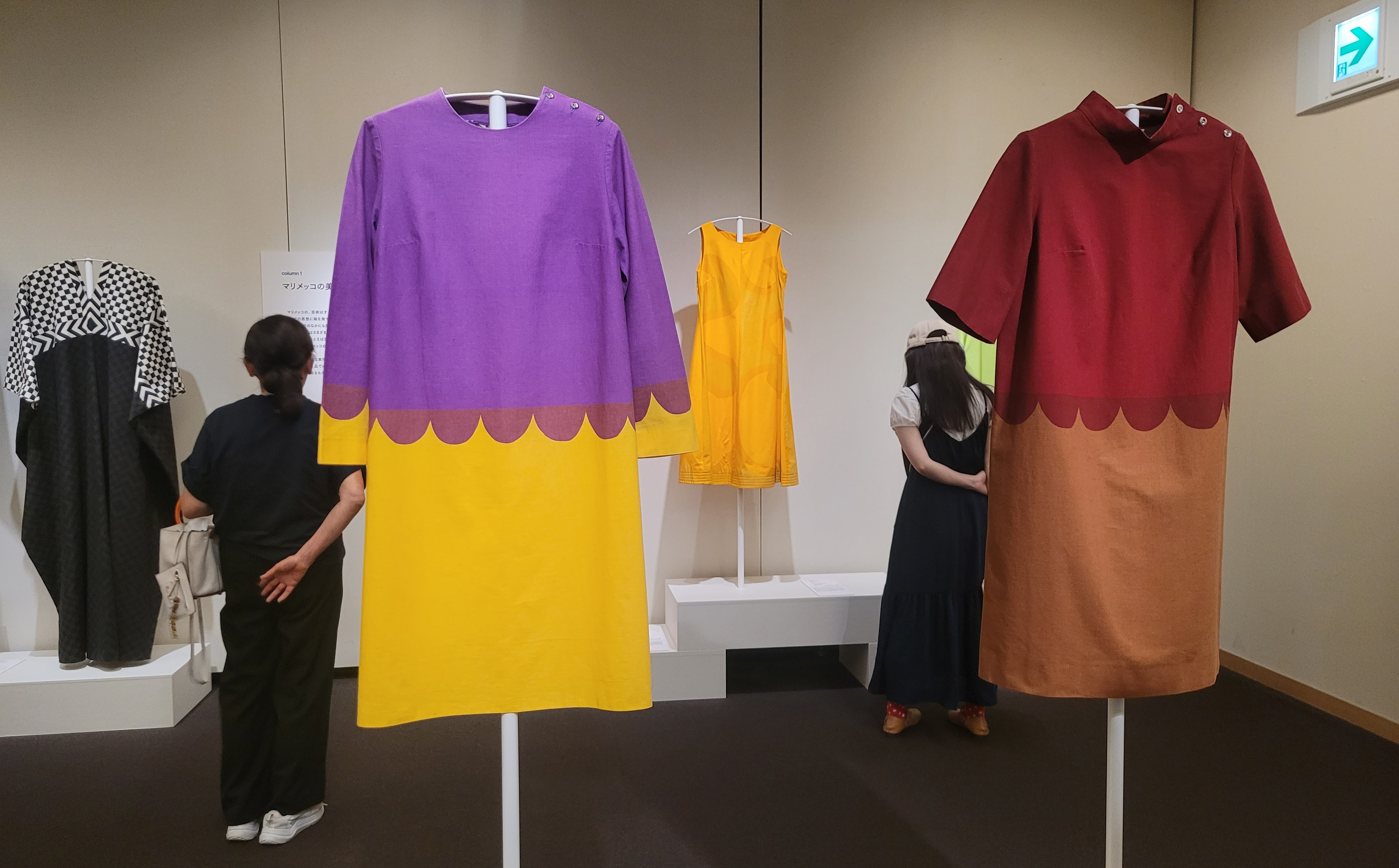
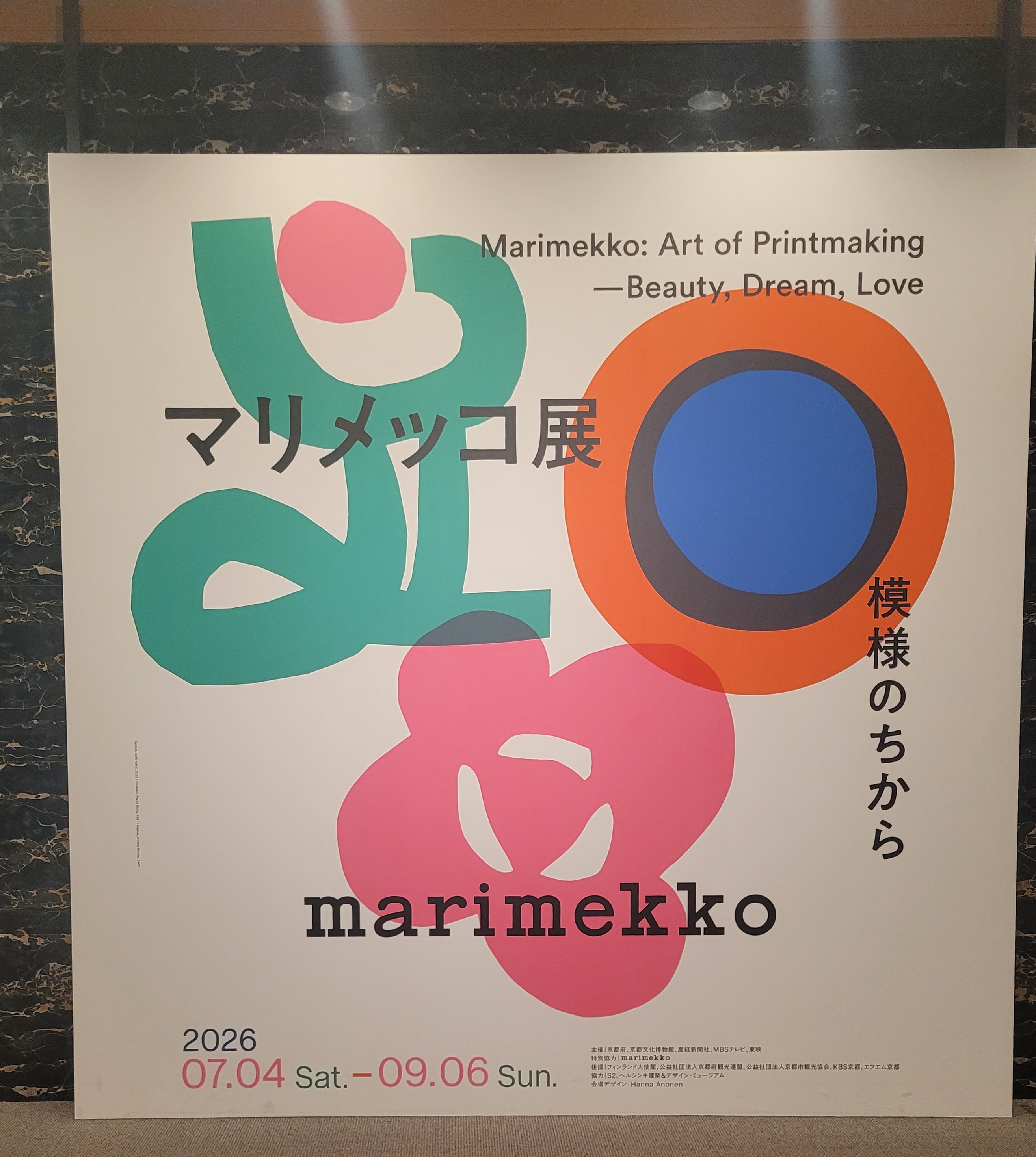
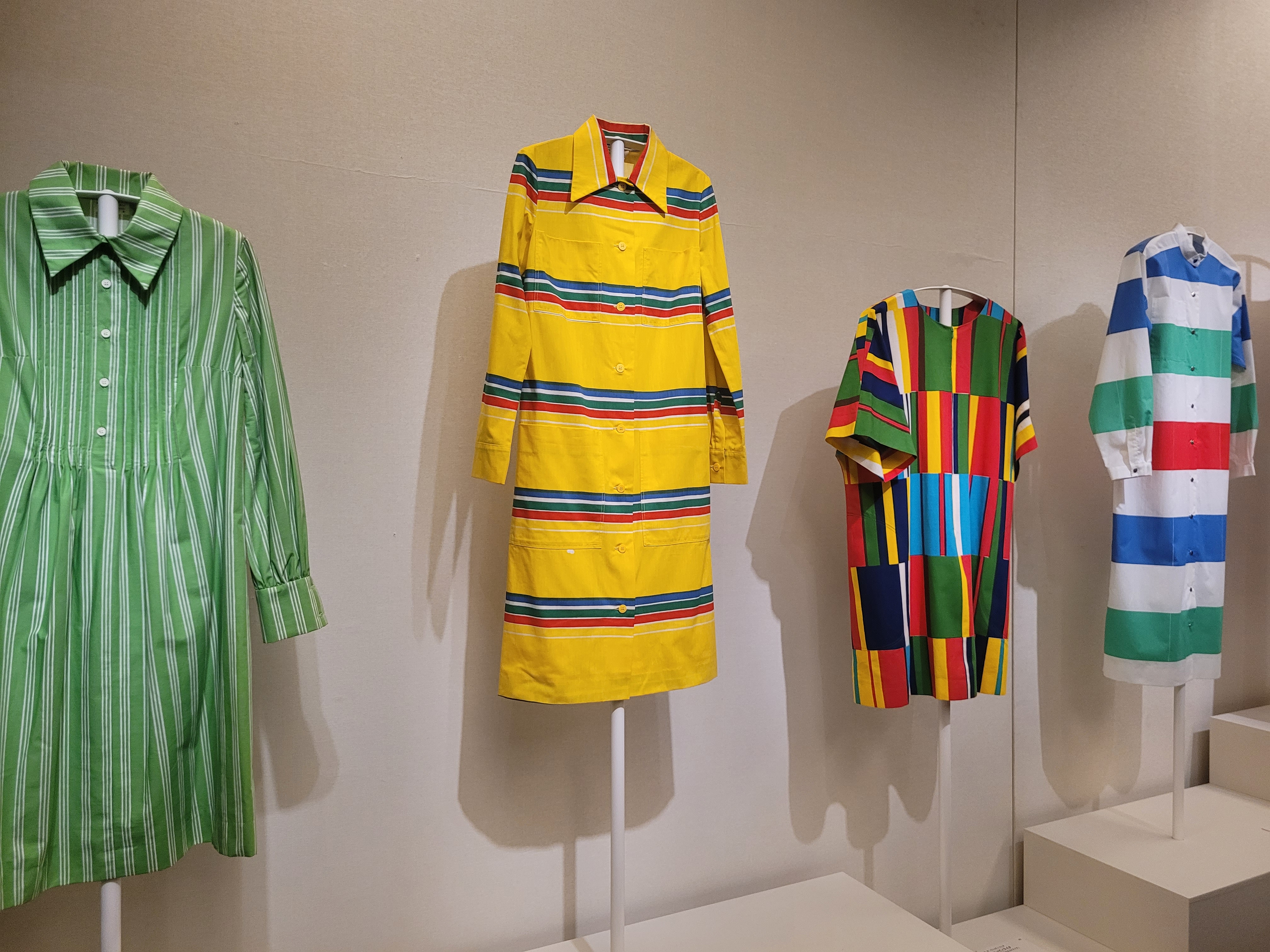

“Marimekko” means “Mary’s dress,” and that concludes our Finnish language lesson for today and the foreseeable future.
At this extensive exhibit we learned all about Armi Ratia’s textile design methods, Finnish industrial dying techniques, and many seasons of her bold fashion and housewares collections. And I really want that green-and-navy-striped, long-sleeved, collared dress!
Colors exploding everywhere! How does such a vivid and exuberant exhibit conclude? By the end it had gone mad! Mad!
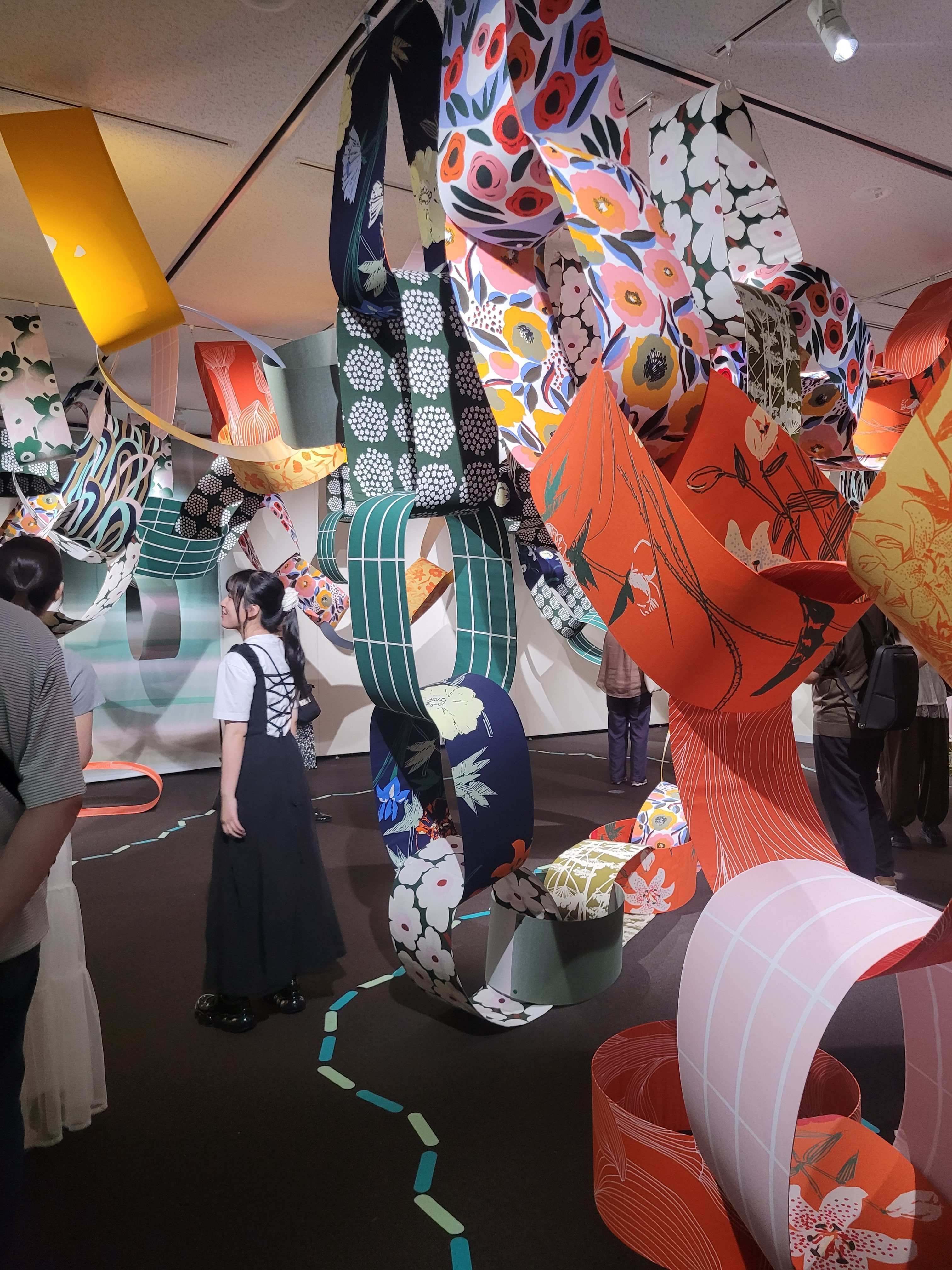
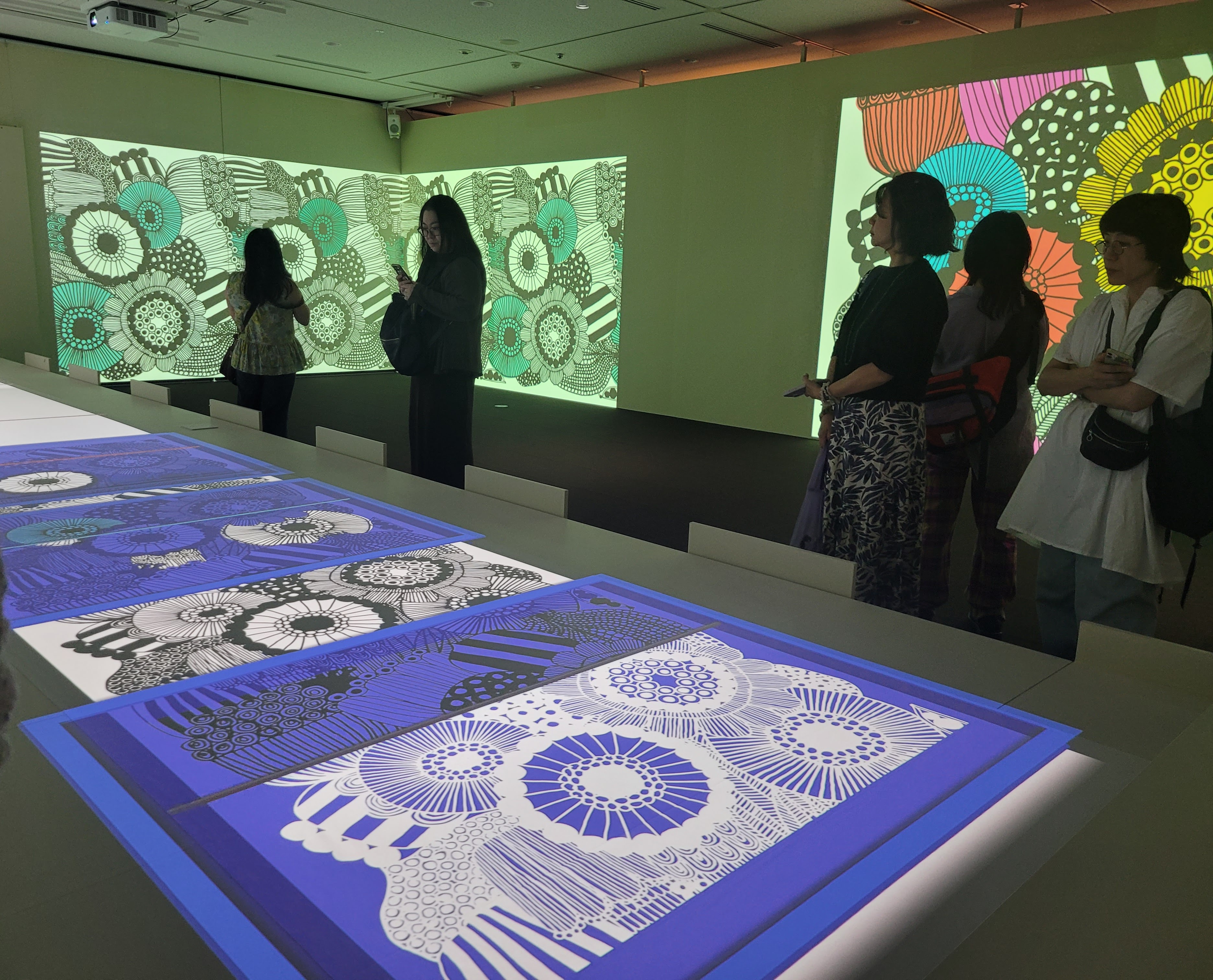
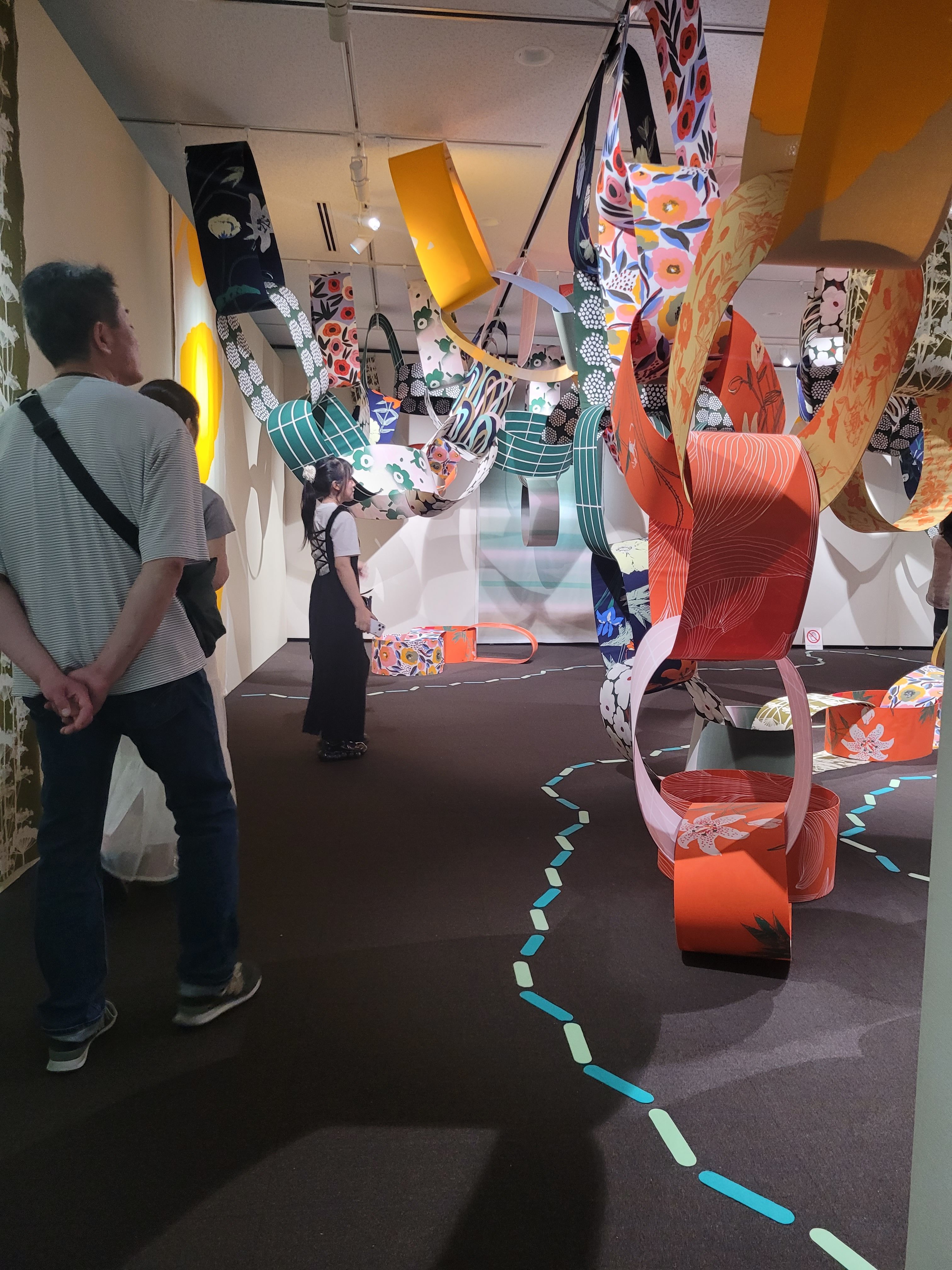


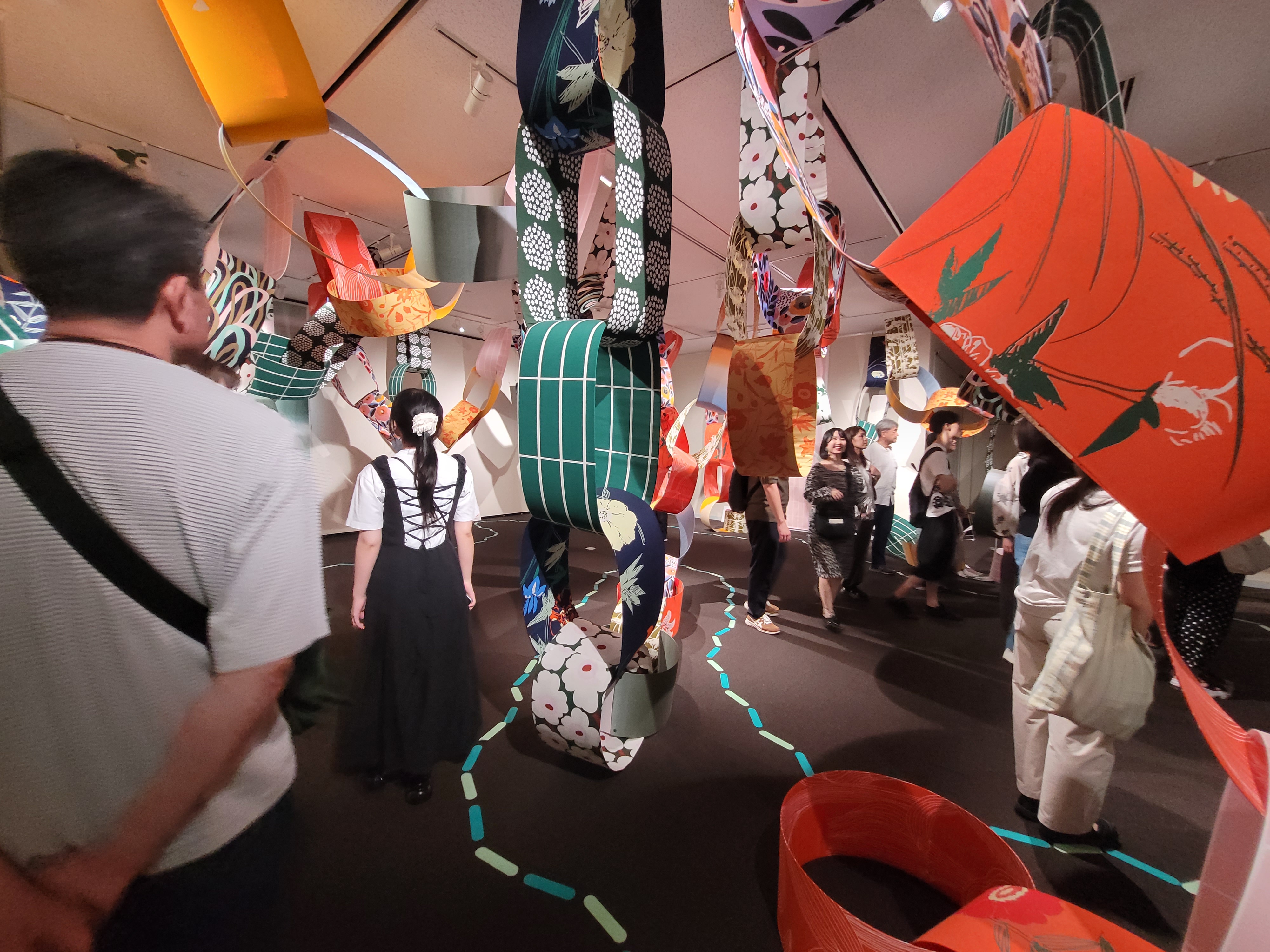
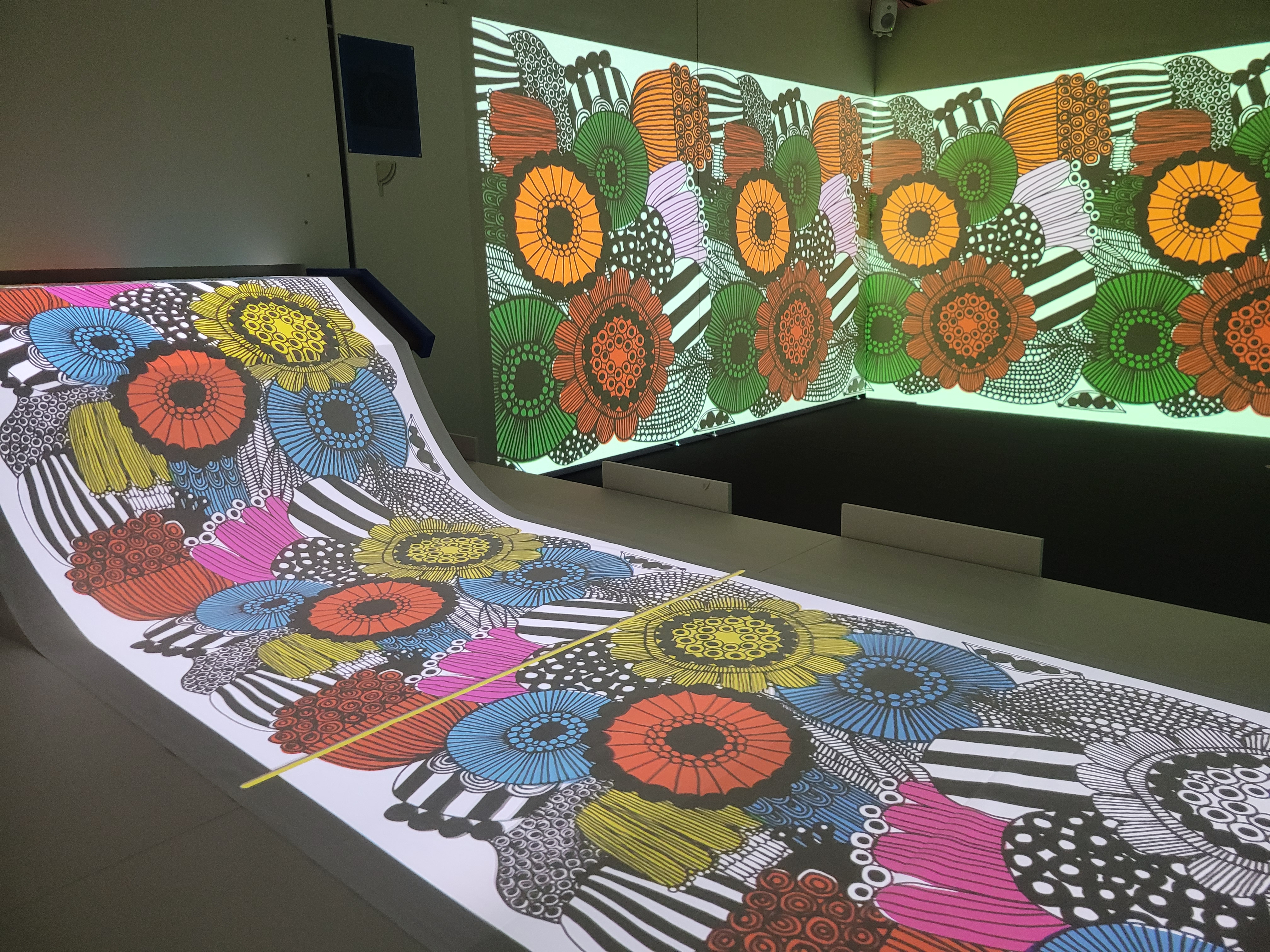
The Kyoto Museum of Culture does not serve a cup of coffee and a cheese toast, so I went home and finished putting my bicycle together.

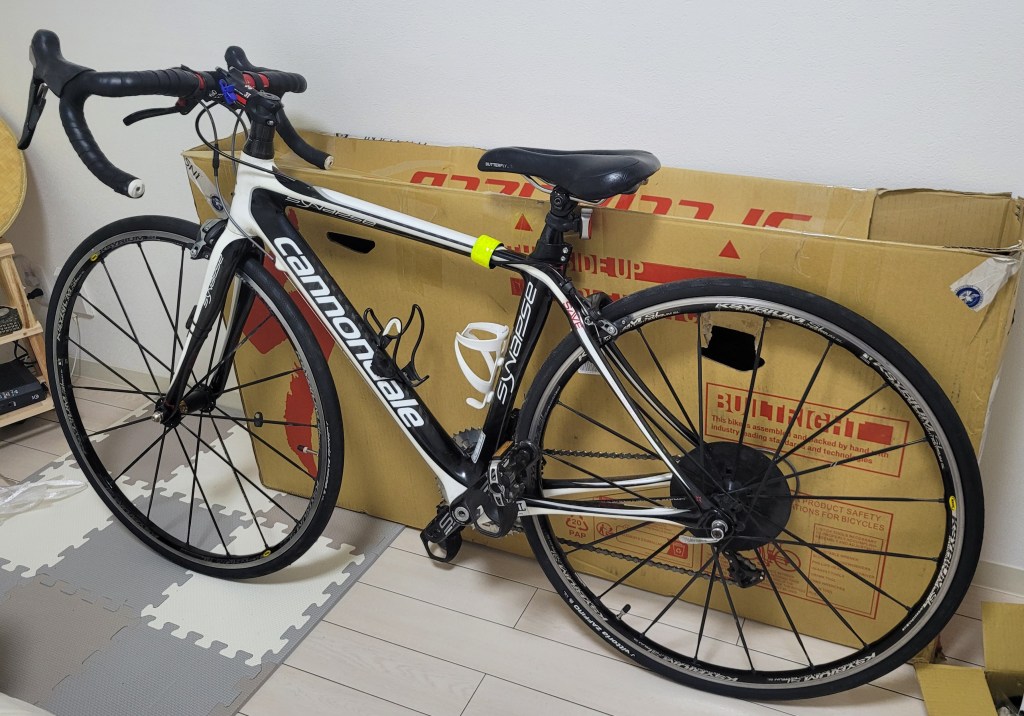
Finally it was time to ride a bike in Japan! If you are wondering why I had not done so yet, it was because upon arriving in Kyoto I decided I just wanted to walk and explore. There was so much to see, and it was all so amazing and different! When you ride a bike you pretty much have to look at the road in front of you. I wanted to look at everything else, so I walked and walked.
But now it was time for a bicycle. I have already gone on some glorious Kyoto rides!
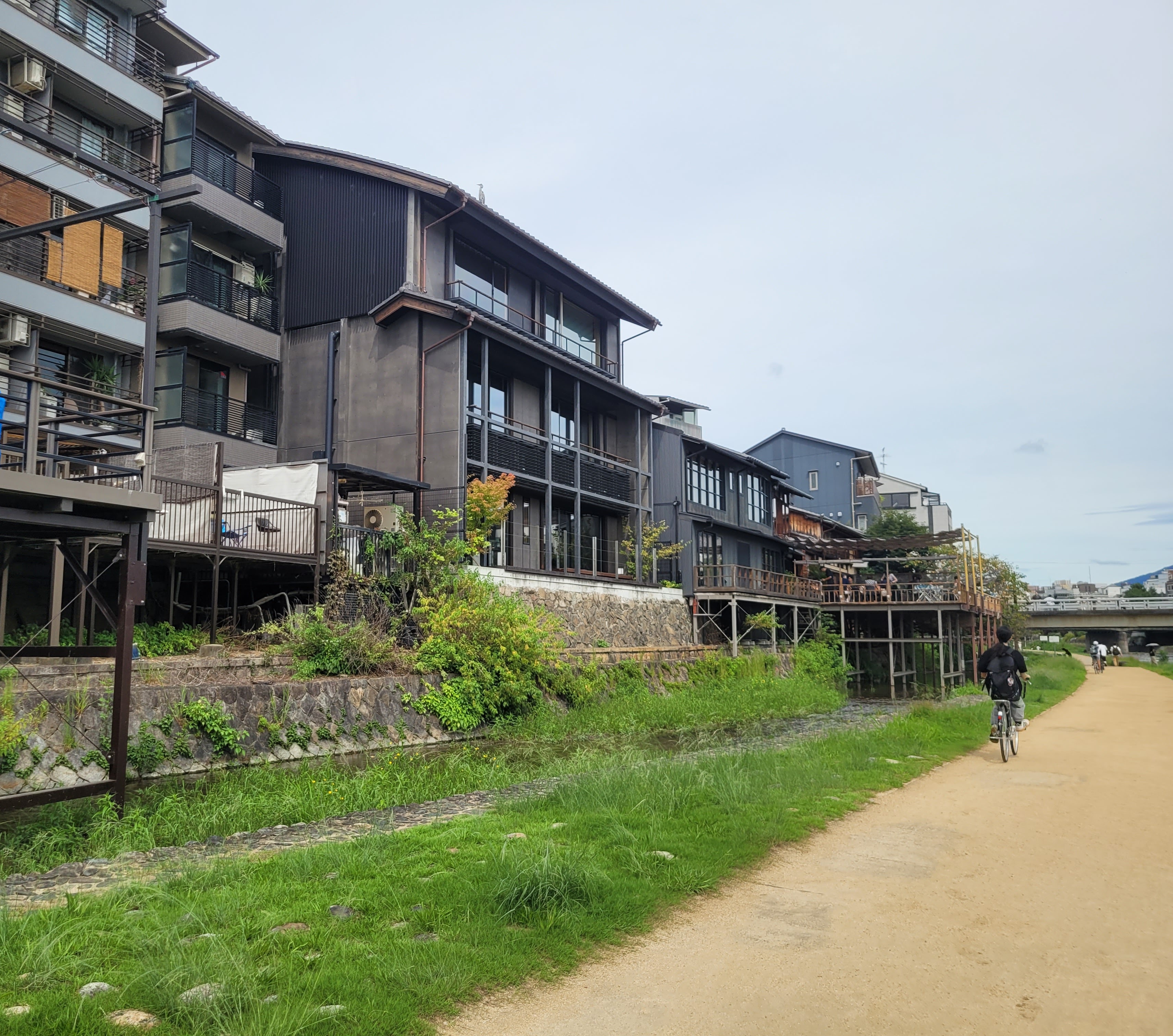
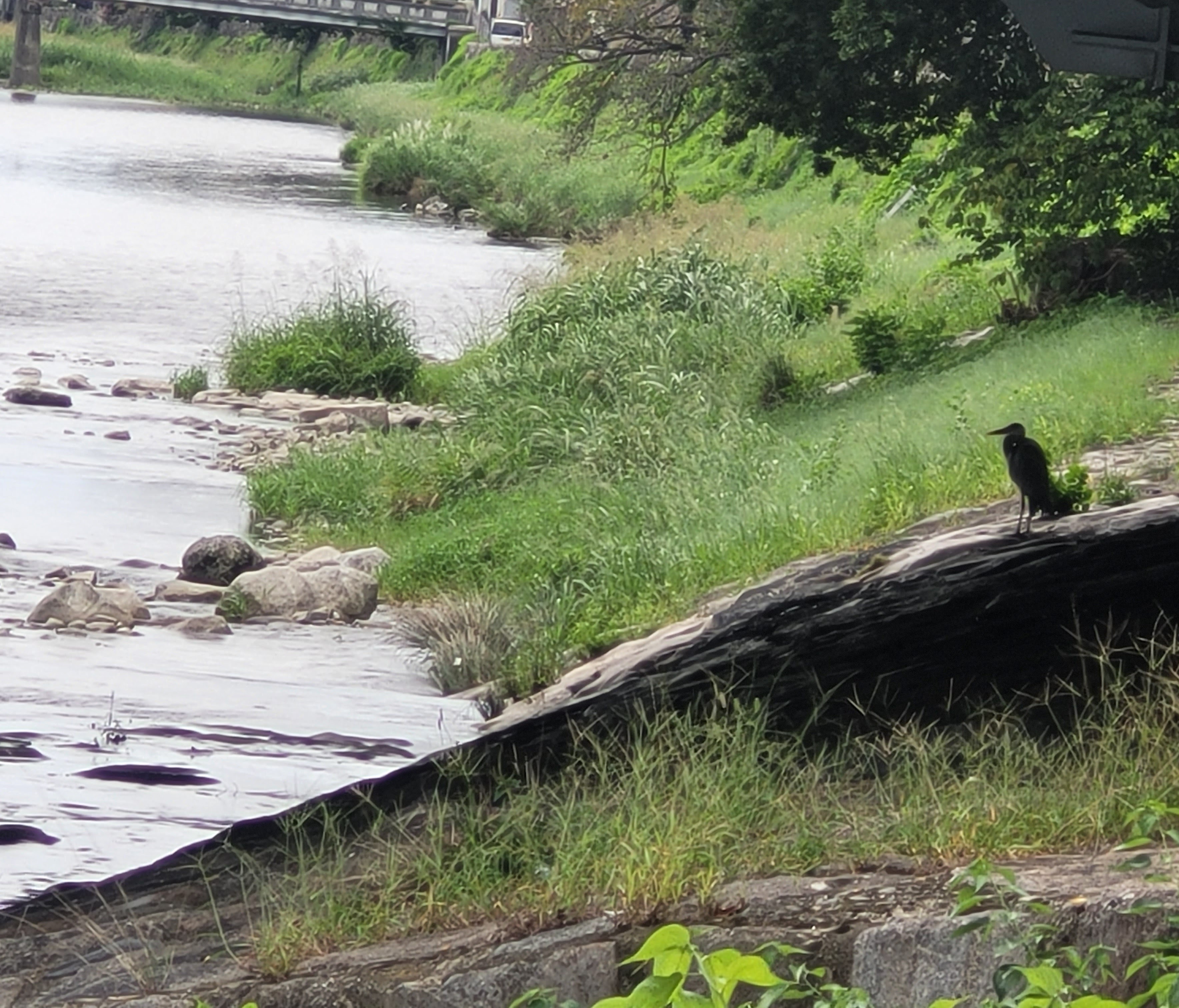
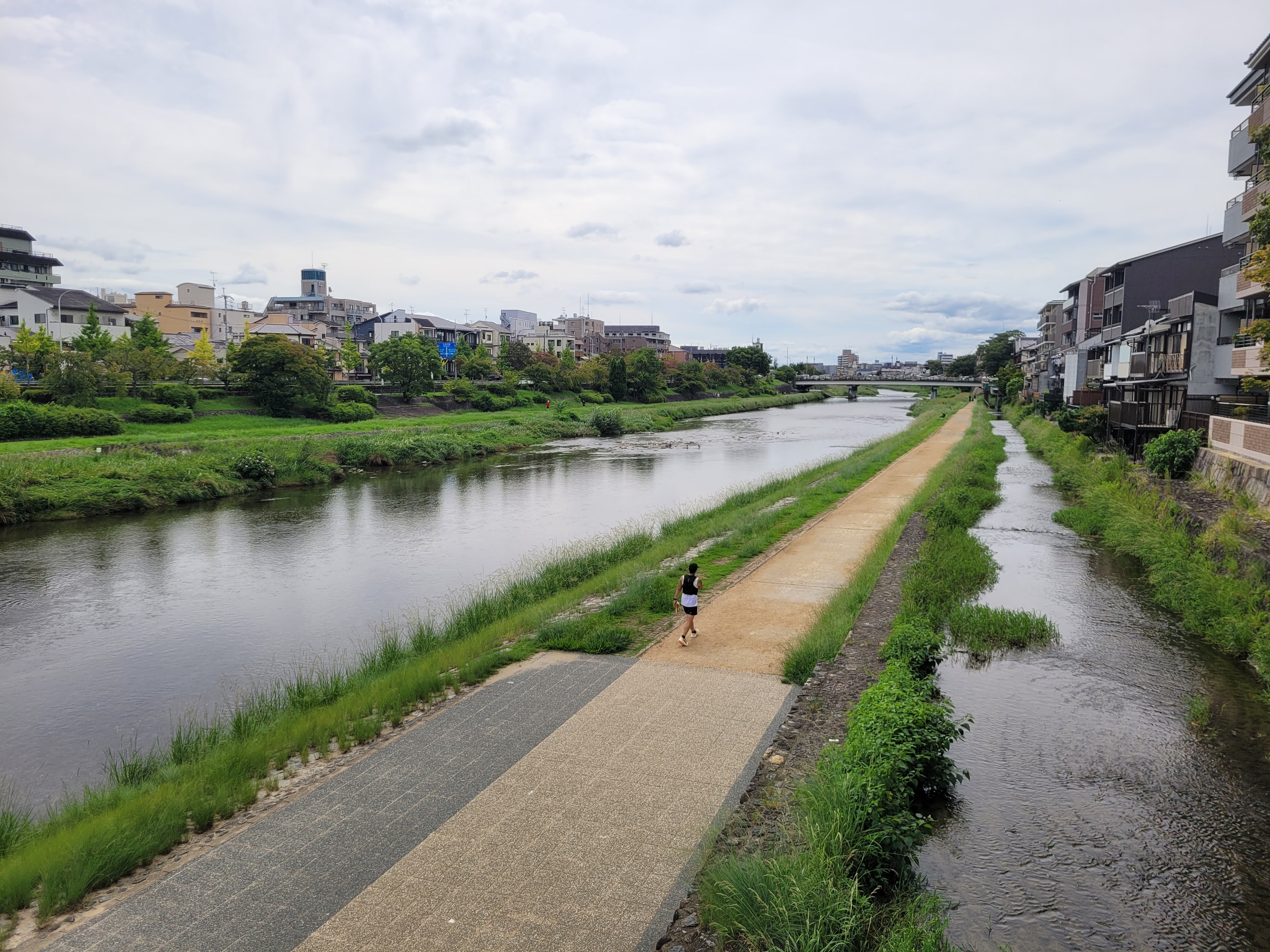
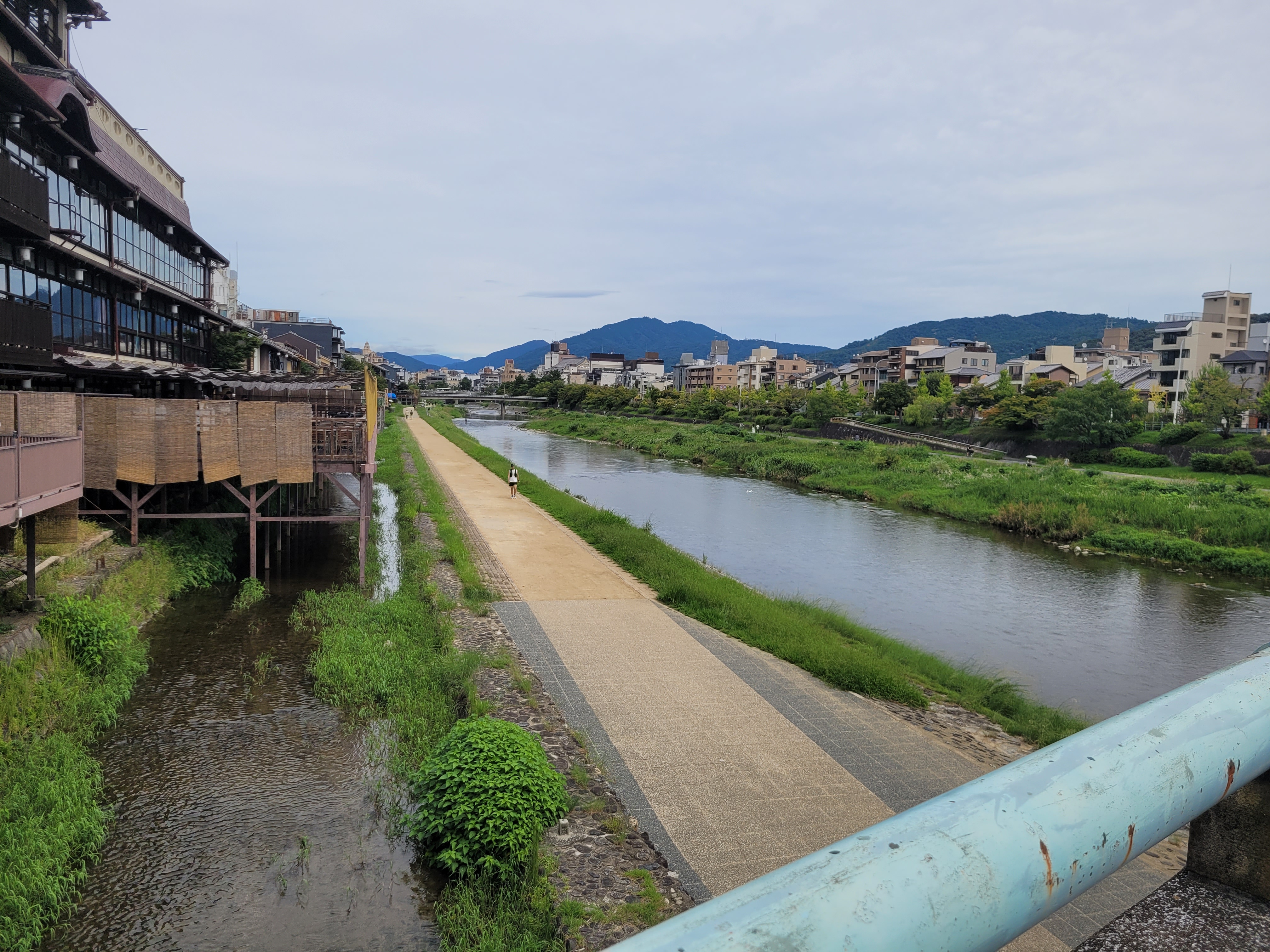

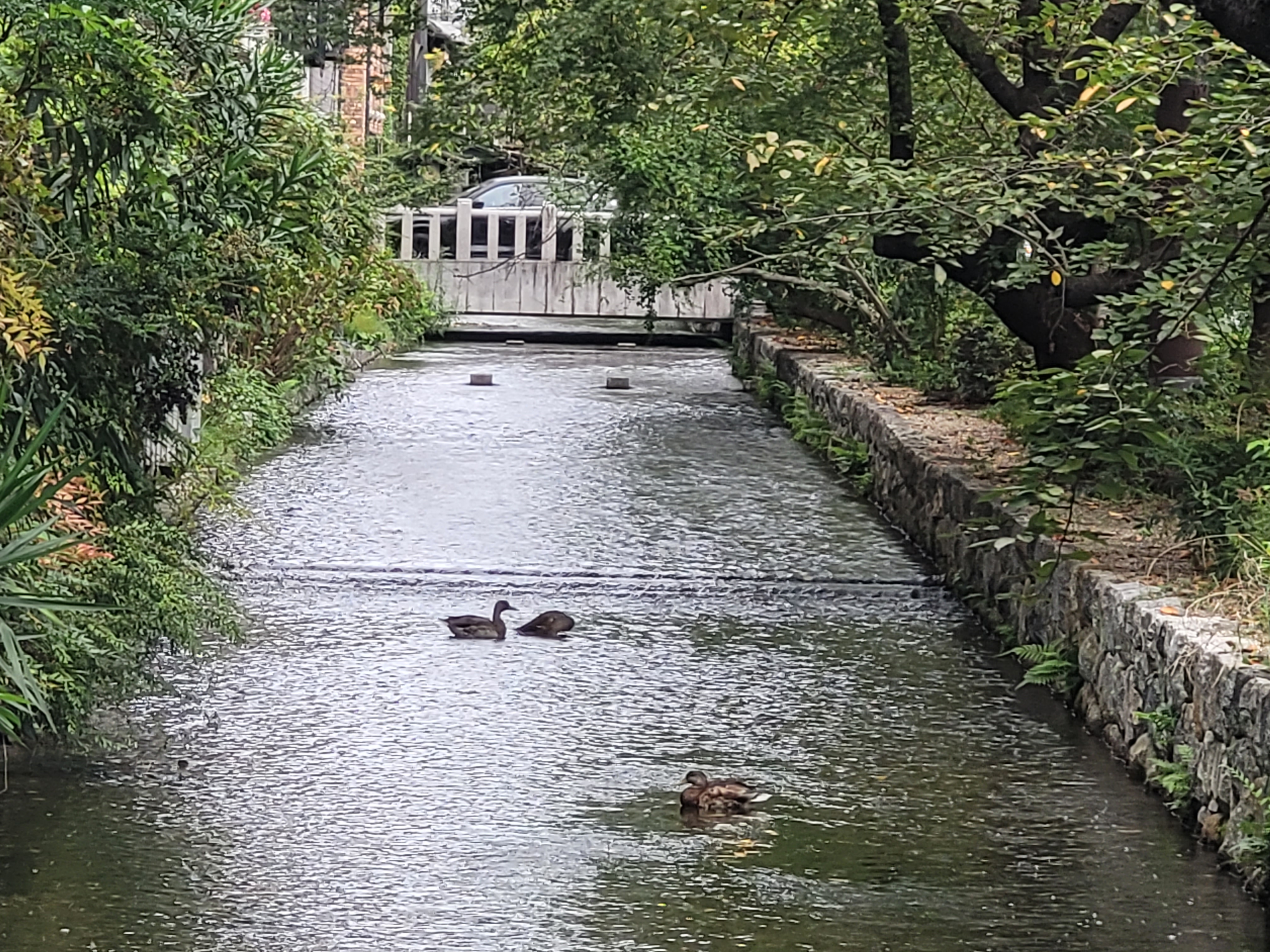
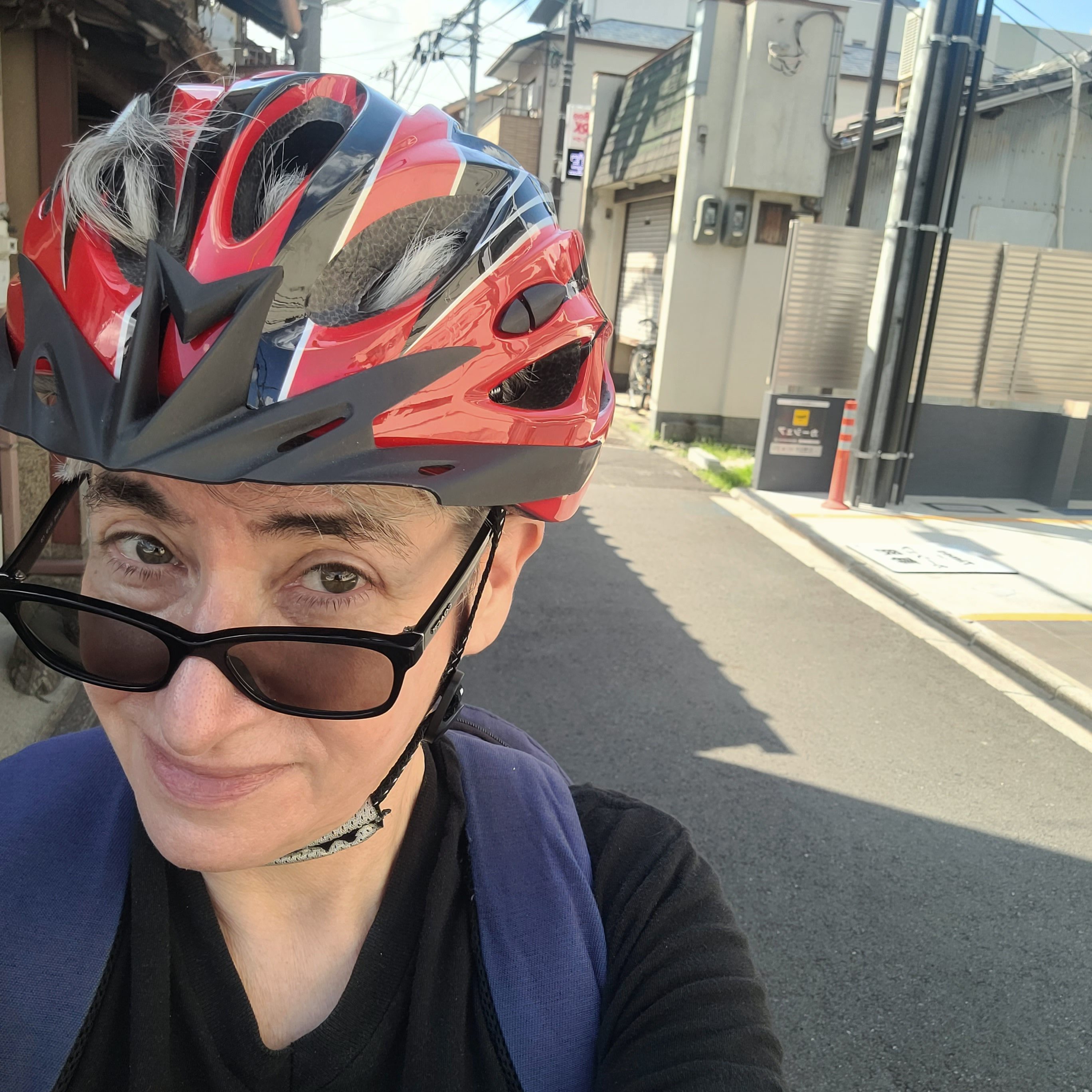
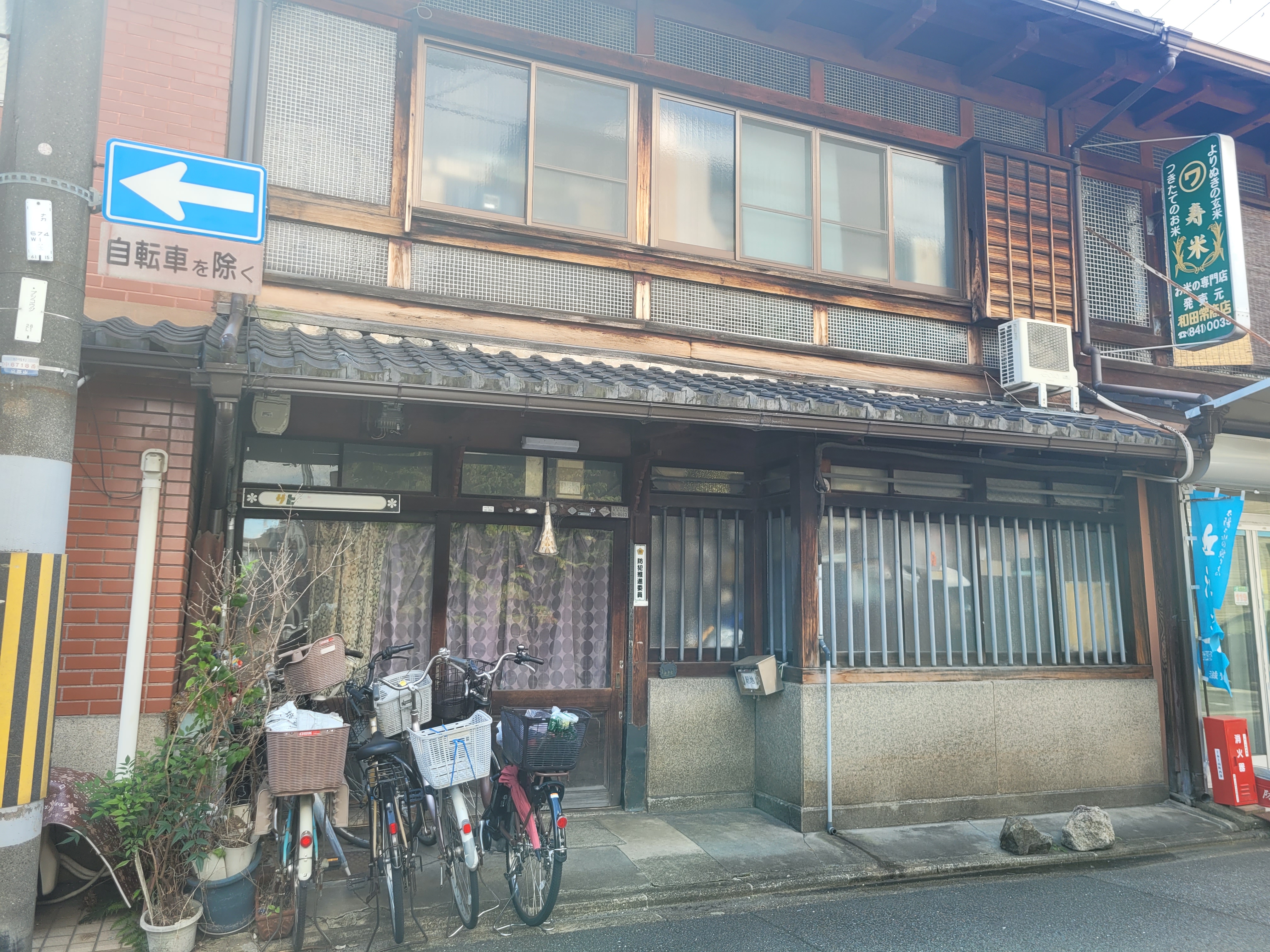
Riverside trails, along canals and tiny alleys — exploring by bike is excellent. And also terrifying. Everyone of course abides by the traffic rules out on the large streets with traffic lights. But they ride and drive on the left here in Japan, which takes some getting used to, and nobody on a bicycle (or motorbike) signals turns, as near as I can figure out, except me. The back streets are scenic but it is a true free-for-all, with electric cars and scooters you can’t hear, pedestrians everywhere, people on bikes blasting through 4-way intersections, and fierce (there is no other word) grandmas on big steel shopping bikes going the wrong way down one-way streets and stopping for no one.
So I have been riding early mornings when the roads are quieter, heading into less-visited neighborhoods, and stopping with care at almost every tiny intersection. I plan to bike-commute to work soon but that route will be almost all safer canal-side trails, so that will be much more calm to ride along.
Here is what is not calm at all: a taiko drumming concert! Those are the big drums used in sacred ceremonies and processions. In a concert hall you can feel them reverberate in your chest. This show was all high energy and motion, with a touch of glitz and Vegas.
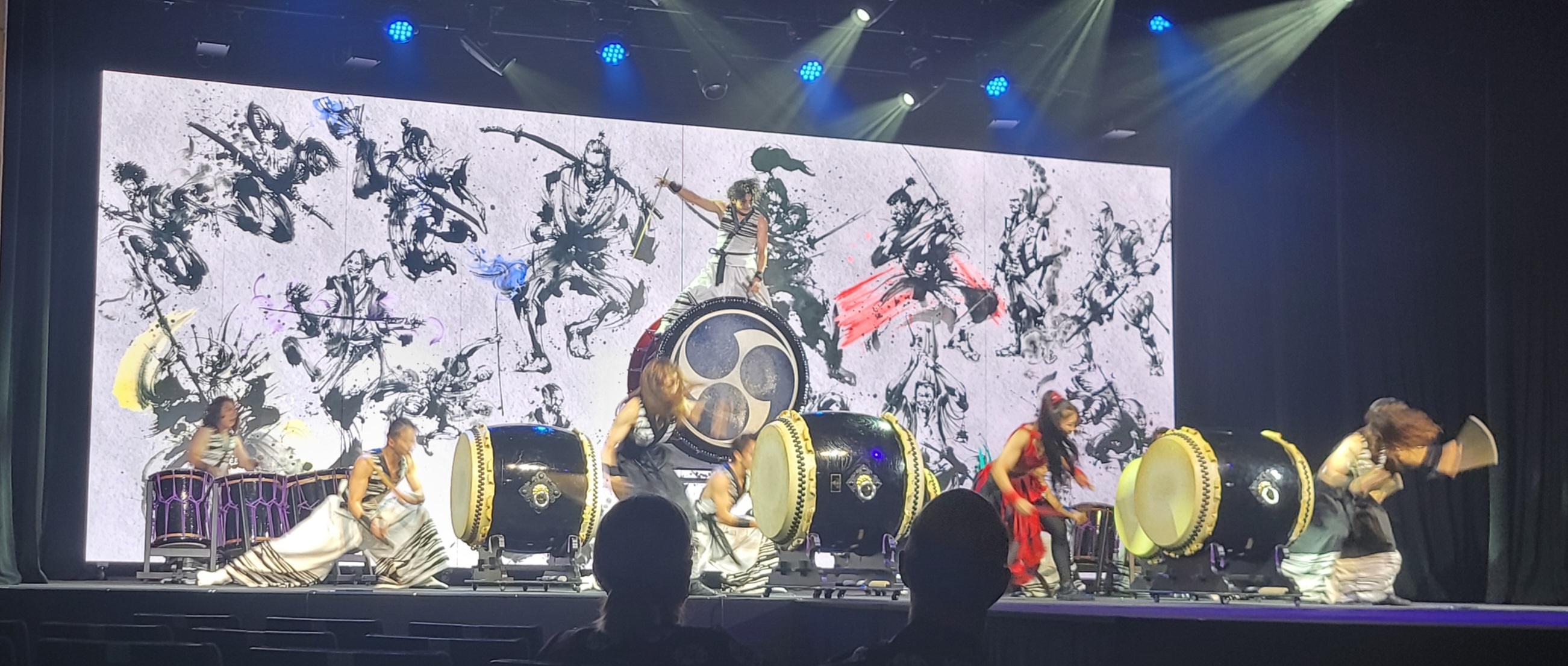
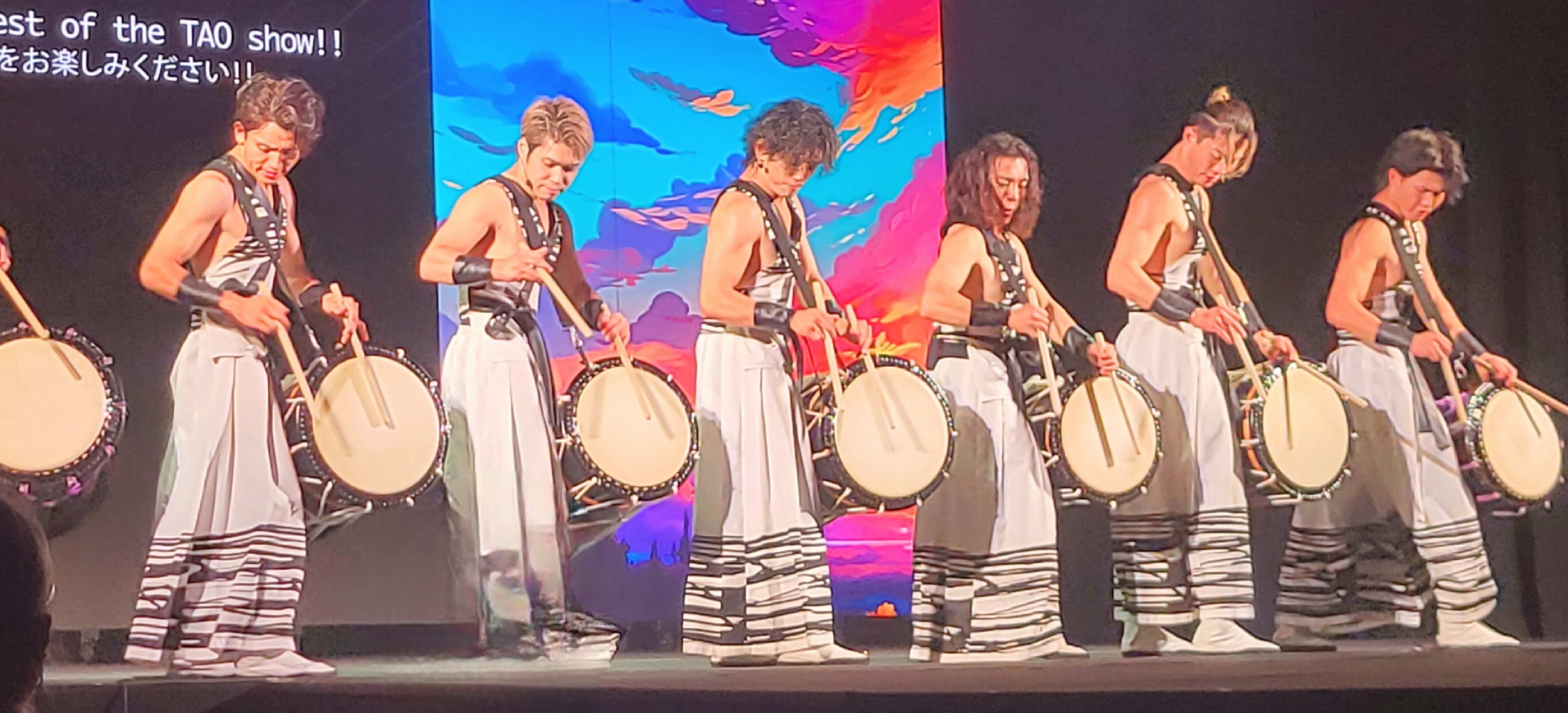
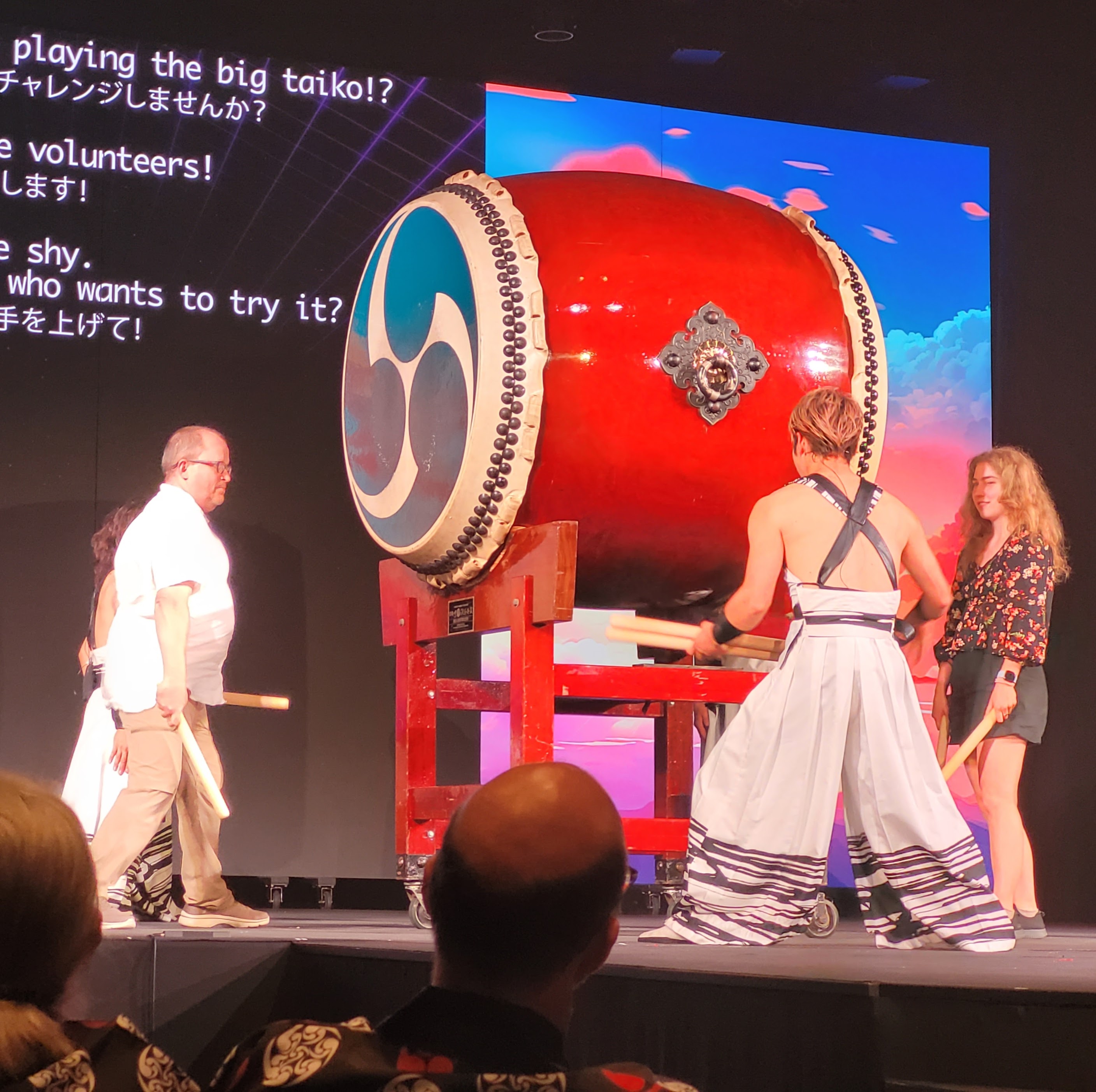
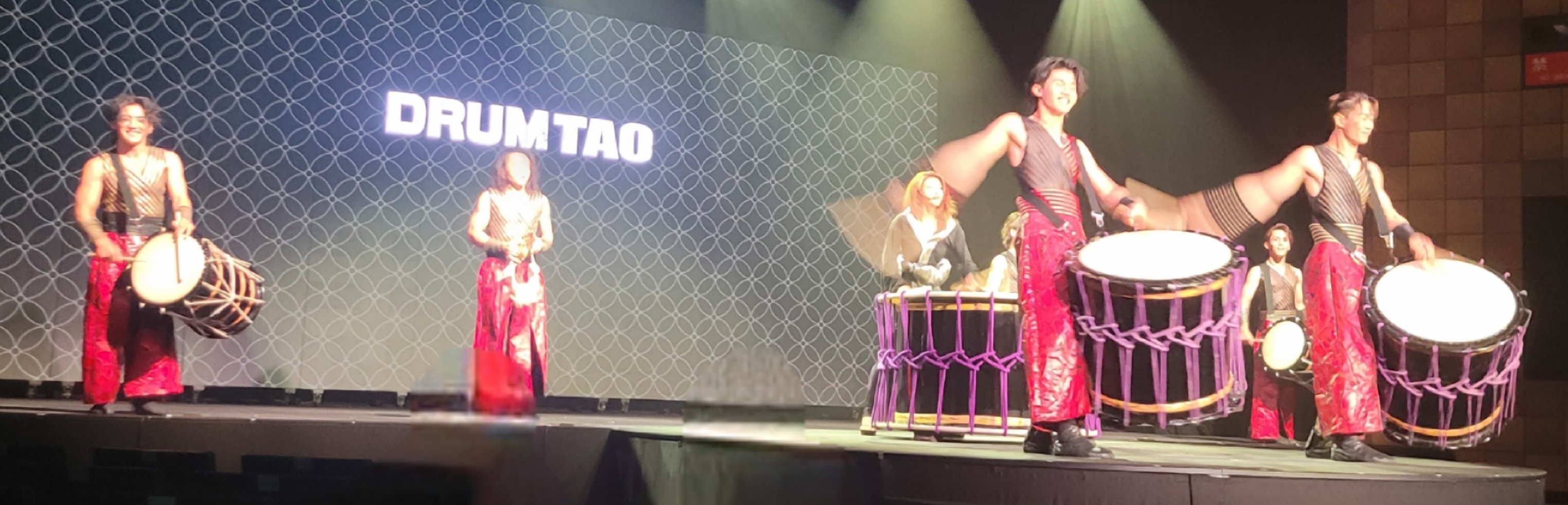
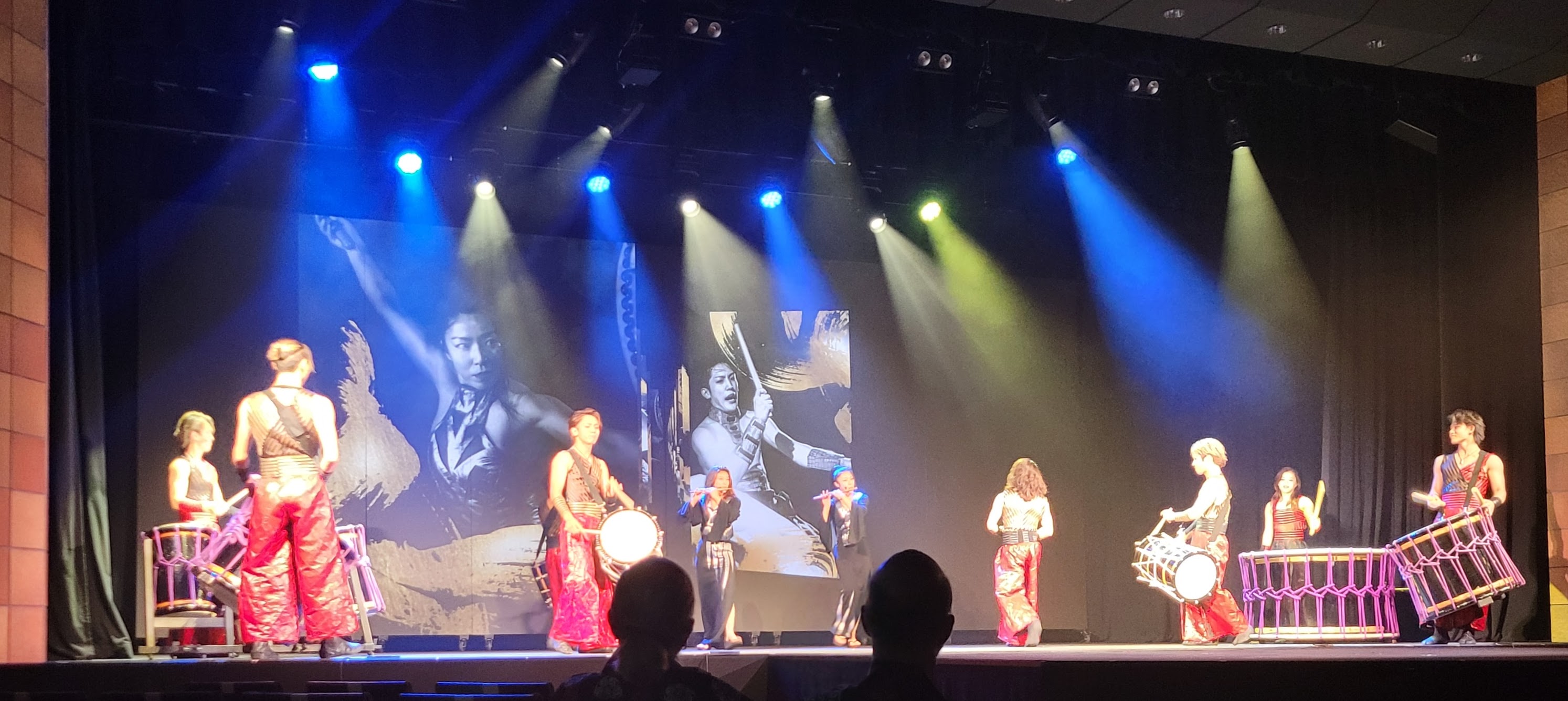
The theater sits atop a shopping center near Kyoto train station and across from the Kyoto Tower, and has a very nice roof terrace.
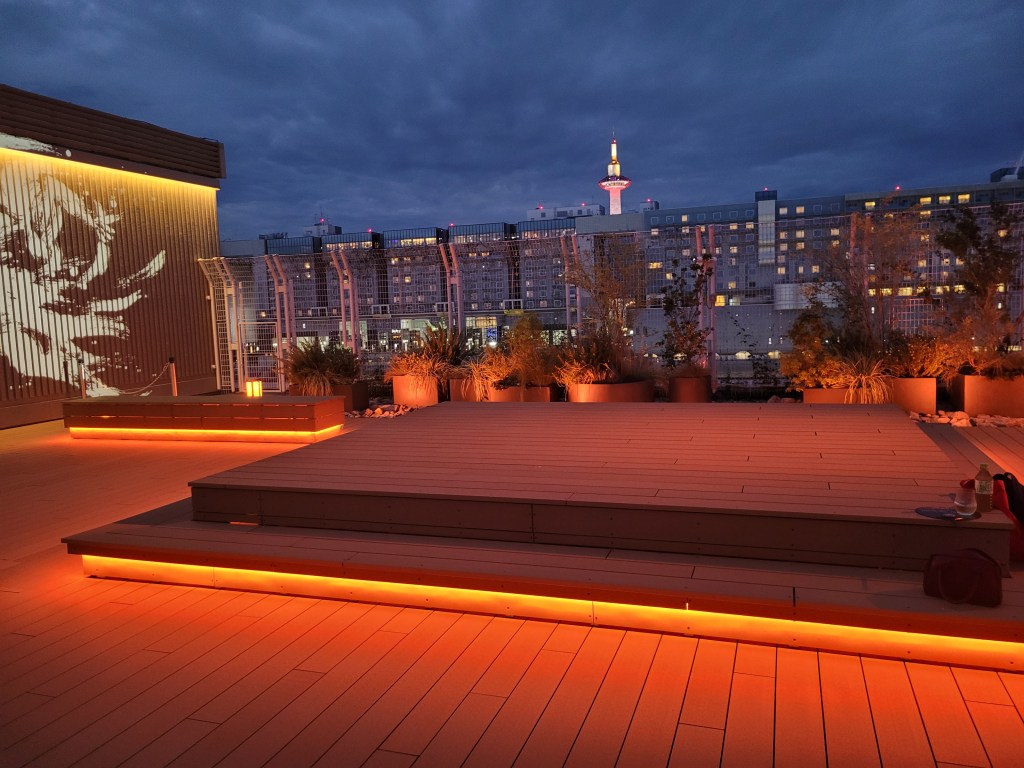
Not exactly a balcony, but it’ll do.
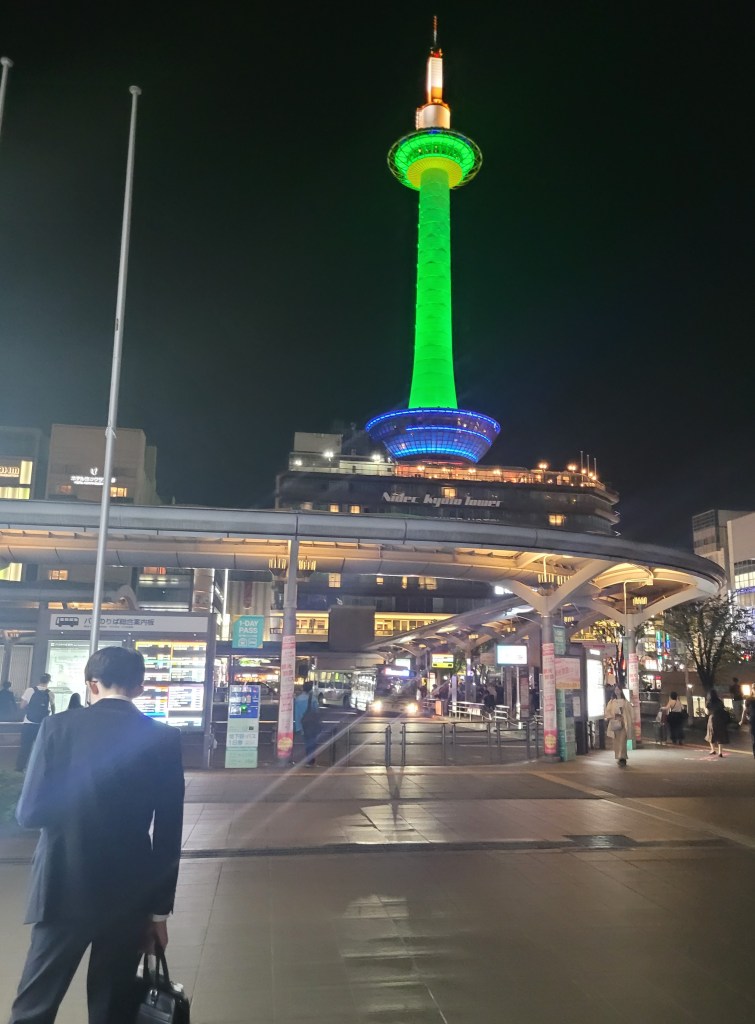
One night our faculty met up after work for dinner in the food hall under that Kyoto Tower; when we left it was all lit up for some tower anniversary celebration. Happy anniversary to the Tower, then.
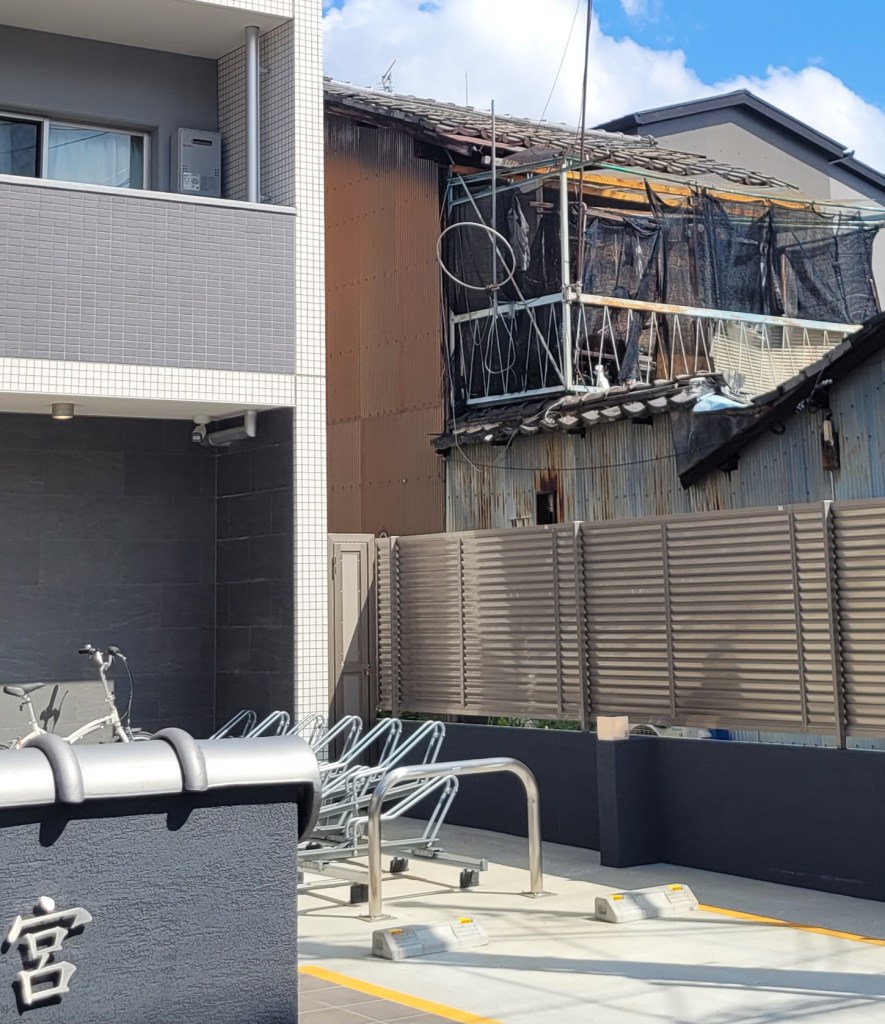
These pictures are all about the contrast of old and new here: buildings side-by-side representing different eras.
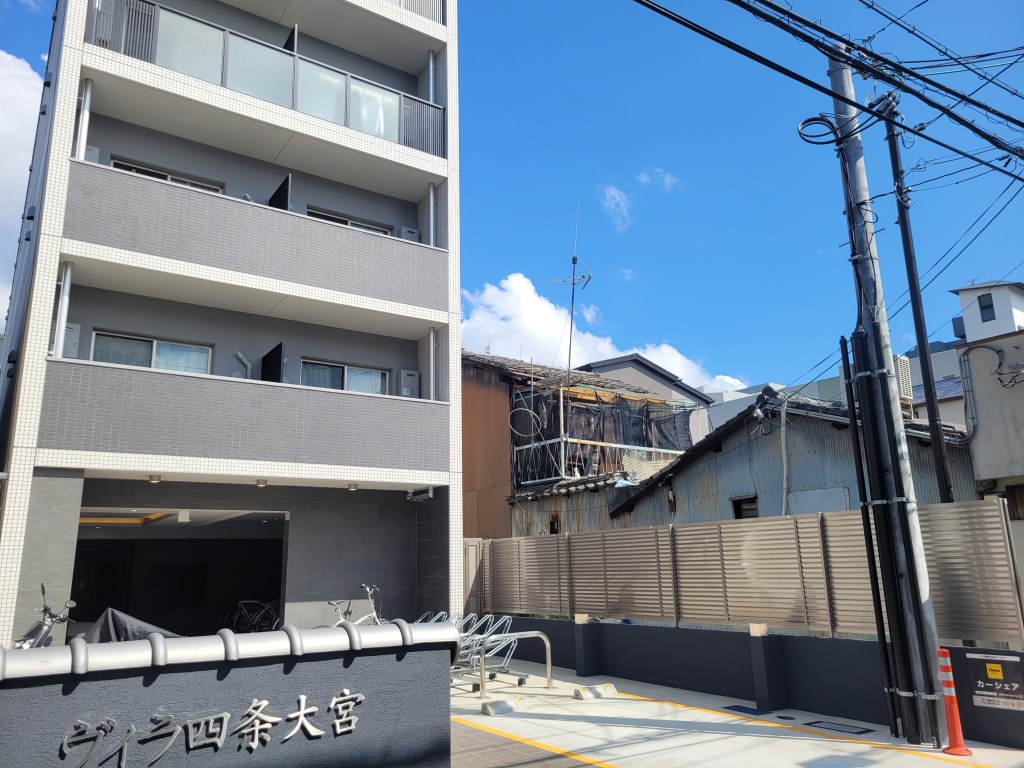
I saw them on one of my bike rides. What contrast!
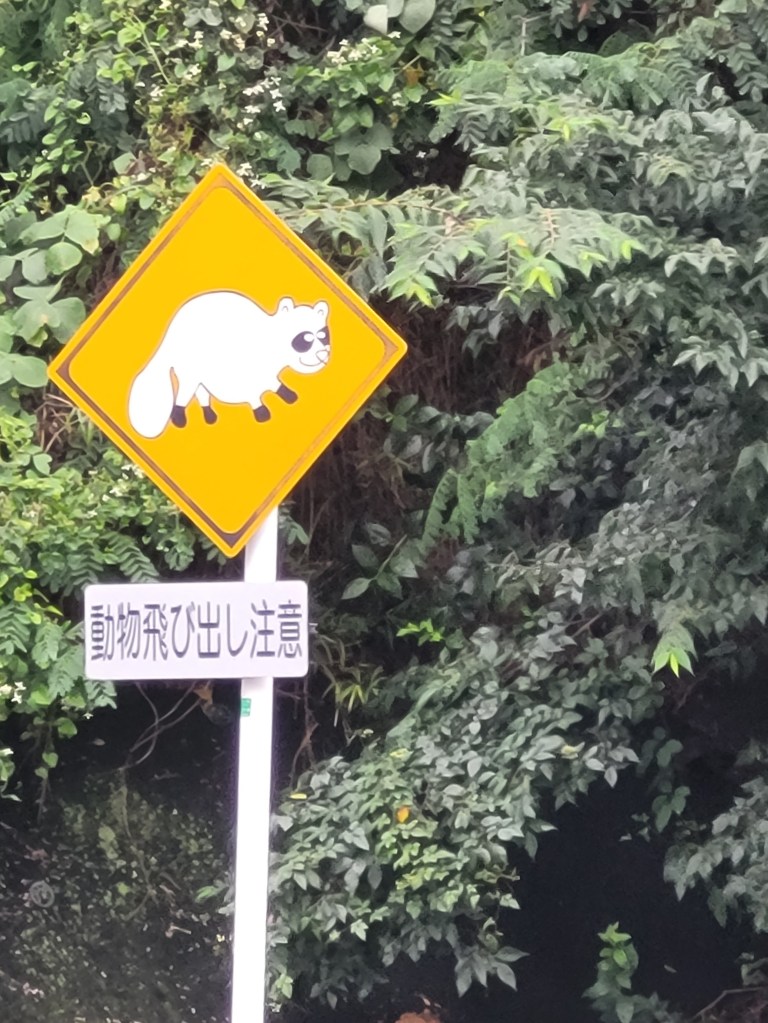
I went to Tokyo for work; Tokyo apparently has enough of these things, whatever they are, to warrant special crossing signs.
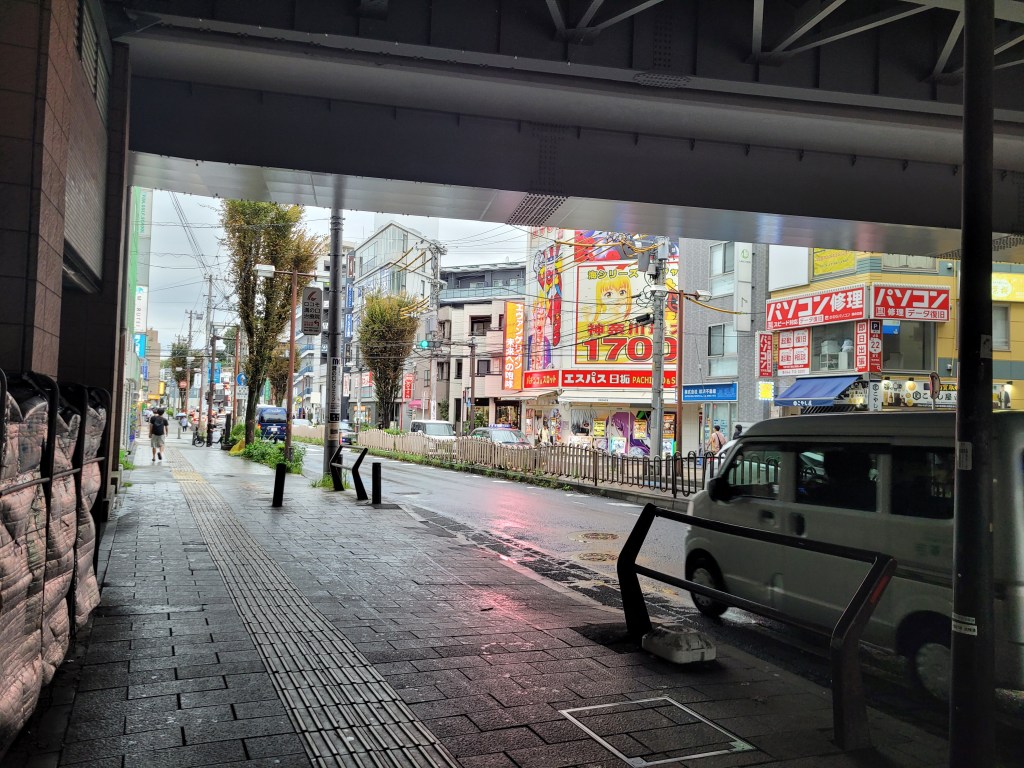
Tokyo looks like this at street level: underpasses and bright signage. Very different from Kyoto.

Possibly the most Japan thing ever: a konbini / convenience store launches a line of socks, one design for each of the 47 prefectures of Japan, each design based on a flower that grows in that prefecture. You can only get the sock of the prefecture in that prefecture. Collect them all! If you can get to every prefecture. And happen to need 47 pairs of socks.
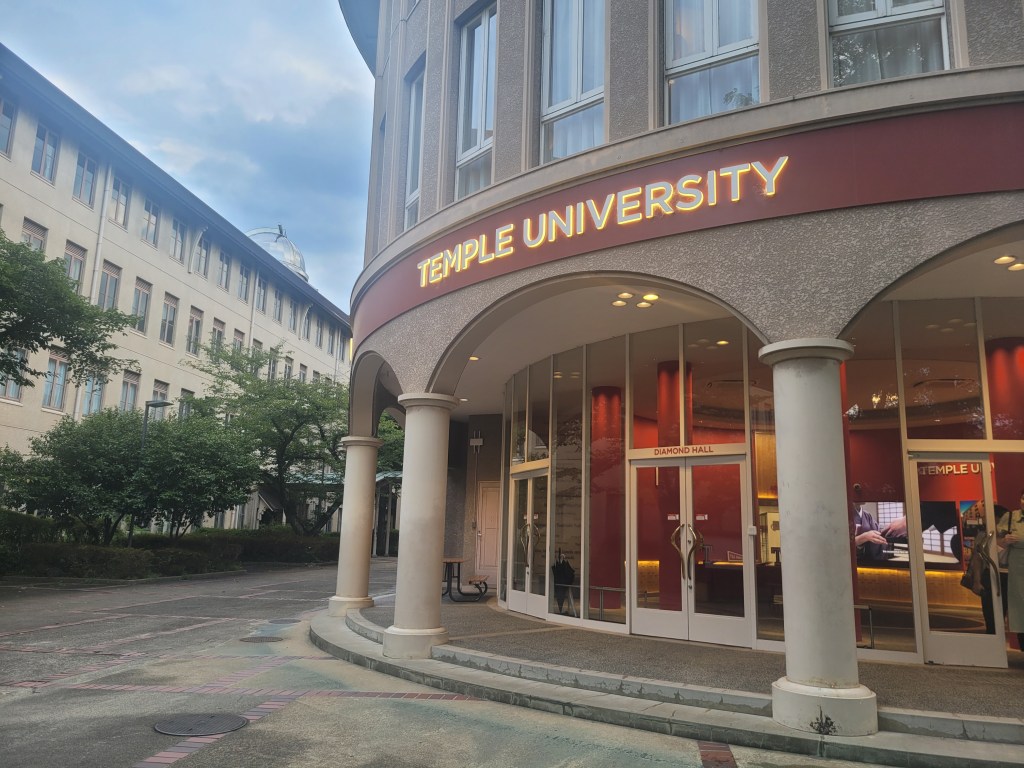
I got the Kanagawa prefecture sock the day I went to Tokyo to visit Temple University-Tokyo’s newest campus building, Hillside.
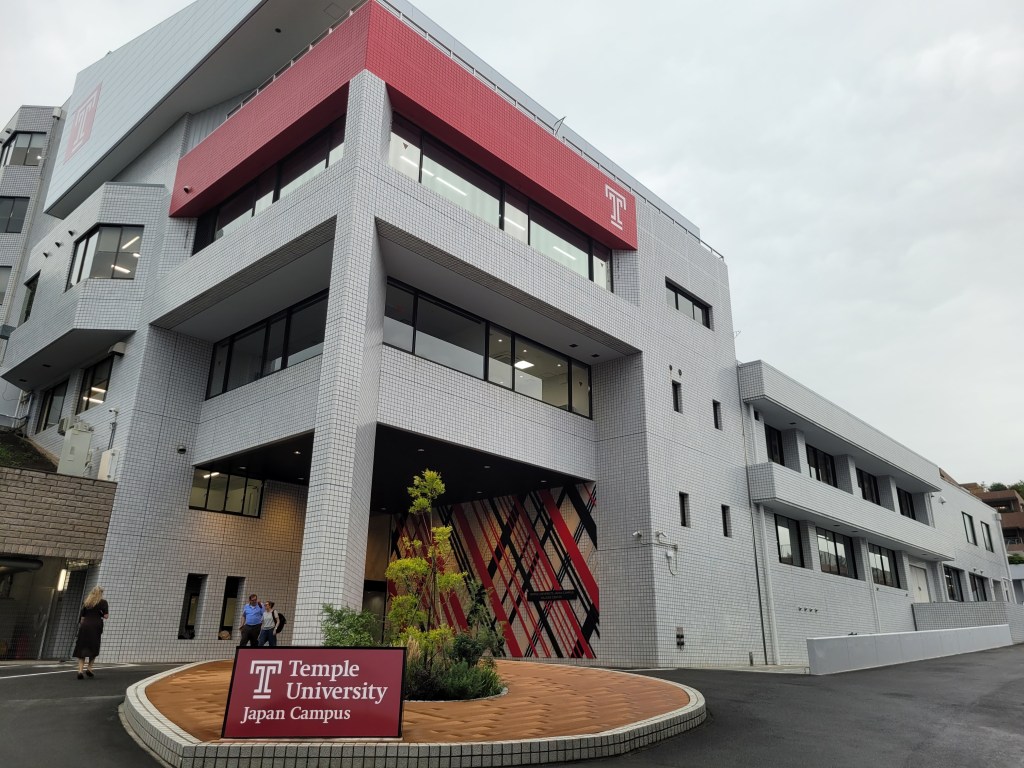
That is how I learned that the new Hillside building, though not too far from the City Campus ones, is not actually in Tokyo proper, but in Kanagawa, part of “greater Tokyo.”
Which really worked out well, all things considered, because I did not really like the Tokyo sock — too pink, based on a specific cherry tree blossom — and so because the new Temple University campus building is not actually inside Tokyo I ended up with a much better sock.
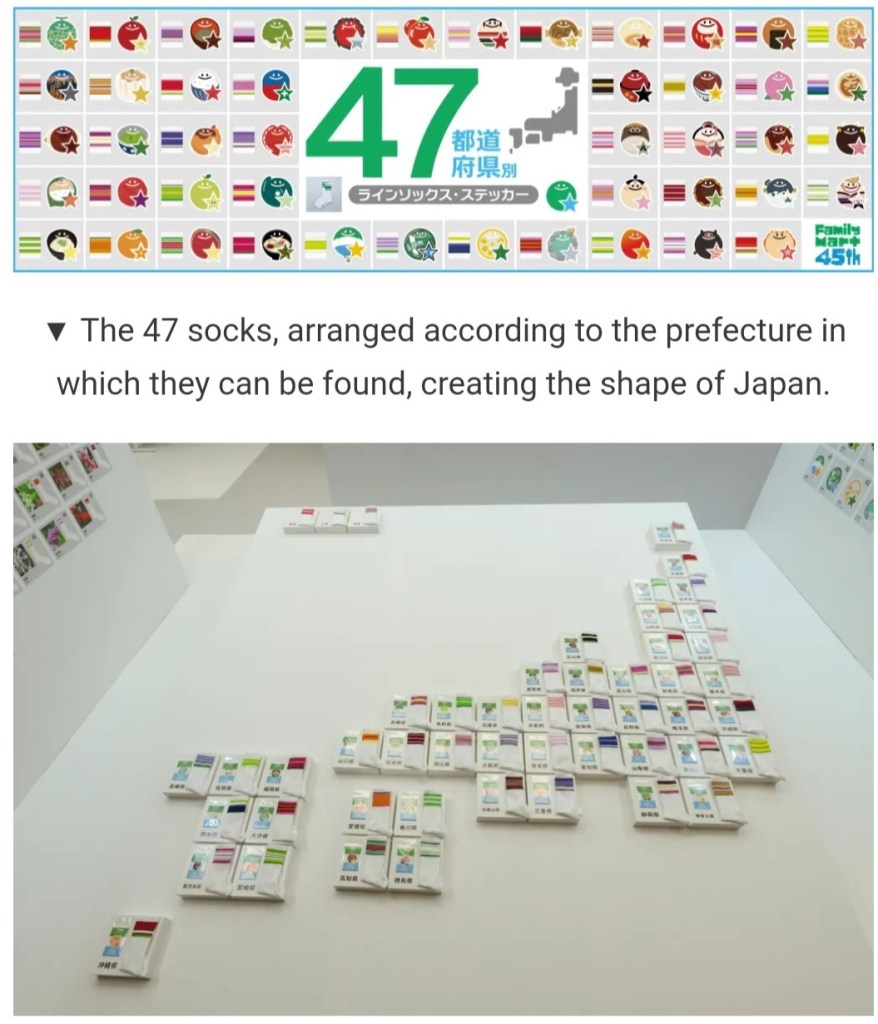
47 varieties!
How’s the Japanese going? So glad you asked! I am doing my best to prioritize the important parts of the language so I can communicate with sincerity and accuracy in whatever conversational situation might arise.
Fortunately modern technology offers an amazingly varied array of supportive avenues for language study, so one can always find the perfect educational tool for deep and effective learning.
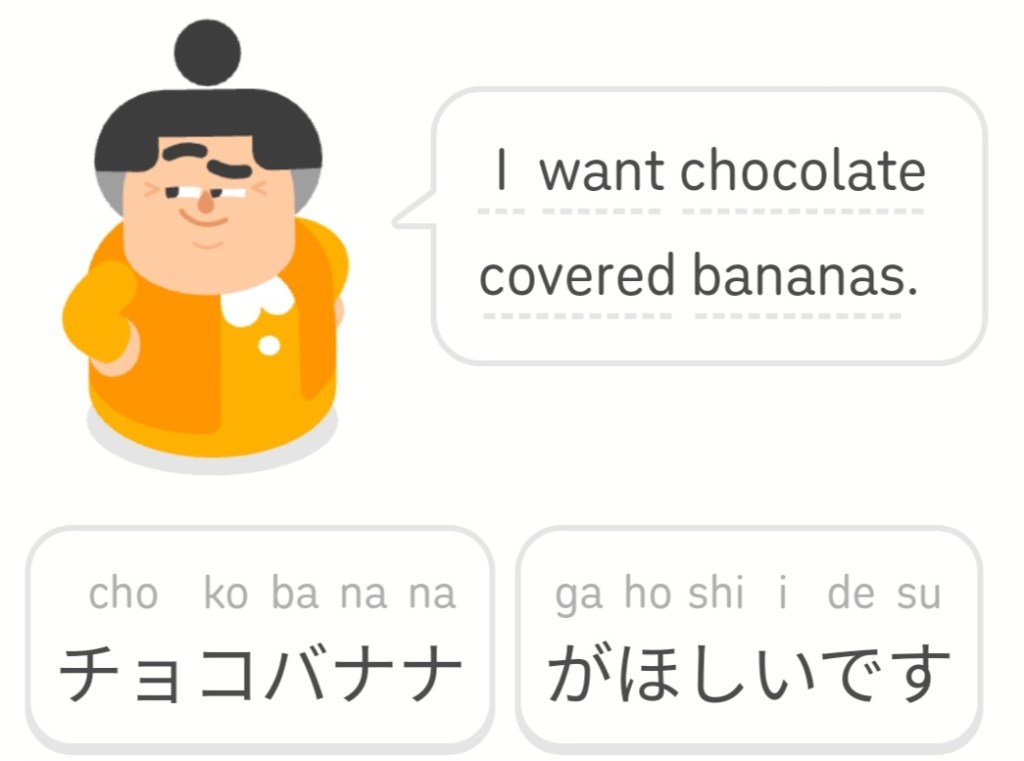
Lookin’ at you, DuoLingo.
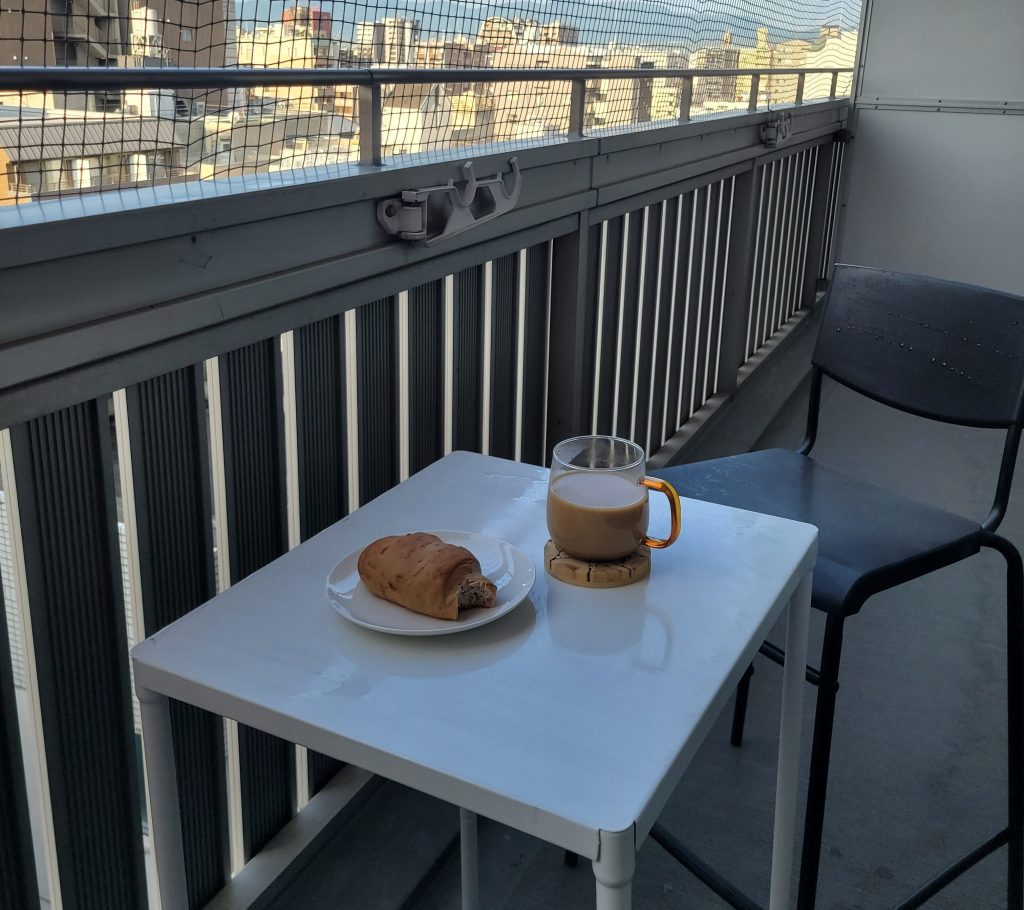
And you know, it really is so nice to come home to one’s balcony. Coffee and cheese toast for everyone!
Stop by for the next exciting blog post when we finally find out if I actually made it back to Japan!
“It was a dark and stormy night as the yellow truck rolled along the Iowa border, crossing into Nebraska in deep fog in search of a decent motel . . .”


Leave a Reply