
It is August and in academic calendars we don’t have classes to teach in August, so in August, one can wander.

Of course you can also start thinking about brand new cutting-edge research in August, in which case one is a wonderer. Or you could get to work on how to revise and improve the syllabi for the upcoming semester, in which case one is a ponderer. (And if you ignore all of these avenues for the entire month, you might end up a very relaxed and rested time-squanderer.)
I could have gone criss-crossing Japan on trains to see as much landscape as possible, or headed off cross-country on a bicycle. But I have just moved to a really lovely new neighborhood in Kyoto, and I wanted to stay here and explore. So I opted for a quieter August and I worked on my next book, studied Japanese, sorted out the new apartment, and started learning my way around an entirely new neighborhood. Before August ends I will have revised those syllabi, too.
A Path To Ponder On
A short bus ride away is the northern end of the Philosopher’s Path, which is a picturesque canalside walking route. A quiet city walk, I had decided on a recent day, would be perfect for August.

In Japanese it is called Tetsugaku no Michi, which means Philosopher’s Path.
The original meandering philosopher was named Nishida Kitaro, and he mainly wandered along this canal under the trees in the first quarter of the 20th century, thinking about Buddhism and Zen and differences in Eastern and Western approaches to ideas.
He was a professor, so perhaps he also thought about syllabi.

If you go, you will find it a very serene place where you are free to think about whatever you like.
You could, for instance, think about the red-necked longhorn beetle, an invasive bug species that has arrived in the prefecture of Kyoto.
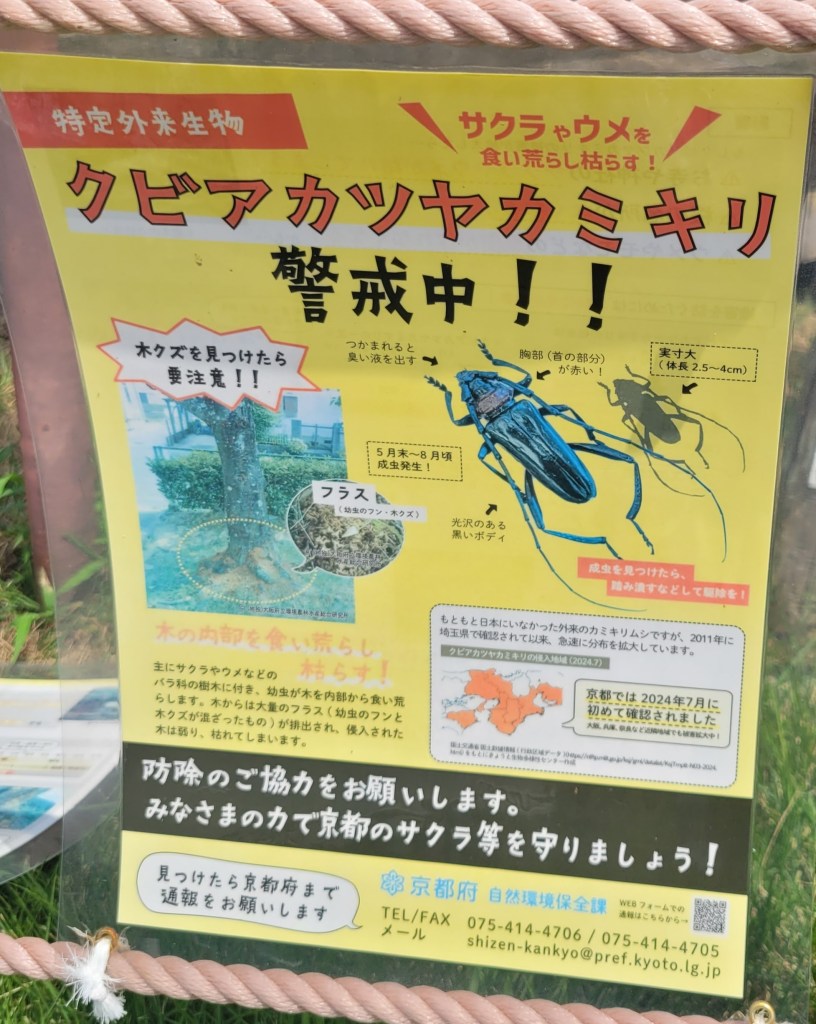
That’s what I did when I saw this alarming poster at the start of the path. I had no idea what exactly it said, but clearly we were being warned that a bad bug is loose, and we need to look out for it.
The poster does not exactly indicate the actual size of the bug we are looking out for.
I sincerely hoped it was a lot smaller than the illustration.
The problem with this particular bug, I later found out from translating the poster when I got home, is that it likes to burrow into and damage fruit trees. And the Philosopher’s Path is lined with cherry trees, the famous sakura which bloom pink in springtime and carpet the country in scads of photo-worthy rosy petals.
This, then, is a very bad bug. I did not encounter any on my walk, but that may be because they had all burrowed into trees already. Also, I have to admit that I wasn’t looking all that hard for them.
Crows in Japan are larger than life
There were many birds along the Path, and in particular lots of crows, which I really like. The crows of Japan are enormous. In the cities they are mostly Large-Billed Crows, which are these massive, black, hopping crows with very large domed heads. They are noisy and bumptious, loud and unrepentant.

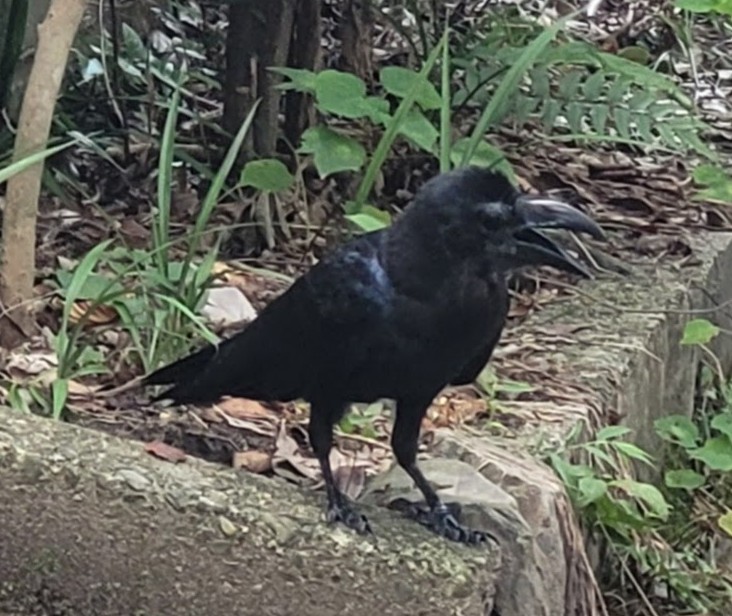
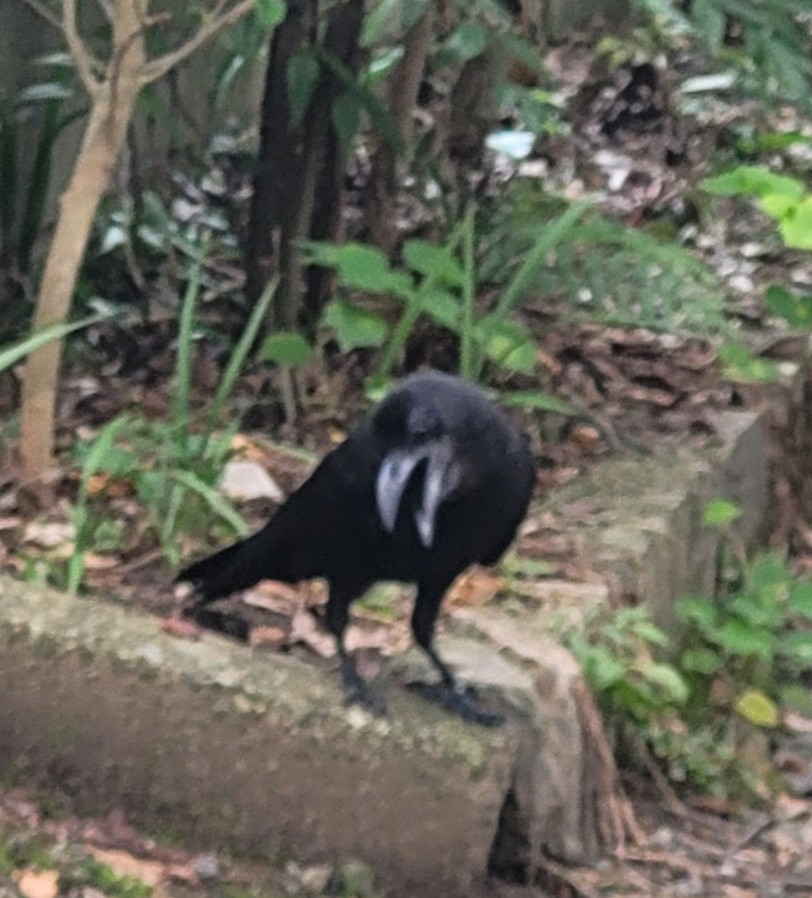
This one just stepped aside slightly when I walked past. They don’t fly away in fear. In fact, they seem to have no fear whatsoever.
Back in Philadelphia there are crows, but smaller ones which move in packs and make an enormous clamor when they decide en masse to settle into some tree for the night.
One Large-Billed Japanese Crow can absolutely make as much noise, just commenting on the inferior nature of a snack it just stole from the hands of a small child playing on a balcony.
It is high tourist season at the moment, and the Philosopher’s Path is definitely on the tourist maps. Expect to share the Path.
However I have a fool-proof plan to avoid the crowds. Visit at high noon, when your weather app says it is 98°F / 36.6°C with a feel-like temperature of 111 degrees! You will have the place pretty much to yourself. You may pass small clumps of wilting tourists along the way but they will not be able to keep up with your jaunty stride.
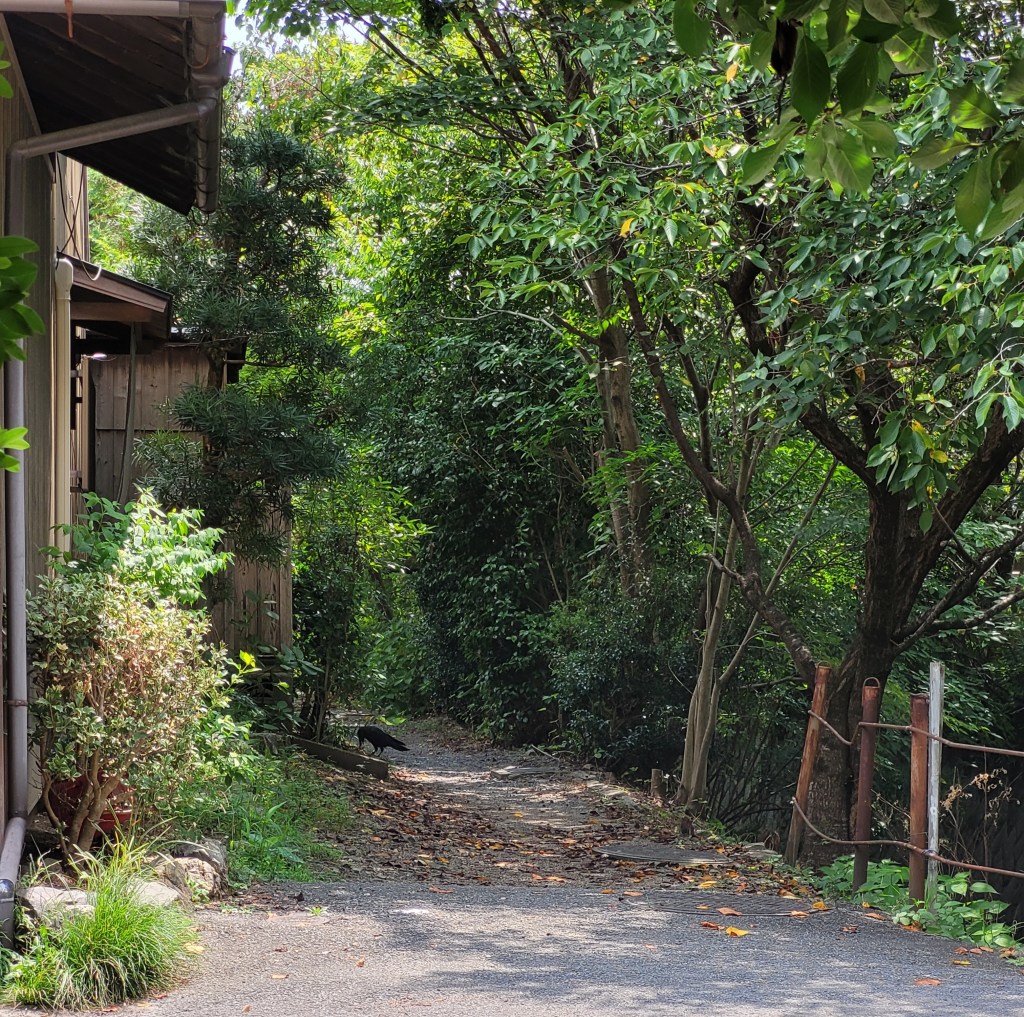
Actually it is cooler under the trees along the canal, and you can stay in shade as you walk. In my loose baggy clothes with a hat and sunglasses, with a thermos of icy water in my backpack, I was not actually that bothered by the heat that day.
Temples To Visit
There are sites of worship all along the Philosopher’s Path, large ornate ones and smaller sites, both Buddhist temples and Shinto shrines. Some have front gates near the path, and some are located at the ends of side streets which break off eastward towards the base of the looming Mount Daimonji.
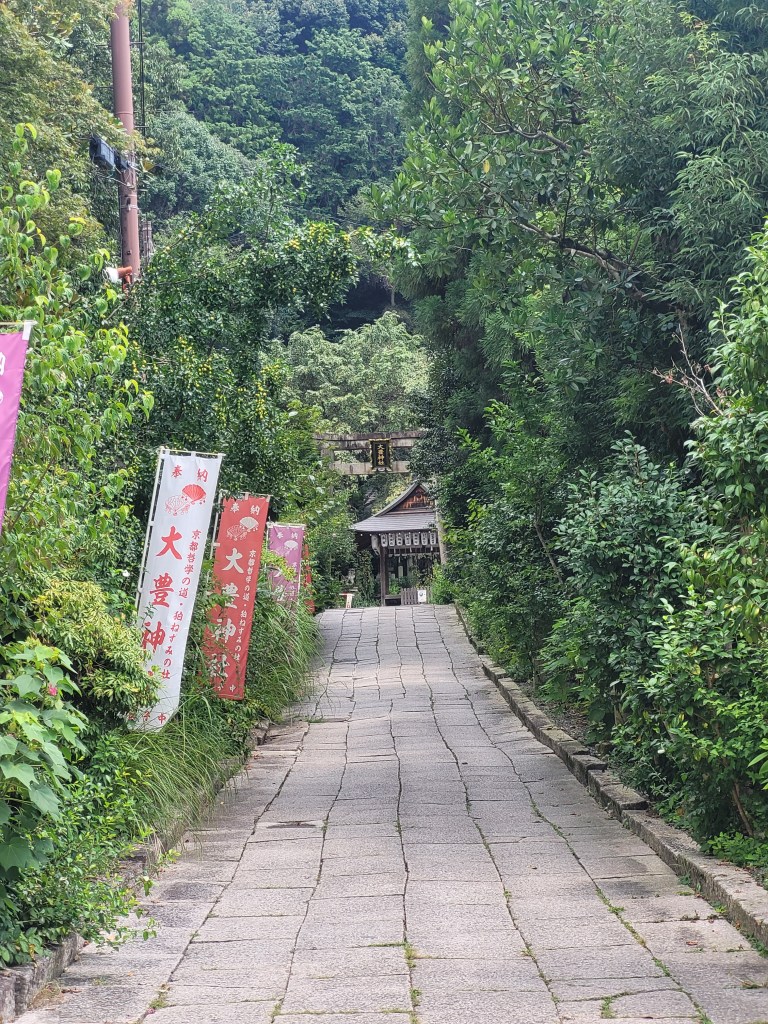
I did not plan which ones to visit, and at some point in my stroll I just headed off towards a shrine because the little street looked so appealing.
It looked like such a calm, peaceful detour.
Who would not want to saunter along to explore?

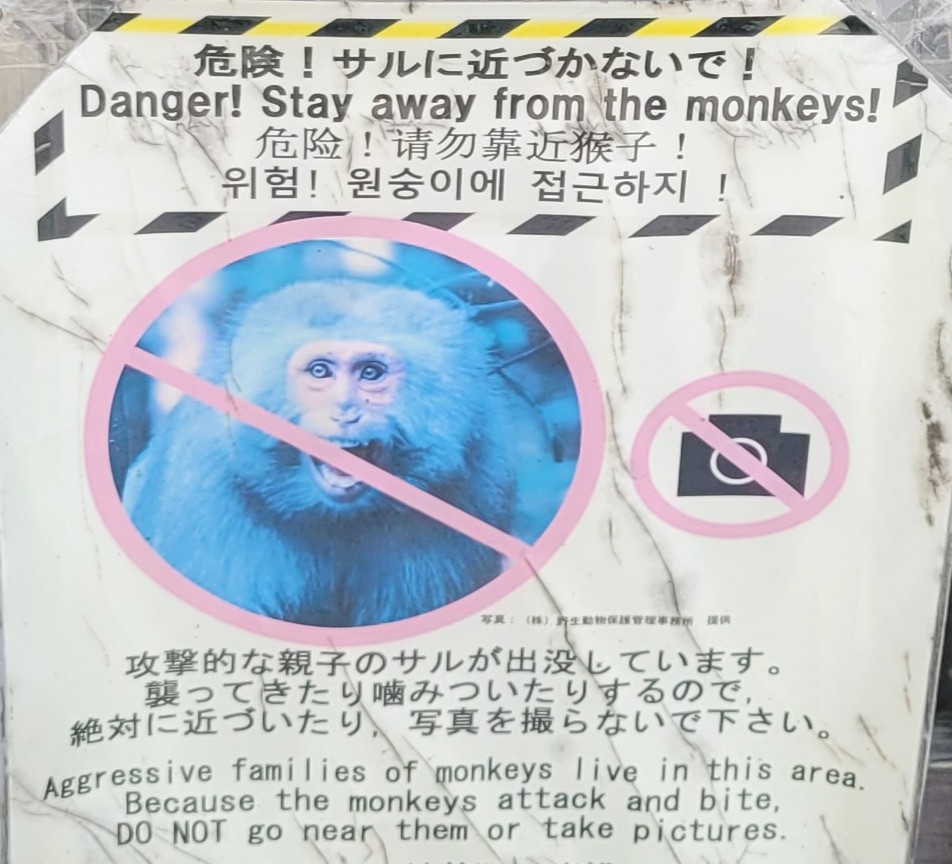
Until it’s all about “aggressive monkey families” who live at the site, attacking and biting people.
According to the warning sign you need to avoid them and not take pictures!
It must be hard being a monkey in 2025 who does not like to have its picture taken. These monkeys don’t want you approaching or taking a photo. These are like aggressively anti-social-media monkeys.
This is the Ōtoyo Shrine, actually a pet-welcoming shrine special for its many animal guardian deities in statue form: guardian rats, snakes, monkeys, kites, and foxes.
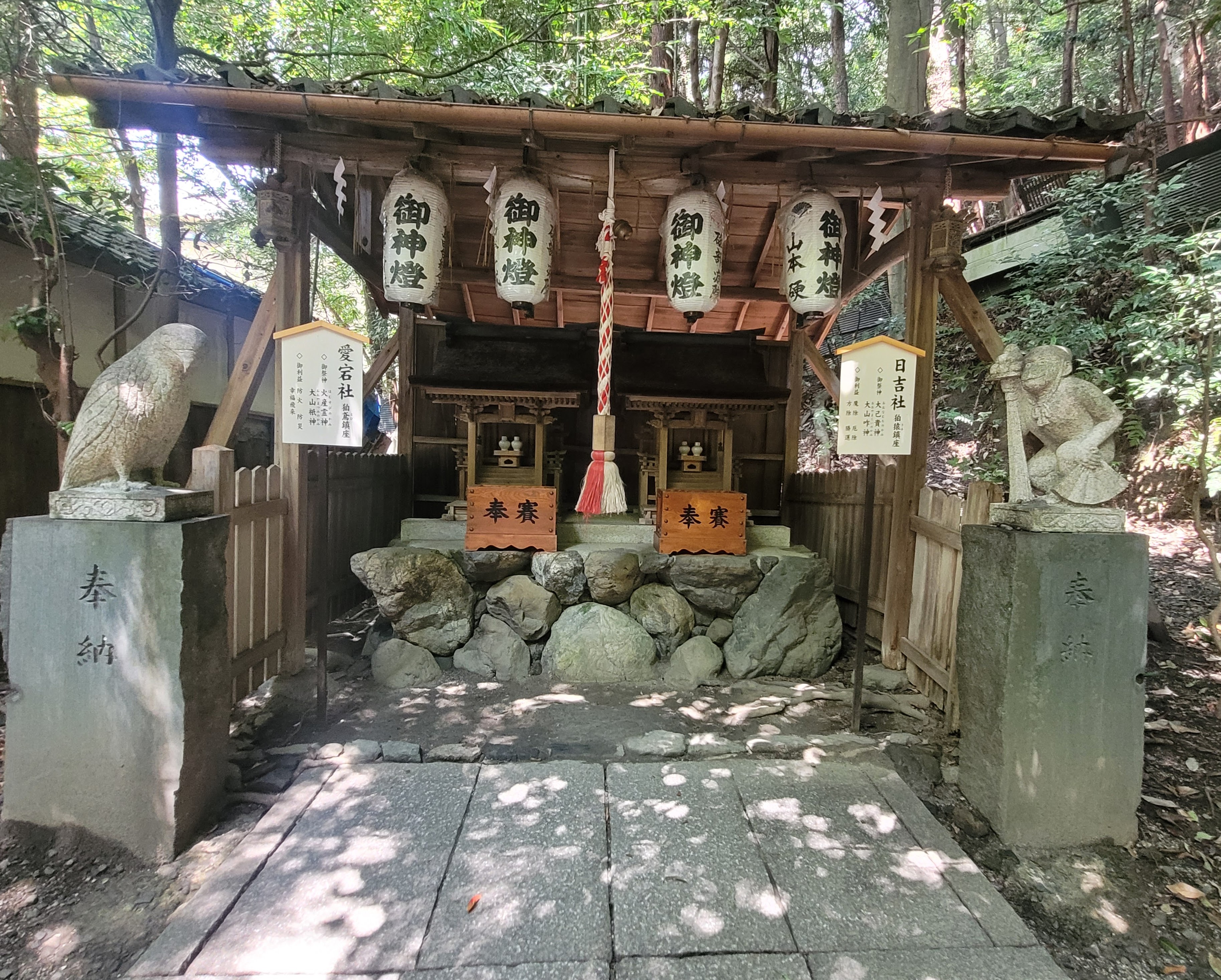
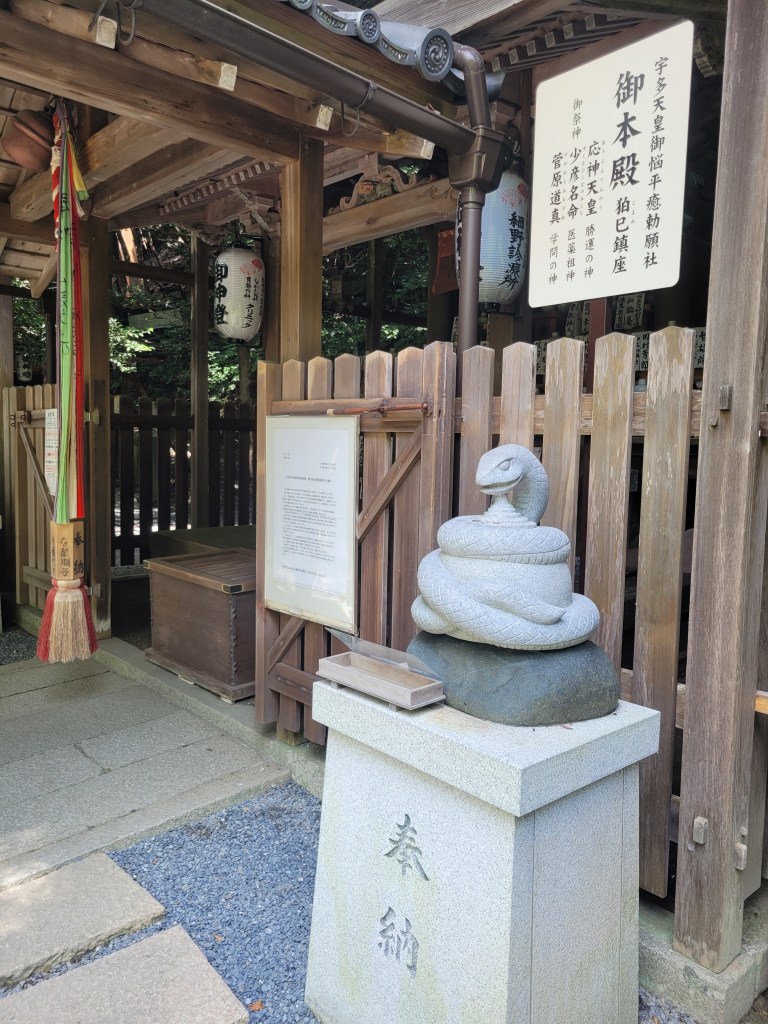
A shrine was founded on this site in 887 to appeal for the return to health of an ailing emperor. The 1138-year-old sacred site, which of course has a website ( https://ootoyojinja.jp/), is said to grant “divine blessings of healing, health, longevity, rejuvenation, financial luck, academic success, and victory.” I do like that part about academic success! In keeping with the apparent wishes of the monkeys, no monkey photographs appear on the shrine’s website.
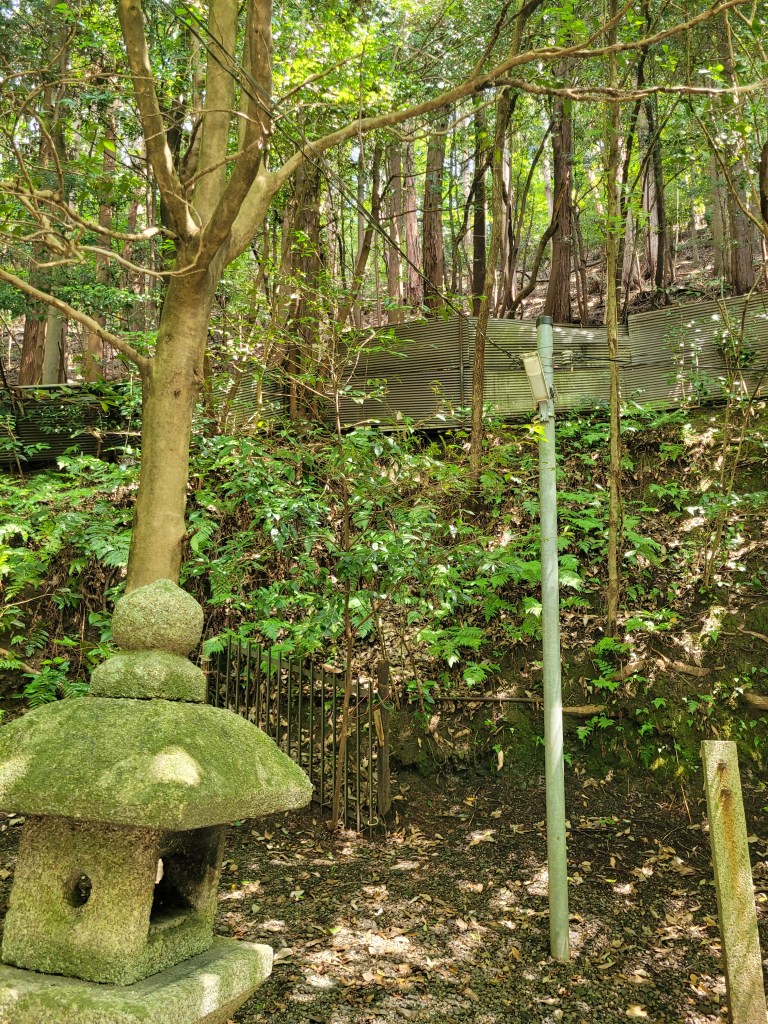
If the monkeys were gonna appear, they’d be heading down this very mountainside. I edged cautiously towards this view at the edge of the property to take this picture.
Now I was a blogger in the danger zone!
Fortunately I encountered no monkeys while ambling around the various shrines, each guarded by the different animal statues.
And I even managed a degree of nonchalance as I stepped back from the edge fence and finished my perambulation of the site. I cooled my hands with some water at the fountain before heading back to the main path.


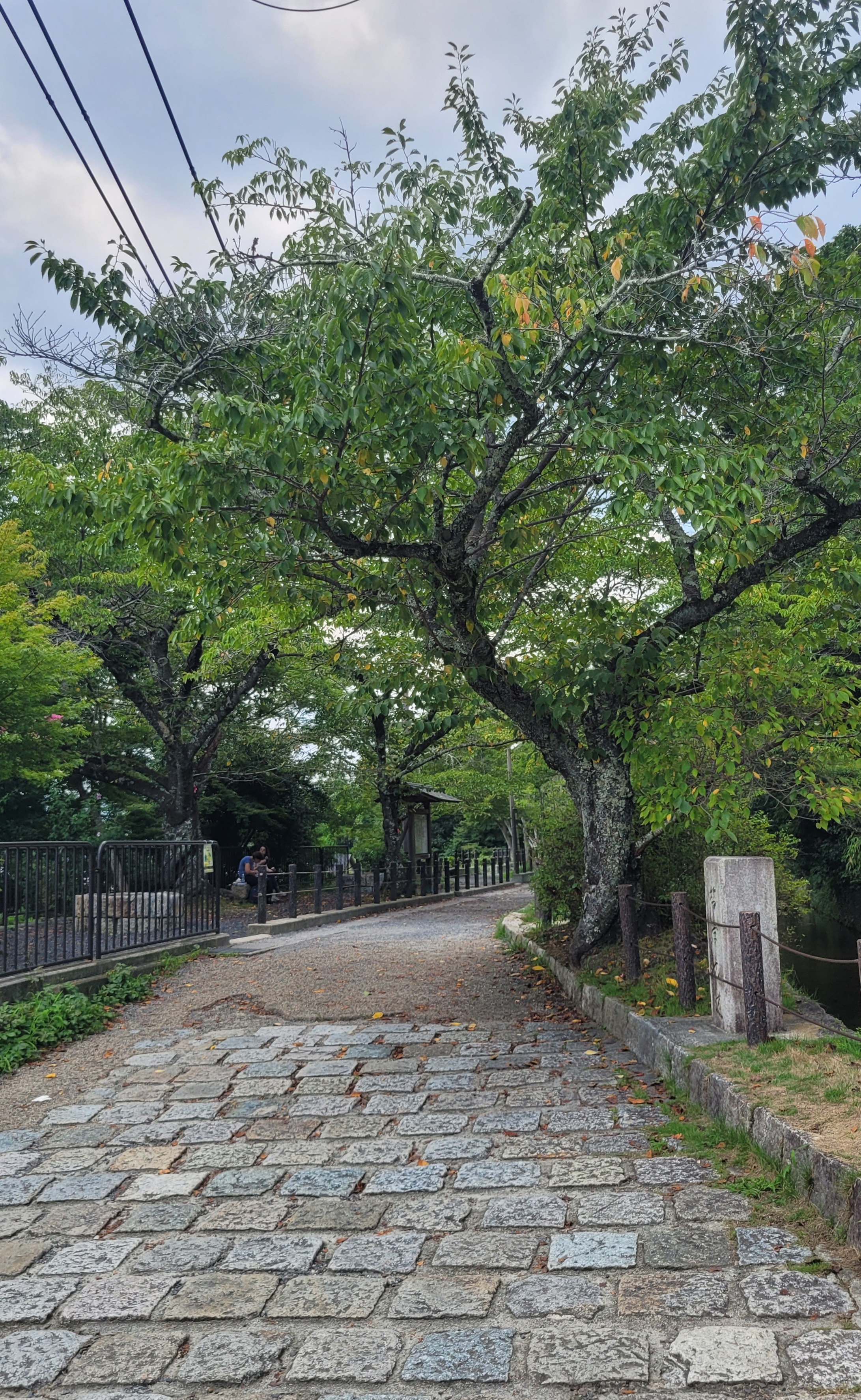
The streets beyond the Path are fairly traditional, and there are cafes and shops dotted all over.
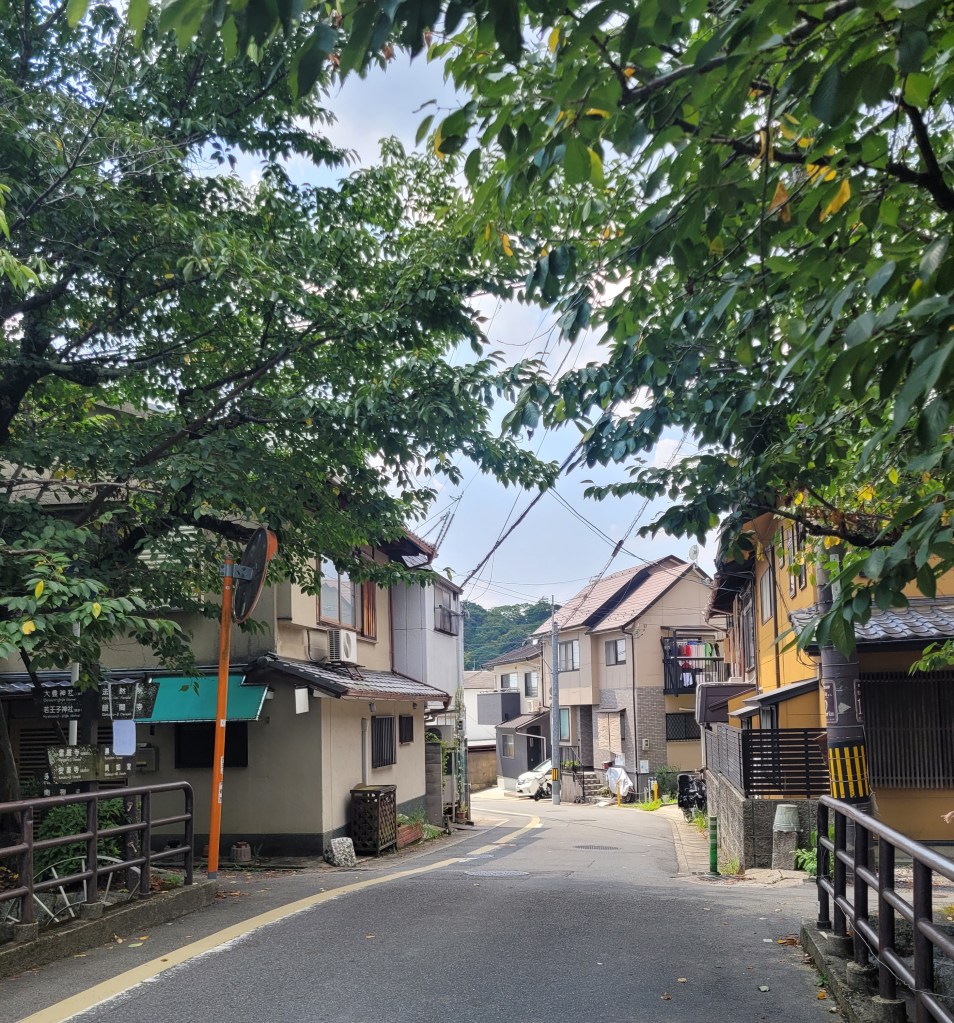
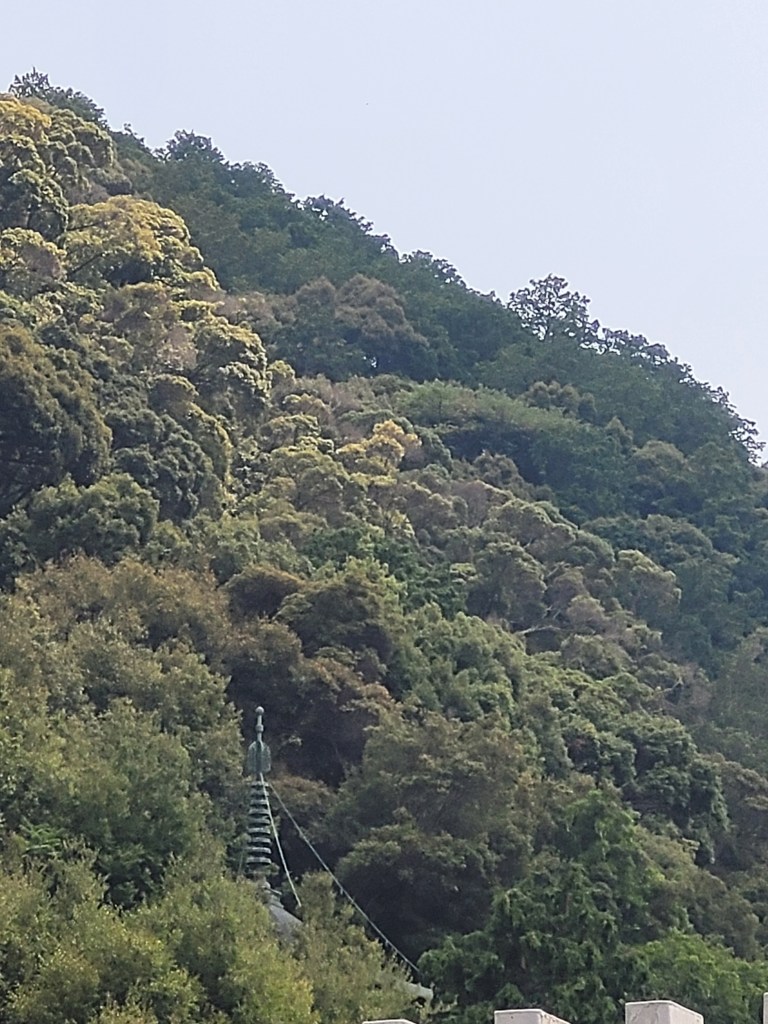
Thar be aggressive photography-detesting monkeys in those hills!
I will be returning to the Philosopher’s Path soon, as I have more temples to see, cafes to visit, and things to take pictures of. I found it such an inspiring place, a small piece of landscape that unfolds in fascinating, history-resonant ways. One thing I want to go back to see is the memorial stone set by the side of the canal halfway along the Path for the person whose daily walks created this place: that wandering thinker Nishida Kitaro. The stone bears a carved poem which he wrote in 1934:
Hito wa hito
ware wa ware nari
tonikaku
waga yuku michi o
waga wa yukunariPeople are people,
and I will be myself.
Regardless,
the path I follow
I will follow on.
Nishida wrote this poem exactly when Japan was heading towards a far-right-wing, nationalist, Japan-first sort of doctrine, which Nishida, being more of a globalist, opposed. His poem is about sticking to one’s path or direction even when that is going against a dominant ideology, and staying true to oneself as a perfectly valid, and very humane, option.
I did not go to walk the Philosopher’s Path for a deep lesson in art, history, politics, and ideology, but one of the amazing features I keep returning to in Japan is the way this place manages to reverberate with its past and stay up-to-the-moment current in its lessons and vibes. Japan is a thoughtful place.

In Japan one is a wanderer, wonderer, and ponderer all of the time.
************************************************************************
Once again, I have added more to the Extras page for Japan. Just click here and scroll down to the latest: Extras To Read All About: Japan 2025
************************************************************************


 Where No Mangoes
Leave a reply to Frani Cancel reply